
Starting Solids Australia 2026: Baby Led Weaning vs Purees — Complete Guide
If you’ve reached the stage where your little one is eyeing off your dinner with keen interest, grabbing at your fork, or sitting up unassisted and opening their mouth like a baby bird, congratulations, you’re probably ready to begin one of the most joyful (and messiest) milestones of the first year. Starting solids is exciting, a little nerve-wracking, and let’s be honest, comes with a mountain of conflicting advice.
Here at mum.com.au, we’ve compared the two big camps Australian parents are torn between: baby led weaning (BLW) and traditional purees. Should you spoon-feed silky mashed pumpkin, or hand over a chunky roasted carrot stick and let bub take the lead? Is one safer? Is one better for fussy eaters? And what on earth does the Australian guidance actually say?
Take a breath, you’re in the right place. This is our complete, no-judgement 2026 guide to starting solids in Australia. We’ll walk you through the current starting solids guidelines Australia recommends, explain exactly what baby led weaning is, compare it honestly against purees, and give you practical baby led weaning ideas and first foods to get you started. Grab a cuppa; let’s do this together.
When Is Your Baby Ready to Start Solids?
Before we get into the great BLW-versus-purees debate, let’s cover the most important question of all: timing. The current starting solids guidelines Australia follows, as set out by the Australian Dietary Guidelines and the National Health and Medical Research Council (NHMRC), recommend introducing solid foods at around six months of age, while continuing breastfeeding (or formula) alongside.
Notice that word “around.” Some babies show readiness a little before six months, others a little after. What matters far more than the exact date on the calendar is that your baby is showing the classic signs of developmental readiness:
- Good head and neck control, bub can hold their head steady and upright.
- Sitting with support, they can sit up (in a highchair or on your lap) without slumping.
- Reaching and grabbing, showing genuine interest in your food and bringing objects to their mouth.
- Loss of the tongue-thrust reflex, they no longer automatically push food back out with their tongue.
Australian health authorities are clear that solids should not be introduced before four months, as bub’s digestive system and swallowing coordination simply aren’t ready. Waiting until around six months (but not too far beyond) also helps reduce the risk of allergies and iron deficiency, which becomes a real concern as your baby’s natural iron stores start to run low in the second half of the first year.
If your baby was premature, chat with your child health nurse or GP about adjusting the timing to their corrected age. And as always, every baby is an individual, trust your instincts alongside the guidelines.
What Is Baby Led Weaning?
So, what is baby led weaning exactly? In the simplest terms, baby led weaning is an approach to starting solids where you skip the spoon-fed purees entirely and instead offer your baby soft, appropriately sized pieces of whole food that they feed to themselves. Bub sits at the table (usually in a highchair), and takes charge of what goes in their mouth, how much, and how fast.
The philosophy behind BLW is that babies are remarkably capable of self-regulating their intake and exploring food with all their senses. Rather than being fed to, they’re invited to join the family meal and learn by doing, squishing, mouthing, gumming, and eventually chewing and swallowing real textures from day one.
The concept was popularised largely by UK health visitor Gill Rapley, whose baby led weaning book “Baby-Led Weaning: The Essential Guide” remains a favourite on Australian mums’ shelves and is a brilliant starting point if you want to read up before you dive in. It explains the reasoning, safety principles, and practical how-tos in a warm, reassuring way.
Key features of the baby led weaning approach include:
- Baby self-feeds from the very beginning (no purees or spoon-feeding required).
- Foods are offered in graspable shapes, think finger-length sticks in the early days.
- Bub eats with the family, sharing (safe versions of) the same meals.
- Mealtimes are relaxed and led by the baby’s appetite and curiosity.
It’s worth noting that many Aussie families take a combination approach, offering purees at some meals and finger foods at others. There’s no rulebook that says you must pick a lane and stick to it forever, which is genuinely liberating once the pressure lifts.
How to Start Baby Led Weaning: A Step-by-Step Guide
Wondering how to start baby led weaning without feeling like you’re winging it? Here’s our friendly, practical roadmap.
1. Set up a safe eating space
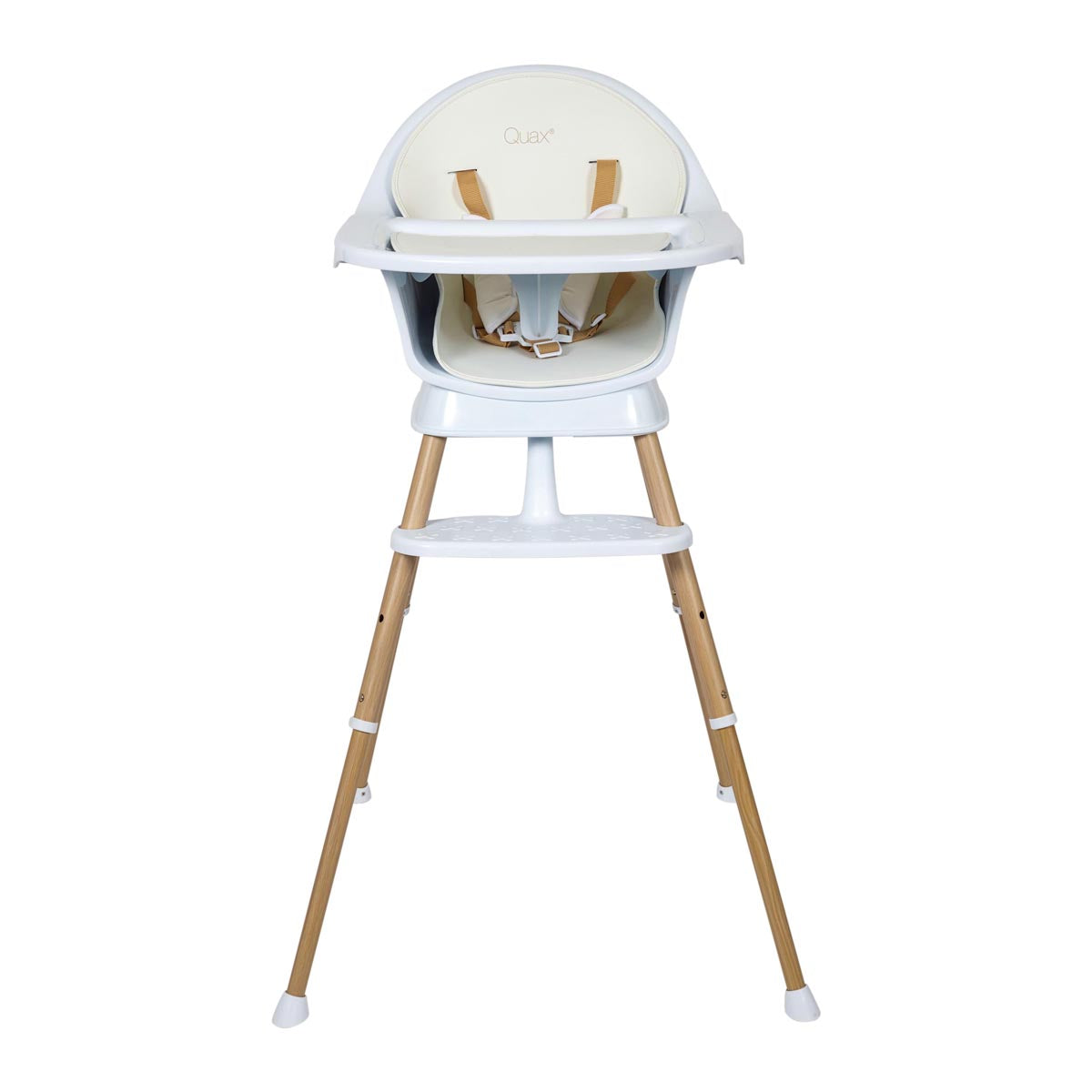
A sturdy highchair with a supportive, upright seat is essential. Your baby should be sitting upright (never reclined) so they can manage food safely. A footrest helps too, stable feet mean better control. Pop a large mat or old towel underneath because, spoiler alert, it’s going to get gloriously messy.
2. Learn the difference between gagging and choking
This is the step that reassures nervous parents most. Gagging is a normal, protective reflex that moves food forward, it looks and sounds dramatic (coughing, going a bit red, spluttering) but it’s your baby’s built-in safety mechanism working exactly as designed. Choking, by contrast, is silent or high-pitched and means the airway is blocked. Every parent starting solids, BLW or purees, should do an infant first aid and CPR course. In Australia these are widely available and worth every cent for your peace of mind.
3. Offer the right shapes and textures
In the early weeks, cut foods into finger-length sticks (roughly the size of your adult finger) so bub can grasp them with a good bit poking out of their fist. Foods should be soft enough to squish between your thumb and forefinger.
4. Sit together and let bub lead
Eat alongside your baby whenever you can. Babies are natural mimics and will learn heaps just by watching you chew and enjoy your food. Resist the urge to put food into their mouth, the golden rule of BLW is that only baby’s own hand goes to their mouth.
5. Keep milk as the main event (for now)
Remember the saying: “food before one is just for fun.” Breastmilk or formula remains your baby’s primary source of nutrition until around 12 months, so early solids are about exploration and skill-building, not filling a tummy.
6. Introduce allergens early and often
Australian guidance now recommends introducing common allergy-causing foods (like well-cooked egg, smooth peanut butter thinned with water, dairy, and wheat) in the first year, ideally around six months, one at a time. Early introduction may actually help reduce the risk of food allergies. Always check with your GP first if there’s a strong family history of allergies.
Baby Led Weaning First Foods & Recipe Ideas
Now for the fun part, what to actually put on the highchair tray! The best baby led weaning first foods are soft, nutritious, easy to grip, and gentle on little tummies. Here are some tried-and-loved baby led weaning ideas to get you rolling:
Vegetables
- Steamed or roasted sweet potato wedges
- Soft-cooked carrot, pumpkin, or parsnip sticks
- Steamed broccoli and cauliflower florets (the stalk makes a perfect handle)
- Roasted zucchini sticks
Fruits
- Ripe banana (leave a bit of the peel on the bottom for grip)
- Soft ripe pear or peach wedges
- Avocado spears (roll in a little baby cereal to make them less slippery)
- Ripe mango cheeks, a summery Aussie favourite
Proteins & iron-rich foods
- Soft-cooked strips of chicken or slow-cooked beef
- Well-cooked egg cut into fingers (a fantastic early allergen)
- Flaked salmon (bones removed, always double-check)
- Cooked lentil or chickpea patties
Grains & more
- Toast fingers with a thin smear of avocado or nut butter
- Cooked pasta shapes (spirals are easy to grab)
- Iron-fortified baby porridge (offered on a preloaded spoon)
Once bub gets the hang of things, you can move on to more adventurous baby led weaning recipes, think mini frittata muffins loaded with veg, veggie fritters, savoury pikelets, and family-friendly curries or bolognese with reduced salt. The goal is variety and exposure to lots of flavours and textures. A brilliant baby led weaning book or a reputable Australian BLW recipe collection is well worth the small investment for inspiration on those uninspired weeknights.
Foods to always avoid in the first year: honey (risk of infant botulism), whole nuts, hard raw vegetables, small round foods like whole grapes or cherry tomatoes (cut into quarters lengthways), popcorn, added salt and sugar, and anything with a choking-hazard shape or firmness.
Baby Led Weaning vs Purees: An Honest Comparison
Here’s the head-to-head. The truth? Both approaches are valid, safe (when done correctly), and can raise happy, healthy eaters. Let’s weigh them up honestly.
| Approach | How it works | Key benefits | Things to consider | Best for |
|---|---|---|---|---|
| Baby Led Weaning | Baby self-feeds soft finger foods from the start. | Builds fine motor skills, encourages self-regulation of appetite, exposes bub to varied textures early, less separate meal prep, family eats together. | Messier, harder to track exact intake, requires close supervision and first-aid confidence, may need adaptation when out and about. | Families who want relaxed, shared mealtimes and are comfortable with mess and gagging. |
| Traditional Purees | Parent spoon-feeds smooth foods, gradually increasing texture. | Easy to monitor how much bub eats, less initial mess, portable and convenient (pouches), reassuring for anxious parents. | More separate cooking/prep, risk of texture aversion if you stay on smooth too long, can be harder to transition to lumps. | Parents who want more control and structure, or babies who need closely monitored intake. |
| Combination | Mix of purees and finger foods across meals. | Best of both worlds, flexibility, monitored nutrition plus self-feeding practice. | Requires a bit more planning; no single “method” to follow. | Most Australian families, honestly! |
One myth worth busting: research has not found that baby led weaning increases choking risk compared to purees, provided foods are prepared safely and bub is always supervised. Both approaches carry the same safety responsibilities.
Our take? Don’t stress about choosing a “team.” Plenty of Aussie mums start with a bit of both and let their baby’s cues guide them. If bub loves grabbing food, lean into BLW. If you feel more secure spooning purees, that’s perfectly wonderful too.
Not sure yet? Put all 3 bibs & bowls we rate next to each other.
Essential Gear for Starting Solids (mum.com.au Approved)
You genuinely don’t need a nursery-full of gadgets to start solids, but a few well-chosen items make life so much easier, and cleaner. When shopping in Australia, always check that products meet the relevant ACCC safety standards, particularly for highchairs (which must comply with the mandatory Australian safety standard) and any items your baby puts in their mouth. Here are the categories we consider genuinely worth it, with approximate 2026 RRP ranges.
| Product | Brand type | Key features | Best for |
|---|---|---|---|
| Supportive highchair | Established nursery brands | Upright supportive seat, footrest, wipe-clean surface, ACCC-compliant harness | Safe, comfortable self-feeding |
| Silicone suction bowls & plates | Baby feeding specialists | Suctions to tray, food-grade silicone, dishwasher safe | Reducing thrown-bowl chaos |
| Long-sleeved coverall bibs | Baby feeding specialists | Waterproof, crumb-catcher pocket, machine washable | Containing the glorious mess |
| Soft-tipped weaning spoons | Baby feeding specialists | Gentle on gums, easy grip, ideal for preloading | Purees & combination feeding |
| Splash mat | Homewares & baby brands | Wipeable, large coverage, rolls up for travel | Protecting floors during BLW |
| Storage cubes / trays | Kitchen & baby brands | Portion-sized, freezer safe, silicone or BPA-free | Batch-cooking purees & meals |
A quick money-saving tip from us: you can absolutely start with items you already own. A tea towel is a splash mat, a regular small bowl works fine, and your steamer basket is all you need for cooking those first veggie sticks. Add the fancier bits only if and when you feel you need them.
Making Starting Solids Work for the Aussie Lifestyle
One of the joys of raising kids in Australia is our incredible fresh produce and outdoor lifestyle, both of which lend themselves beautifully to starting solids.
In the warmer months, take advantage of summer fruits like mango, peach, and rockmelon (cut into safe, graspable pieces), they’re naturally sweet, soft, and hydrating on a hot day. Chilled cucumber sticks can also be wonderfully soothing for teething gums during a scorching January afternoon. Just be mindful of food safety at picnics and the beach: keep perishables cool, and never leave prepared food sitting in the heat.
In the cooler months, lean into slow-cooked, iron-rich family meals, think tender casseroles, soft-cooked root vegetables, and warming lentil dishes that you can adapt for bub (simply set aside a portion before adding salt). Batch-cooking and freezing in portion cubes is a lifesaver for busy Australian families juggling work, daycare, and everything in between.
When you’re out and about, whether it’s a weekend at the coast or a visit to Nan’s, a combination approach can be handy. Pouches and pre-cut soft fruits travel well, and most cafes are happy to warm a little food or provide a highchair. Don’t feel you have to be rigid; flexibility is what keeps starting solids enjoyable rather than stressful.
Frequently Asked Questions
How do I know if my baby is choking or just gagging?
Gagging is loud and dramatic, your baby may cough, splutter, go red, and push food forward with their tongue. It’s a normal, protective reflex and you should stay calm and let them work through it. Choking is different: it’s usually silent or produces a high-pitched sound, and your baby may go quiet, pale, or blue. This is an emergency requiring immediate action. We strongly recommend every parent completes an accredited infant first aid and CPR course before starting solids, whichever method you choose.
Do I have to choose between baby led weaning and purees?
Not at all! Many Australian families use a combination approach, offering purees at some meals and finger foods at others. There’s no evidence you have to commit to one method exclusively. Follow your baby’s cues and do what feels manageable and safe for your family.
Will my baby get enough iron with baby led weaning?
Iron is a genuine consideration from around six months, as your baby’s stores begin to deplete. With BLW, you can ensure adequate iron by regularly offering iron-rich finger foods such as well-cooked meat strips, egg, lentils, and iron-fortified cereals (offered on a preloaded spoon). If you’re ever worried about your baby’s intake, your child health nurse or GP can help you assess and, if needed, suggest supplementation.
How messy is baby led weaning really?
Honestly? Very. Expect food on the walls, in the hair, and everywhere in between during those early weeks. A good coverall bib, a splash mat under the highchair, and a relaxed attitude are your best friends. The upside is that the mess is a sign your baby is exploring and learning, and it does ease as their skills develop.
What are the best first foods to start with?
Soft, iron-rich, and easy-to-grip foods are ideal. Great baby led weaning first foods include steamed sweet potato or carrot sticks, ripe banana, avocado spears, soft-cooked broccoli florets, and well-cooked egg. Introduce common allergens early (one at a time) and always avoid honey, whole nuts, and choking hazards like whole grapes in the first year.
The Bottom Line
Starting solids is a beautiful, milestone-filled chapter, not a test you can pass or fail. Whether you choose baby led weaning, traditional purees, or a happy blend of both, the most important ingredients are the same: wait for genuine readiness signs around six months, prepare food safely, supervise every mouthful, introduce a wide variety of flavours and textures (including allergens), and keep mealtimes relaxed and pressure-free.
Our honest recommendation at mum.com.au? Don’t get bogged down in choosing a “correct” method. If your baby is grabbing at everything and loves being independent, lean into BLW and enjoy watching them explore. If spoon-feeding purees gives you peace of mind, that’s every bit as valid, and you can always add finger foods later. A combination approach suits most Aussie families beautifully, offering the reassurance of monitored nutrition alongside the developmental benefits of self-feeding.
Invest in a good highchair that meets ACCC standards, do an infant first aid course, keep a sense of humour about the mess, and trust your instincts. You know your baby best. Here’s to happy, curious little eaters and many joyful (if slightly chaotic) mealtimes ahead. You’ve got this, mum.
The shortlist, in your inbox
New winners, price drops and recalls worth knowing.