
Best Baby Bibs Australia 2026: Bandana vs Silicone vs Traditional for BLW
By the time solids start, most Australian parents have already worked out that a single bib style won’t cut it. The muslin bandana bib that looks gorgeous in the newborn photos is useless against a fistful of mashed pumpkin. The nappy-bag stash of cheap terry bibs gets soaked through in one meal. And nobody warns you that baby-led weaning turns a highchair tray into a crime scene three times a day, every day, for months.
This guide exists because that decision fatigue is real: you don’t need forty open tabs comparing bandana dribble bibs to silicone catch-all bibs to old-school towelling ones, you need a shortlist that actually matches the stage you’re at. A dribbly four-month-old has completely different needs to a nine-month-old flinging avocado across the kitchen, and buying the wrong style for the wrong stage is how bib drawers end up overflowing with things nobody reaches for.
Below we’ve grouped the genuinely useful, currently-sold Australian bibs by what they’re actually for, drawing on manufacturer specs, care-label detail and what parents consistently report about mess containment, wash-wear and how long velcro or poppers actually hold up.
What to look for in a baby bib
Not every bib needs to do the same job. A bib for a teething three-month-old is solving a completely different problem to a bib for a nine-month-old doing baby-led weaning. Before you buy, it’s worth being honest about which problem you’re actually solving.
- Closure that survives a wriggling baby: velcro is fast but can loosen and scratch tiny necks over time; poppers (snaps) are slower to do up one-handed but rarely fail and won’t catch on hair.
- A catch pocket for BLW: once solids properly start, a rigid or semi-rigid pocket at the base of a silicone bib catches food that would otherwise land on the floor or the highchair straps.
- Fabric that actually wipes or washes clean: 100% cotton muslin bandana bibs need a full wash after most meals; silicone wipes clean in seconds, which matters more than people expect on a busy weeknight.
- Coverage for the stage: a bandana bib covers the chest for dribble and light spit-up; it does very little once purees and finger foods start landing with force.
- No loose parts or long ties: check there are no ribbons, snap-off bits, or anything a baby could work loose and put in their mouth, particularly with cheaper imported traditional bibs.
- Sizing that grows with bub: adjustable neck poppers (multiple settings) let one bib fit from around 3 months through to toddlerhood, which saves buying multiple sizes.
What to skip
- Bibs with only a single fixed neck-hole size, since they’re outgrown within weeks.
- Anything with decorative buttons, bows or small attached toys, which are a choking risk once bub starts grabbing at their own bib.
- Cheap silicone bibs with a flat, shallow pocket. It looks the same in photos but catches almost nothing once weaning gets messy.
Bandana vs silicone vs traditional: which wins for BLW
There isn’t one Australian Standard number that governs bibs specifically the way there is for cots (AS/NZS 2172) or car seats (AS/NZS 1754). The relevant Australian Standard for children’s nightwear flammability (AS/NZS 1249) doesn’t apply to daywear bibs either. What does matter, and what manufacturers of reputable bibs comply with regardless, are general product-safety rules around choking hazards, secure attachments and non-toxic materials, particularly for anything that goes near a baby’s mouth like a silicone bib’s rolled edge.
Bandana bibs
Bandana bibs are the dribble-and-teething workhorse from around 3 to 9 months. They look neat layered under a bodysuit, catch spit-up and drool, and most Australian brands sell them in multi-packs so you can rotate through a wash cycle without running out mid-week. Their weakness is obvious the moment solids start: the coverage is too small and the fabric absorbs rather than repels, so purees soak straight through to clothing underneath.
Silicone bibs
Silicone bibs are built for exactly the mess bandana bibs can’t handle. The wide, wipeable surface and moulded catch pocket at the bottom are designed to intercept food before it hits the floor, which is why they’ve become the default recommendation once baby-led weaning starts in earnest, generally from around 6 months. The trade-off is that they’re stiffer, less breathable for very young babies, and a genuinely deep pocket costs more than a shallow imitation.
Traditional (fabric/terry) bibs
Old-school towelling or cotton bibs sit in between: absorbent enough for milk feeds and early purees, machine washable, and cheap enough to buy a dozen. They don’t catch chunky food the way silicone does, and heavy stains from beetroot or turmeric-heavy purees tend to set into the fabric permanently.
- Newborn to 4 months: bandana bibs for dribble and reflux spit-up.
- 4 to 6 months, early teething: bandana or soft traditional bibs, still minimal food mess.
- 6 months onwards, BLW or purees: silicone bibs with a proper catch pocket become the workhorse.
- Travel and grandma’s house: a couple of traditional fabric bibs are lighter to pack than silicone.
Our picks for 2026
1. Mum 2 Mum Wonder Bib
This Australian-designed long-sleeved, fully waterproof bib has been a baby shower staple for years, and it’s still the one most consistently recommended for the messiest stretch of baby-led weaning. It covers arms and torso, not just the chest, which matters enormously once a baby starts smearing food rather than just dropping it.
Approx. RRP $15 to $22 each. It’s not cheap for what looks like a plastic smock, but the coverage genuinely reduces the number of outfit changes per meal, which counts for something on a school-run morning.
- Full arm coverage stops mess reaching sleeves and hair
- Wipes clean instantly, dries fast
- Can feel warm on a hot day; not ideal for very young babies who overheat easily
- Popper neck closure, generally one size fits most from around 6 months to 2 years
Mum 2 Mum Wonder Bib
2. Snuggle Hunny Kids Dribble Bib
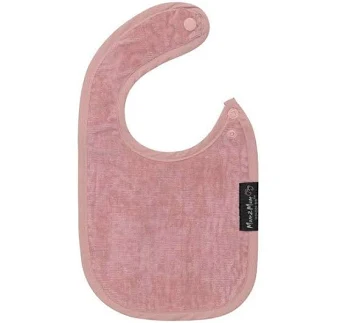
An Australian brand’s bandana-style dribble bib in soft muslin cotton, sold in sets, and the one most parents reach for in the dribble-and-teething months before solids properly begin. The triple-layer construction (cotton front, absorbent middle layer, cotton back) means it actually holds moisture rather than just smearing it around.
Approx. RRP $20 to $30 for a multi-pack, which works out cheaper per bib than most single silicone options and means you always have a clean one in rotation.
- Soft against sensitive newborn necks, unlike stiffer silicone
- Adjustable popper sizing across three settings
- Minimal coverage once solids start; not built for BLW mess
- Needs a full wash rather than a wipe-down

Snuggle Hunny Kids Dribble Bib
3. Bibetta UltraBib
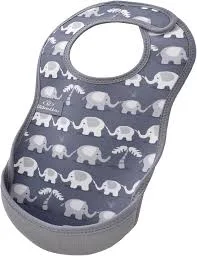
A UK-designed silicone bib that’s become something of a cult favourite among Australian BLW parents for one reason: the pocket is genuinely deep and semi-rigid, so it holds food rather than just funnelling it back onto the tray. The soft-touch neck strap is a step up from the harder plastic collars on cheaper alternatives.
Approx. RRP $20 to $28, which sits at the premium end for a single bib, but the pocket capacity and the soft neckline are the two details that separate a genuinely good silicone bib from a mediocre one.
- Deep, semi-rigid pocket catches significantly more than flat silicone bibs
- Soft, comfortable neck strap; no scratching
- Rolls up small for the nappy bag once wiped clean
- Pricier per unit than basic silicone bibs; best value if you only need one or two
Bibetta UltraBib
4. Bumkins Silicone Bib
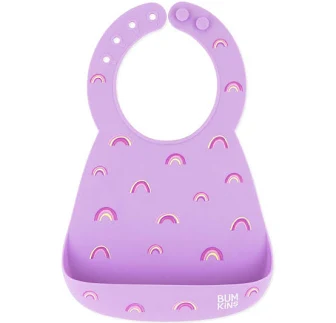
A widely stocked, no-fuss silicone bib that does the job without the premium price tag of the Bibetta. It’s a single moulded piece with an adjustable snap neckline, and the shallower pocket is fine for purees and soft finger foods, just less effective once a baby moves on to messier chunkier meals.
Approx. RRP $15 to $20, making it a sensible starting point for parents who aren’t sure yet how messy their particular baby is going to be.
- Single moulded design, no fabric to stain or mildew
- Three-point adjustable neckline
- Pocket is shallower than the UltraBib’s, so more food escapes onto the tray
- Wipes clean in seconds, dishwasher-safe on the top rack
Bumkins Silicone Bib
5. Bubba Blue Terry Bibs
An Australian brand’s classic cotton terry bib, sold in multi-packs, and the cheapest genuinely useful option for milk feeds, early purees and travel. It won’t survive a full BLW meal unscathed, but for burping, dribble and the gentler end of solids it’s soft, absorbent and easy to throw in with the regular wash.
Approx. RRP $15 to $25 for a pack of several, depending on pack size.
- Soft cotton terry, gentle on newborn skin
- Cheap enough to buy in bulk for the nappy bag and grandparents’ houses
- Stains from beetroot, pumpkin and turmeric-heavy purees can set permanently
- Minimal coverage compared with silicone or the Wonder Bib
Bubba Blue Terry Bibs
6. Baby Studio Bandana Bibs
Another Australian-designed bandana option, typically sold in packs of three or four in coordinated prints, aimed squarely at the dribble and teething stage rather than solids. The fleece-backed versions are noticeably better at stopping moisture soaking through to clothing than plain cotton competitors.
Approx. RRP $20 to $30 for a pack.
- Fleece backing reduces soak-through better than cotton-only bandana bibs
- Coordinated print sets are handy for outfit-matching if that matters to you
- Same limitation as all bandana bibs: not built for food mess
- Machine washable, though prints can fade after repeated hot washes
Baby Studio Bandana Bibs
How the bibs compare
| Product | Brand | Approx RRP | Key features | Best for |
|---|---|---|---|---|
| Wonder Bib #1 | Mum 2 Mum | $15 to $22 | Waterproof, long sleeve, full torso coverage | Messy BLW meals, 6 months to 2 years |
| Dribble Bib Budget | Snuggle Hunny Kids | $20 to $30 (pack) | Triple-layer muslin cotton, adjustable poppers | Dribble and teething, 3 to 9 months |
| UltraBib Premium | Bibetta | $20 to $28 | Deep semi-rigid catch pocket, soft neck strap | Serious baby-led weaning mess |
| Silicone Bib | Bumkins | $15 to $20 | Single moulded piece, adjustable snap neckline | Everyday purees and soft finger foods |
| Terry Bibs | Bubba Blue | $15 to $25 (pack) | Cotton terry, machine washable, multi-pack | Milk feeds, travel, gentle solids |
| Bandana Bibs | Baby Studio | $20 to $30 (pack) | Fleece-backed, coordinated prints, adjustable | Dribble and teething with better soak resistance |
Want to see how these stack up? We’ve reviewed 6 bibs & bowls in total.
mum. Approved: our top 3 for 2026
Full-arm waterproof coverage handles the messiest stage of solids better than anything else on this list.
A soft, absorbent multi-pack that covers the dribble and teething months for less per bib.
The deepest, most effective catch pocket on this list for serious baby-led weaning mess.
Frequently asked questions
Do I need bandana bibs and silicone bibs, or just one type?
Most Australian parents end up with both, used at different stages. Bandana bibs suit the dribble and teething months before solids properly start, while silicone bibs earn their keep once baby-led weaning or purees begin. Buying only one type usually means replacing it within a few months anyway.
Are silicone bibs safe for babies to chew on?
Reputable silicone bibs sold in Australia use food-grade silicone free from BPA, PVC and phthalates, and the rolled edges are designed to be gentle if a baby mouths them. Always check the manufacturer’s care label and avoid bibs with small decorative attachments that could work loose.
How many bibs do I actually need?
For the dribble stage, three to four bandana bibs in rotation is generally enough between washes. Once solids start, two to three silicone bibs is usually sufficient since they wipe clean between meals rather than needing a full wash each time.
What’s the best bib for baby-led weaning specifically?
A silicone bib with a deep, semi-rigid catch pocket, such as the Bibetta UltraBib, generally performs best for BLW because it’s designed to intercept dropped food rather than simply absorb spills the way fabric bibs do.
Can I put silicone bibs in the dishwasher?
Many silicone bibs are dishwasher-safe on the top rack, but always check the specific product’s care instructions first, since some manufacturers recommend hand-washing to preserve the pocket’s shape over time.
If we had to choose one bib to see you through the messiest year of eating, the Mum 2 Mum Wonder Bib is our 2026 pick for its full-arm waterproof coverage. Pair it with a pack of Snuggle Hunny Kids Dribble Bibs for the earlier dribble months, and if you want the best possible mess containment once baby-led weaning ramps up, the Bibetta UltraBib won’t let you down.
Where to buy these picks
✓ Verified prices are checked live at the retailer. Otherwise we show the approximate RRP (an indicative recommended price, not a live retailer price), or “price pending” where we don’t have one.
Snuggle Hunny Kids Dribble Bib
★ Best for teething dribble
Mum 2 Mum Wonder Bib
★ Best for messy weaning
Bibetta UltraBib
★ Best for catching mess
Bumkins Silicone Bib
Best easy clean
Bubba Blue Terry Bibs
Best value multi-pack
Baby Studio Bandana Bibs
Best stylish bandana bib
The shortlist, in your inbox
New winners, price drops and recalls worth knowing.