
Best Baby & Kids Sunscreen Australia 2026: TGA-Approved Picks Worth Trusting
If you are standing in the skincare aisle with a squirming toddler on your hip, reading the back of five near-identical white tubes, you are not alone. Choosing a sunscreen for a baby or young child feels like it should be simple, and then you hit the wall of SPF numbers, “broad spectrum” claims, mineral versus chemical filters, and the very Australian worry that the one you pick will either sting little eyes or quietly do nothing at all.
Here is the reassuring part: in Australia, sunscreen is regulated as a therapeutic good by the TGA, which means any product legally sold here as a sunscreen has to meet the Australian Standard for sun protection (AS/NZS 2604) covering SPF rating and broad-spectrum performance. That takes a lot of the guesswork out of it. What is left is choosing the formula that your child’s skin tolerates, that you will actually reapply, and that suits your family’s day.
We have done the aisle-reading for you. Below are the baby and kids sunscreens worth your shortlist in 2026, grounded in what is actually in the tube, who each one suits, and the honest trade-offs so you can pick one and get back out the door.
What to look for in a baby and kids sunscreen
The good news is that the hard safety work is regulated for you. What you are really choosing between is texture, filter type and sensitivity. Here is what actually matters when you are comparing tubes.
- SPF 50 or SPF 50+, broad spectrum: for Australian conditions, aim high. SPF 50+ blocks around 98 percent of UVB, and broad spectrum means it also covers UVA, which contributes to long-term skin damage. This is exactly what a cancer council kids sunscreen SPF 50+ is formulated to deliver.
- TGA-listed and meets AS/NZS 2604: the Australian Standard that governs SPF labelling and broad-spectrum claims. If it is sold as a sunscreen in Australia, it is held to this. It is your baseline, not a bonus feature.
- Mineral versus chemical filters: mineral (zinc oxide, titanium dioxide) sits on top of the skin and reflects UV, and tends to suit reactive baby skin. Chemical filters absorb UV and rub in clearer with less white cast. Neither is unsafe, but many parents prefer mineral for very young or eczema-prone skin.
- Fragrance-free and low-irritant: added fragrance is a common trigger for little faces. For babies and sensitive skin, look for fragrance-free and ideally a shorter ingredient list.
- Water resistance and wear time: most kids formulas offer up to 4 hours water resistance, but no sunscreen is truly waterproof. You still reapply every two hours and after swimming or towelling off.
- Applicator format: a roll-on or stick is gold for wriggly toddlers and faces, a pump or tube is faster for arms, legs and backs. Many families keep two formats going.
- The age note: sunscreen is generally recommended from 6 months. For babies under 6 months, shade, clothing and hats do the heavy lifting, with sunscreen used sparingly only on small exposed areas if shade is not possible.
Our top baby and kids sunscreen picks for 2026
Each of these is a real, currently sold Australian product you can search by name. We have flagged the honest trade-off with every one, because the “best” sunscreen is the one your child tolerates and you will actually reapply.
1. Cancer Council Kids Clear Zinc SPF 50+
This is our overall pick because it threads the needle most families are chasing: a zinc-based mineral sunscreen that suits reactive young skin, but with a modern “clear zinc” formula that does not leave the thick chalky white cast older mineral sunscreens were famous for. It is SPF 50+, broad spectrum and fragrance-free, and comes from an organisation whose entire reason to exist is skin cancer prevention.
It suits babies from 6 months, toddlers and school-age kids, and is a sensible choice for faces and eczema-prone skin. The trade-off is the one every zinc formula shares: it is a touch thicker to rub in than a chemical sunscreen, so give yourself an extra few seconds per limb. As an approximate RRP, expect somewhere around $10 to $16 for a standard tube.
- Mineral zinc formula, generally kinder to sensitive and reactive baby skin
- SPF 50+ broad spectrum, meeting the Australian Standard AS/NZS 2604
- Fragrance-free, a real plus for little faces
- Reduced white cast compared with traditional zinc
- Trade-off: slightly thicker to apply than a clear chemical sunscreen
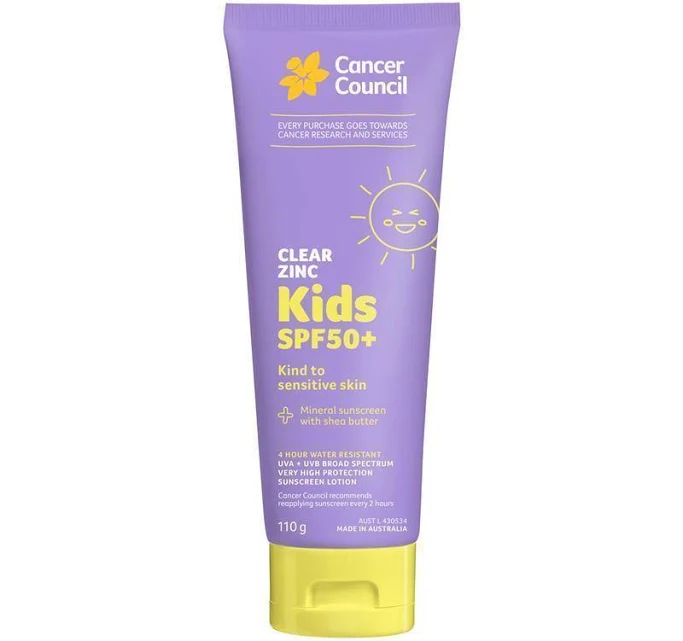
Cancer Council Kids Clear Zinc SPF 50+
2. Cancer Council Kids Sunscreen SPF 50+
This is the everyday workhorse and our best-value pick. It is a standard cancer council kids sunscreen SPF 50 (labelled 50+), broad spectrum, up to 4 hours water resistant, and priced so you never feel guilty applying it generously, which is the single biggest mistake parents make. Under-application is what quietly turns an SPF 50 into an SPF 20 in practice.
It rubs in more easily than the clear zinc version, making it the faster option for arms, legs and backs on a busy morning. The trade-off is that it uses chemical filters rather than pure mineral, so if your child has particularly reactive skin you may prefer the zinc formula for their face. Approximate RRP sits around $8 to $14 depending on tube size, and larger family pump packs bring the cost per use down further.
- Excellent value, which encourages the generous application sunscreen actually needs
- SPF 50+ broad spectrum, up to 4 hours water resistant
- Rubs in quickly, ideal for covering lots of little limbs fast
- Available in tube and larger pump formats for families
- Trade-off: chemical filters may not suit the most reactive faces
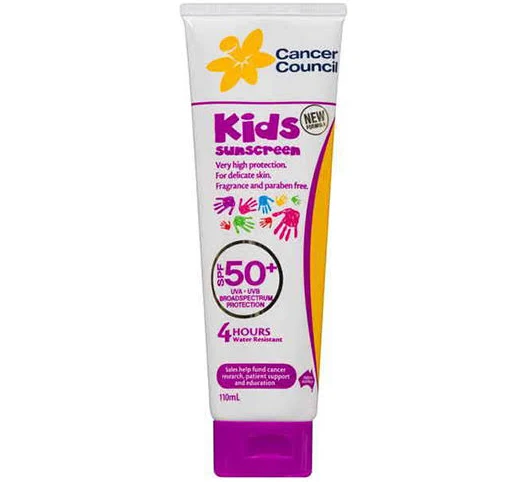
Cancer Council Kids Sunscreen SPF 50+
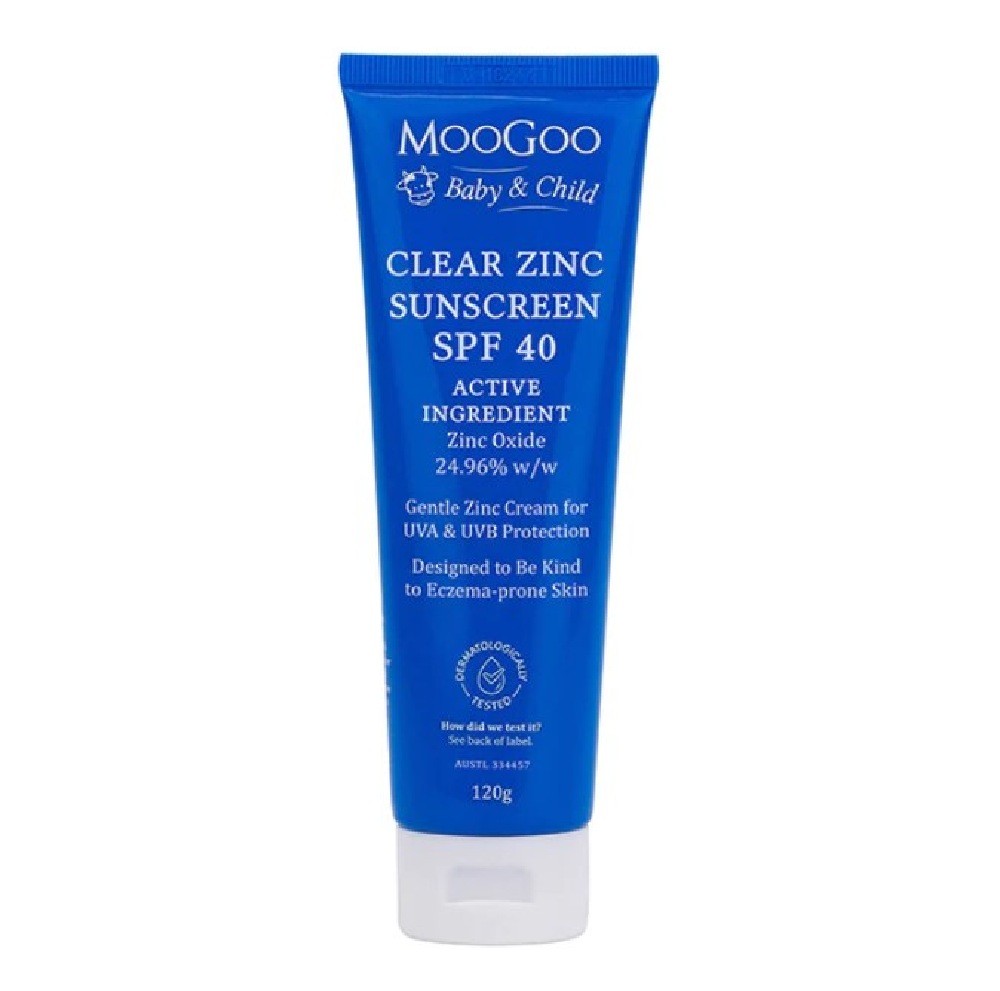
3. MooGoo Natural Sunscreen SPF 40
MooGoo is the pick for parents drawn to a shorter, simpler ingredient list and a moisturising, skin-friendly base. The moogoo baby sunscreen and moogoo kids sunscreen options are built around a mineral zinc filter with nourishing ingredients, which many parents of eczema-prone or very dry skin reach for specifically. It is fragrance conscious and made in Australia.
The honest catch is the number: this is SPF 40, not SPF 50+. SPF 40 is still strong broad-spectrum protection and perfectly legitimate, but if you want the highest rating on the shelf, it is not this one. It also carries a premium price for its size, reflecting the ingredient philosophy, with an approximate RRP around $20 to $30. Think of it as the gentle, considered choice rather than the cheapest.
- Simple, skin-friendly mineral formula popular with eczema-prone families
- Moisturising base that many parents find kinder on dry little cheeks
- Australian made, which matters to a lot of families
- Trade-off: SPF 40, a step below the SPF 50+ on other picks
- Trade-off: higher price per millilitre than mainstream tubes
MooGoo Natural Sunscreen SPF 40
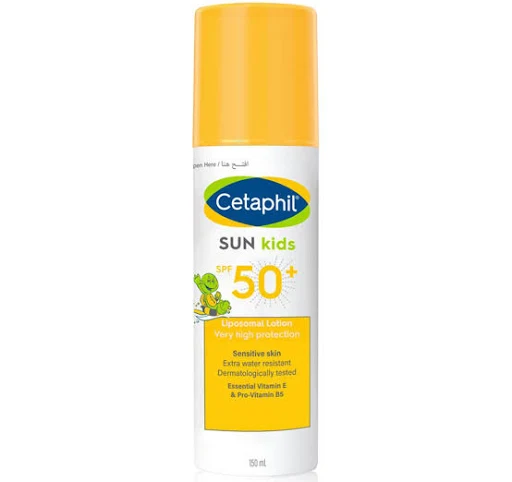
4. Cetaphil Sun Kids SPF 50+ Liposomal Lotion
If your child has genuinely sensitive or dermatitis-prone skin, the cetaphil kids sunscreen is a strong shortlist candidate from a brand paediatricians frequently mention for delicate skin. It is SPF 50+, broad spectrum and formulated to be low-irritant, aimed squarely at kids whose skin flares easily with mainstream products.
It offers the highest protection rating alongside a sensitive-skin focus, which is a genuinely useful combination. The trade-off is availability and price: it is a specialist line rather than a bargain-bin staple, with an approximate RRP around $18 to $26. If your standard sunscreen has caused stinging or redness before, this is worth the extra outlay.
- SPF 50+ broad spectrum with a clear sensitive-skin focus
- Low-irritant formulation aimed at reactive and dermatitis-prone skin
- Trusted skincare brand for delicate skin
- Trade-off: pricier and less widely stocked than everyday tubes
Cetaphil Sun Kids SPF 50+ Liposomal Lotion
5. Cancer Council Kids Roll On SPF 50+
Every parent of a wriggler needs one of these. The roll-on format is the practical hero for faces, ears and the tops of little feet, and it lets an older child help apply their own, which builds the sun-safe habit. It is SPF 50+ and broad spectrum, same protection standard as the tube.
The trade-off is coverage speed: a roll-on is fiddly for covering a whole back or two arms, so most families use it as a companion to a pump or tube rather than a sole product. Approximate RRP sits around $8 to $13. Keep one in the nappy bag and one in the car.
- Mess-free, no-hands format ideal for faces and toddlers
- Encourages independence for kindy and school-age kids
- SPF 50+ broad spectrum, same protection as the tube versions
- Trade-off: slow for covering large areas, best used alongside a tube
Cancer Council Kids Roll On SPF 50+
Baby and kids sunscreen compared at a glance
| Product | Brand | Approx RRP | Key features | Best for |
|---|---|---|---|---|
| Kids Clear Zinc SPF 50+ #1 | Cancer Council | approx. $10 to $16 | Mineral zinc, SPF 50+, fragrance-free, low white cast | Sensitive skin and faces |
| Kids Sunscreen SPF 50+ Budget | Cancer Council | approx. $8 to $14 | SPF 50+, 4hr water resistant, rubs in fast | Everyday all-over use |
| Natural Sunscreen SPF 40 Premium | MooGoo | approx. $20 to $30 | Mineral, moisturising, Australian made | Eczema-prone, dry skin |
| Sun Kids SPF 50+ Liposomal | Cetaphil | approx. $18 to $26 | SPF 50+, low-irritant, sensitive-skin focus | Very reactive skin |
| Kids Roll On SPF 50+ | Cancer Council | approx. $8 to $13 | Roll-on, SPF 50+, mess-free | Faces and wriggly toddlers |
Mineral versus chemical: which is right for your child
This is the question that stalls the most parents in the aisle, so let us make it simple. Both types are regulated to the same standard and both protect well when applied properly. The choice comes down to skin type and preference, not one being “safe” and the other not.
When mineral (zinc) makes sense
- Your baby is under 12 months or has very sensitive skin
- Your child is eczema-prone or reacts to mainstream products
- You want protection that works from the moment it is applied
- You are covering the face and want something gentle around eyes
When chemical filters make sense
- You want a lighter feel with no white cast
- You are covering lots of skin fast on active older kids
- Your child has no history of skin reactions
Plenty of families keep both: a mineral clear zinc for faces and reactive spots, and a quick-rubbing chemical formula for arms and legs. That is not overkill, it is practical.
How to actually apply baby sunscreen (the bit that matters most)
The single biggest reason a sunscreen underperforms is not the brand, it is how it is used. A brilliant SPF 50+ applied thinly behaves like a weak one. Getting the technique right is worth more than upgrading the tube.
- Apply 20 minutes before going out: sunscreen needs time to bind to the skin, so do it before you leave, not at the beach gate.
- Use more than feels necessary: most people apply half what they should. Be generous, especially on ears, the back of the neck, feet and shoulders.
- Reapply every two hours: and always after swimming, sweating or towelling off, even on water-resistant formulas.
- Do not rely on sunscreen alone: pair it with a hat, a rashie and shade during peak UV. Sunscreen is one layer of protection, not the whole plan.
- Patch test a new product: for babies and reactive skin, dab a little on the inner arm a day before full use.
What to skip and common mistakes
A few honest words on where parents waste money or trust the wrong thing.
- Do not buy last summer’s half-used tube back out: check the expiry and the period-after-opening symbol. Heat-degraded sunscreen from a hot car glovebox loses effectiveness.
- Do not treat SPF 30 as “basically the same” as 50+: for Australian sun and young skin, start high.
- Do not fall for “all-day” claims: no sunscreen lasts all day. Reapplication is non-negotiable.
- Do not assume adult sunscreen is wrong for kids: a fragrance-free adult SPF 50+ is fine for older children, but dedicated kids formulas are usually more sensitivity-conscious and come in kid-friendly formats.
Frequently asked questions
At what age can I start using sunscreen on my baby?
Sunscreen is generally recommended from around 6 months. For younger babies, shade, protective clothing and a hat are the primary defence, with a small amount of sunscreen used only on exposed areas like the face and hands if shade genuinely is not available. If your baby is under 6 months and you are unsure, your maternal and child health nurse or GP can advise for your situation.
Is SPF 50+ actually better than SPF 30 for kids?
SPF 50+ blocks around 98 percent of UVB, compared with about 96.7 percent for SPF 30. The difference sounds small, but for Australian UV levels and delicate young skin, starting at the highest rating gives you more margin when application is inevitably a little uneven. A cancer council kids sunscreen SPF 50+ is a sensible default.
What is the best baby sunscreen in Australia for sensitive skin?
For reactive or eczema-prone skin, a fragrance-free mineral zinc formula is usually the gentlest starting point. The Cancer Council Kids Clear Zinc SPF 50+ and Cetaphil Sun Kids SPF 50+ are both worth a shortlist, and MooGoo’s mineral option suits families wanting a simpler ingredient list. Always patch test a new product first.
How often do I really need to reapply?
Every two hours, and always after swimming, heavy sweating or towelling off, regardless of the water-resistance claim on the tube. Water resistance buys you time in the water, not permission to skip reapplication.
Is mineral sunscreen safer than chemical for babies?
Both types sold in Australia are regulated to the same Australian Standard and are considered safe when used as directed. Many parents simply prefer mineral (zinc) for very young or reactive skin because it sits on the surface and tends to cause fewer reactions, not because chemical filters are unsafe.
mum. Approved: our top 3 for 2026
Gentle mineral protection at the highest SPF, fragrance-free, with far less white cast than old-school zinc.
Priced so you apply it generously, which is exactly what real protection needs.
A simple, moisturising mineral formula loved by families with dry, eczema-prone skin.
If we had to choose one, the Cancer Council Kids Clear Zinc SPF 50+ is our 2026 pick: it pairs sensitive-skin-friendly mineral protection with the highest SPF rating and a texture kids will actually tolerate on their faces. On a tighter budget, the Cancer Council Kids Sunscreen SPF 50+ won’t let you down, and its low price is a feature, not a compromise, because it means you will use enough. For very reactive or eczema-prone skin, the MooGoo Natural Sunscreen SPF 40 is the gentle, considered upgrade.
Where to buy these picks
✓ Verified prices are checked live at the retailer. Otherwise we show the approximate RRP (an indicative recommended price, not a live retailer price), or “price pending” where we don’t have one.
Cancer Council Kids Clear Zinc SPF 50+
★ Best for sensitive skin
MooGoo Natural Sunscreen SPF 40
Best for eczema-prone skin
Cancer Council Kids Sunscreen SPF 50+
Best for everyday all-over use
Cancer Council Kids Roll On SPF 50+
Best for wriggly toddlers
Cetaphil Sun Kids SPF 50+ Liposomal Lotion
Best for very reactive skin
The shortlist, in your inbox
New winners, price drops and recalls worth knowing.