
Best Toys for Kids Australia 2026: Age-by-Age Guide to Toys That Last
Every parent has stood in the toy aisle at 8pm before a birthday, staring at a wall of boxes promising to make their kid smarter, calmer, or just quiet for twenty minutes. The truth is most of what’s on that wall gets forgotten within a fortnight. What actually earns its shelf space is the toy that grows with a developmental leap, that a child comes back to on their own, and that doesn’t need a screen to hold their attention.
This guide is built around that reality. We’ve grouped picks by the ages Australian parents actually shop for (birthday and Christmas lists, not marketing categories), leaned on the safety standards that genuinely apply, and been honest about which toys are worth the spend and which are fine to skip. We’ve also given extra attention to talking toys for kids 5-7, because that’s the age where kids want a toy that responds to them, not just lights up.
Nothing here is a guess. Every product named is real and currently sold in Australia, and where a price is mentioned it’s an approximate RRP range, not a live figure, because prices move and our comparison pages further down the site track that in real time.

What to look for before you buy
Not every toy needs to be educational, and not every expensive toy is worth it. But a few checks will save you money and, more importantly, save the toy from ending up untouched by week two.
- Age grading on the box: it’s not a suggestion. Toys sold in Australia should meet the relevant clauses of AS/NZS ISO 8124 (the toy safety standard), and small-parts warnings matter most in a house with older and younger siblings mixing toy boxes.
- Open-ended over single-use: a toy that can be played with a hundred different ways (building bricks, blocks, dress-ups) tends to outlast a toy that does one thing, however flashy that one thing is.
- Battery life and noise: check whether it’s rechargeable or eats AAs, and whether there’s a volume control. You will thank yourself at 6am.
- Screen-free interaction: for talking toys and interactive toys, look for ones that respond to voice or touch without needing a tablet or wifi connection running in the background.
- Availability of spares: bricks, figures, replacement parts and companion characters (especially for systems like LEGO or Tonies) should still be sold new, not discontinued, so the toy has room to grow with your child.
Babies and toddlers: birth to 2
At this age it’s less about “educational” and more about cause and effect: does pressing this make something happen? Toys that reward simple actions with sound, light or movement hold attention far longer than anything with a screen.
1. Fisher-Price Linkimals Musical Moose
This is a genuinely well-designed cause-and-effect toy for babies around 9 to 36 months. Squeeze the moose’s foot and it lights up and plays music, and if you own other Linkimals characters they sync up and “talk” to each other, which is a small detail that keeps toddlers experimenting.
It’s not a toy that will last for years, but for the crawling-to-early-walking stage it earns its approx. $30 to $40 RRP through repeat play rather than novelty.
- Batteries included, volume is fixed but not harsh
- Designed for one-handed grip and gross motor practice
- Limited lifespan once a toddler moves past cause-and-effect play
- Best bought new rather than secondhand, given hygiene and battery compartment wear
Fisher-Price Linkimals Musical Moose
2. Melissa & Doug Wooden Shape Sorting Cube
A genuine classic, and one of the few toys in this guide with no batteries, no screen and no app. Twelve chunky wooden shapes drop through matching holes in a solid cube, which is exactly the kind of repetitive, hands-on problem solving toddlers need around 18 months to 3 years.
It’s also one of the most durable toys you can buy: solid wood construction means it survives being thrown, sat on and gnawed. At an approx. $30 to $40 RRP it’s an easy gift that doesn’t feel like a compromise.
- No batteries, no noise, genuinely screen-free play
- Shapes are large enough to clear typical choking-hazard concerns for the stated age, but always check the pack’s age grading against AS/NZS ISO 8124
- Not flashy: some toddlers need a sibling or parent to demonstrate the first few times
- Doubles as a storage box once the sorting phase passes
Melissa & Doug Wooden Shape Sorting Cube
Preschoolers: 3 to 4
This is the age of imaginative, narrative play, building a story rather than just stacking. Open-ended building sets earn their keep here because a three-year-old and a five-year-old can both use the same box of bricks completely differently.
3. LEGO DUPLO My First Number Train
Designed for ages 18 months and up but genuinely gets more use once a child is 2 to 4 and starting to recognise numbers. The oversized bricks are sized and shaped to meet DUPLO’s own safety threshold for younger hands, well above standard LEGO brick size, and the numbered carriages turn counting into a physical, hands-on activity rather than a worksheet.
- Compatible with other DUPLO sets, so the collection grows over birthdays
- Bright colours and simple connections suit early fine motor skills
- Approx. $40 to $50 RRP, on the higher end for a toddler set but built to be handed down
- Pieces are large, but always supervise play if a younger sibling under 18 months is in the house
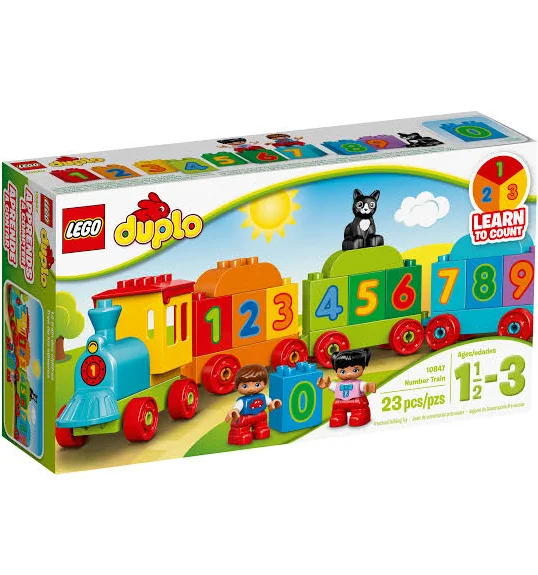
LEGO DUPLO My First Number Train
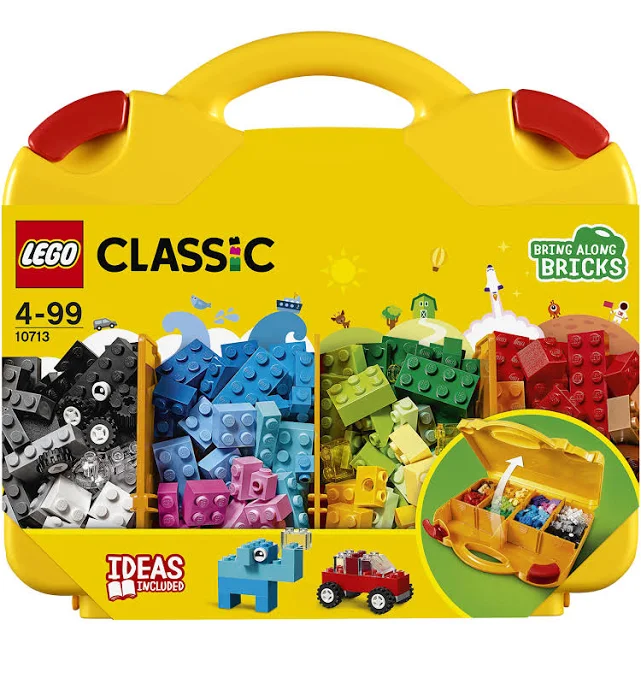
4. LEGO Classic Creative Suitcase
If we had to recommend one toy in this entire guide to a parent who only wants to buy once, this is it. The Creative Suitcase packs 213 standard LEGO pieces in a wide range of colours and shapes into a carry case with a handle, and there’s no set instructions forcing one outcome. A four-year-old builds a wobbly house; the same box, two years later, builds something completely different.
The trade-off is standard LEGO brick size, which means it’s genuinely not appropriate for toddlers under 3 who still mouth toys, and the small pieces do need adult supervision and a “pack it away” routine to avoid the 2am foot injury every LEGO household knows about.
- Open-ended play that scales up as a child’s building skill improves
- Carry case doubles as tidy storage, unusual for a LEGO set
- Approx. $40 to $60 RRP, genuinely reasonable for the piece count
- Not suitable where a toddler under 3 shares the play space unsupervised
LEGO Classic Creative Suitcase
Big kids 5 to 7: talking toys and toys that keep up with big personalities
This is the age bracket where parents most often go looking for talking toys for kids 5-7, and it makes sense: kids this age want a toy that reacts to them specifically, not one that just plays a pre-set sound. The good news is some of the best options in this category are also screen-free, which matters if you’re trying to hold the line on tablet time.
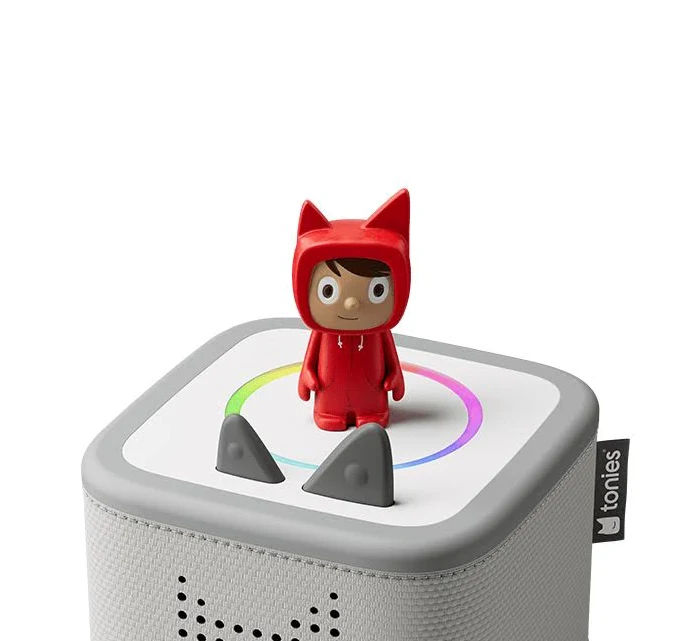
5. Tonies Toniebox Starter Set
The Toniebox is a padded, kid-proof speaker cube that plays audio, stories, music, podcasts, when you place a small figurine (a “Tonie”) on top. There’s no screen at any point, volume is capped, and a 5 to 7 year old can operate the whole thing independently, which is exactly the appeal for a parent trying to hand over some control without handing over a tablet.
It sits at the premium end of this guide because the box itself, at an approx. $100 to $130 RRP, is only the start; individual Tonie figures (stories, music collections, Australian content included) are bought separately at around $17 to $20 each. Families who commit to a few figures tend to get years of use, but the ongoing cost is worth knowing upfront.
- Genuinely screen-free, and volume-limited for little ears
- Rechargeable and drop-resistant, designed to survive being carried everywhere
- Figures are sold individually, so the full library costs more than the box suggests
- Requires wifi for initial setup and adding new content, though playback itself doesn’t need it
Tonies Toniebox Starter Set
6. Hasbro Furby
If you want an actual talking toy rather than a storytelling speaker, this is the one. The current Furby responds to touch, motion, voice and light, has hundreds of phrases and reactions, and genuinely feels different session to session because its “mood” shifts with how it’s treated. It’s aimed at 6 years and up, and that age grading is worth respecting: younger kids can find the sudden noises and reactions startling rather than delightful.
At an approx. $90 to $110 RRP it needs four AA batteries and isn’t the quietest toy in the house, so a volume-managing parent should know what they’re signing up for.
- Reacts uniquely to how it’s handled, which keeps repeat play interesting
- Genuinely interactive without needing an app or screen to function
- Runs on batteries, not rechargeable, and can be loud
- Better suited to 6 to 7 year olds than the younger end of this age band
Hasbro Furby
7. LeapFrog LeapStart 3D
A different take on “talking toy”: this is an interactive pen-and-book system rather than a character. The pen reads aloud, asks questions and responds to a child tapping specific points on the page, working through phonics, maths and problem-solving books pitched at 4 to 7 year olds. There’s no screen at all, and no wifi requirement once you own the books.
The catch is the same as any book-based system: the value depends on buying enough books to keep it interesting, and the core unit alone, at an approx. $70 to $90 RRP, is only the starting point.
- Screen-free, and closely tied to school-stage phonics and maths
- Pen is chunky and easy for small hands to hold correctly
- Book library is an ongoing cost beyond the base unit
- Less open-ended than building toys; it does what the book tells it to do
LeapFrog LeapStart 3D
How the picks compare
| Product | Brand | Approx RRP | Key features | Best for |
|---|---|---|---|---|
| Creative Suitcase #1 | LEGO | $40 to $60 | 213 pieces, open-ended, carry case storage | Ages 4 to 10, everyday building play |
| Wooden Shape Sorting Cube Budget | Melissa & Doug | $30 to $40 | Solid wood, no batteries, 12 shapes | Ages 18 months to 3 years |
| Toniebox Starter Set Premium | Tonies | $100 to $130 | Screen-free audio player, volume-capped | Ages 3 to 8, independent story time |
| Linkimals Musical Moose | Fisher-Price | $30 to $40 | Lights, music, syncs with other Linkimals | Ages 9 to 36 months |
| My First Number Train | LEGO DUPLO | $40 to $50 | Oversized bricks, number recognition | Ages 18 months to 4 years |
| Furby | Hasbro | $90 to $110 | Voice and touch reactive, hundreds of phrases | Ages 6 to 7, talking toy fans |
| LeapStart 3D | LeapFrog | $70 to $90 | Interactive talking pen, phonics and maths books | Ages 4 to 7, school-readiness play |
Not sure yet? Put all 44 kids toys we rate next to each other.
mum. Approved: our top 3 for 2026
Open-ended, portable and genuinely used across several birthdays’ worth of ages.
No batteries, no fuss, and built to survive years of toddler handling.
The rare premium buy that actually delivers screen-free independence.
Frequently asked questions
What age is a talking toy actually appropriate for?
Most genuinely interactive talking toys, like Furby, are graded from 6 years, partly because younger kids can find sudden voice reactions and noises overwhelming rather than fun. For 3 to 5 year olds, a screen-free audio player like the Toniebox tends to suit better, since the child controls the pace rather than the toy reacting unpredictably.
Are screen-free toys actually better than tablets for learning at this age?
There’s no single answer that fits every child, but parents and early childhood guidance consistently favour hands-on, screen-free play for building attention span and fine motor skills at preschool and early primary age. Talking toys and interactive pen systems like LeapFrog’s LeapStart give some of the responsiveness of a tablet without the screen itself.
What Australian safety standard should I check on toy packaging?
Look for reference to AS/NZS ISO 8124, the toy safety standard covering things like small parts, sharp edges and flammability for toys sold in Australia. Age grading on the box is tied to this standard, so it’s worth taking seriously rather than treating as a rough guide.
How many toys does a five to seven year old actually need?
Fewer than most gift lists suggest. Open-ended toys that can be used many different ways (building bricks, a wooden kitchen, a good talking toy) tend to get more genuine play time than a large collection of single-purpose toys, and they’re easier to store and hand down.
Do talking toys for kids 5 to 7 need wifi to work?
Not always. Furby works entirely offline once its batteries are in. The Toniebox needs wifi briefly for setup and adding new content, but day-to-day playback doesn’t require a connection. LeapFrog’s LeapStart system is fully offline once you own the books and pen.
If we had to choose one toy to buy across every age in this guide, the LEGO Classic Creative Suitcase is our 2026 pick for how far it stretches a child’s imagination and a parent’s budget. On a tighter budget, the Melissa & Doug Wooden Shape Sorting Cube won’t let you down, and for a family chasing genuine talking-toy independence without a screen, the Tonies Toniebox Starter Set earns its higher price tag.
Where to buy these picks
✓ Verified prices are checked live at the retailer. Otherwise we show the approximate RRP (an indicative recommended price, not a live retailer price), or “price pending” where we don’t have one.
LEGO Classic Creative Suitcase
★ Best portable building set
LEGO DUPLO My First Number Train
Best for early numbers
Fisher-Price Linkimals Musical Moose
Best for older babies
LeapFrog LeapStart 3D
Best for school readiness
Hasbro Furby
Best talking interactive toy
Tonies Toniebox Starter Set
Best screen-free story player
Show all 7 picksShow fewer
Melissa & Doug Wooden Shape Sorting Cube
Best for toddlers
The shortlist, in your inbox
New winners, price drops and recalls worth knowing.