
When Do Babies Start Crawling? 2026 Australian Guide + Best Baby Proofing Products
If you’ve found yourself watching your little one rock back and forth on their hands and knees, you’re probably wondering the same thing thousands of Aussie mums type into Google every single day: when do babies start crawling? It’s one of those milestones that feels equal parts exciting and terrifying, because the moment your bub gets mobile, your whole house becomes their personal obstacle course.
The good news is that crawling is a wonderfully normal part of your baby’s development, and there’s no single “right” way or “right” time to do it. Some babies bum-shuffle, some commando crawl across the lounge room floor like tiny soldiers, and others skip crawling altogether and go straight to pulling themselves up on the coffee table. As long as your baby is moving towards independent movement in their own way, there’s usually nothing to worry about.
In this 2026 guide, we’ll walk you through exactly when babies crawl, the different styles of crawling you might see, how to encourage your bub safely, and, crucially, how to baby proof your Aussie home before your newly mobile explorer gets into mischief. We’ve also rounded up our mum.com.au Approved baby proofing picks so you can shop with confidence. Grab a cuppa and let’s get into it.
Price checked 28 Jun 2026
Price checked 28 Jun 2026
Price checked 12 Jul 2026
When Do Babies Start Crawling? The Typical Timeline
Let’s answer the big question first. Most babies start crawling somewhere between 6 and 10 months of age, with many landing right around the 8 to 9 month mark. That said, it’s a broad window, and plenty of perfectly healthy babies don’t get going until closer to their first birthday.
Crawling typically follows a few other developmental building blocks. Before your baby can crawl, they usually need to be able to:
- Hold their head up steadily during tummy time
- Roll over in both directions
- Sit up without support (often around 6 to 8 months)
- Push up onto their hands and knees and rock back and forth
That rocking motion is often the big giveaway that crawling is just around the corner. Your baby is building the upper body and core strength they need to coordinate their arms and legs. From there, it can take anywhere from a few days to a few weeks before they figure out how to actually propel themselves forward (and sometimes, hilariously, backwards first).
So if you’re asking when do babies crawl in those quieter night-feed moments, remember the answer is a range, not a deadline. Premature babies, for instance, may reach this milestone later when measured against their actual birth date, so it’s worth using their corrected age as a guide.
The Different Ways Babies Crawl (Yes, There’s More Than One)
Here’s something that surprises a lot of first-time mums: the classic hands-and-knees crawl is just one of many ways babies get around. If your bub has invented their own unique method, that’s completely normal. Here are the most common crawling styles you might spot:
- Classic crawl: The textbook version, moving forward on hands and knees, alternating opposite arm and leg.
- Commando (or tummy) crawl: Dragging themselves along the floor on their belly using their arms. Very common as a first step.
- Bum shuffle: Scooting along on their bottom, often using one hand to push. Bum shufflers sometimes crawl later or skip it entirely.
- Crab crawl: Moving sideways or even backwards before they figure out forward.
- Bear crawl: Crawling with straight arms and legs, bottom in the air, like a little bear.
- Roll and go: Some babies simply roll to where they want to be and skip crawling altogether.
None of these styles is “better” than another, and your baby’s chosen method doesn’t predict how clever or coordinated they’ll be later in life. What matters most is that your baby is finding a way to move, explore and reach the things they want to investigate.
How to Encourage Your Baby to Crawl
While you absolutely can’t force a milestone (and you shouldn’t try to rush it), there are some lovely, low-pressure ways to give your baby the strength and motivation they need. The number one tip? Tummy time, tummy time, tummy time.
Regular supervised tummy time from the newborn stage builds the neck, shoulder, arm and core strength that crawling relies on. Start with just a minute or two and build up as your baby tolerates it. If your bub hates tummy time (many do!), try lying down face-to-face with them, or pop them tummy-down across your lap.
Other gentle ways to encourage crawling include:
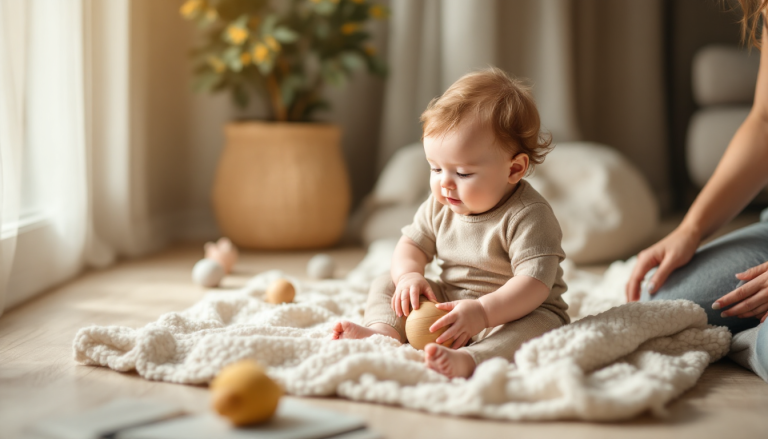
- Floor play: Give your baby plenty of supervised time on a clean, firm surface rather than being confined to bouncers or seats.
- Tempting toys: Place a favourite toy just out of reach to motivate them to move towards it.
- Get down on their level: Babies love to mimic, so crawl alongside them and make it a game.
- Mirror play: A baby-safe floor mirror can captivate your bub and encourage them to push up and reach.
- Barefoot time: Letting little feet grip the floor helps with traction and balance.
A quick word on baby walkers: the ACCC and Australian health authorities have long raised safety concerns about traditional baby walkers, which have been linked to falls and injuries. Most experts recommend avoiding them altogether and letting your baby develop at their own pace through floor play instead.
Why Baby Proofing Matters Before the Crawling Begins
Here’s the reality check every Aussie mum needs: the day your baby starts crawling is the day your home changes forever. Suddenly that power point, those cupboard cleaning products and the corner of the coffee table are all within reach of curious little hands and mouths.
The smartest approach is to baby proof before your baby is fully mobile, ideally when you first notice them rocking on their hands and knees, or even earlier. Trust us, it’s far less stressful to have everything sorted in advance than to scramble once your bub is already on the move.
A great way to plan is to get down on your hands and knees and crawl around each room yourself. It sounds silly, but seeing your home from your baby’s eye level reveals hazards you’d never notice standing up, dangling cords, gaps under furniture, small objects under the couch, and unsecured furniture that could topple.
The key danger zones to address in an Australian home include:
- Furniture tip-overs: Bookshelves, drawers and TV units must be anchored to the wall. Furniture toppling is a serious and well-documented risk for young children.
- Stairs: Both the top and bottom should be gated.
- Power points and cords: Cover unused outlets and secure or remove dangling blind and electrical cords (blind cords are a recognised strangulation hazard).
- Cupboards and drawers: Especially those holding cleaning products, medicines or sharp objects.
- Sharp corners: Coffee tables, hearths and bench edges.
- Pools and water: A non-negotiable in Australia, where pool fencing laws are strict and supervision is critical.
Essential Baby Proofing Products for Aussie Homes
Once you know your danger zones, it’s time to gear up. The good news is that baby proofing your home doesn’t have to cost a fortune, and a handful of well-chosen products will cover most of your bases. When shopping in Australia, always look for products that meet relevant Australian Standards and ACCC safety guidance, particularly for safety gates and anything load-bearing.
Here’s a rundown of the baby proofing essentials worth investing in:
| Product | Brand Type | Key Features | Best For |
|---|---|---|---|
| Safety gate (pressure-mounted) | Various trusted baby brands | No-drill install, auto-close, easy one-hand open | Doorways & bottom of stairs |
| Safety gate (screw-mounted) | Various trusted baby brands | Wall-fixed for maximum security, wider spans available | Top of stairs |
| Furniture anchor straps | Various | Secures bookshelves, drawers & TV units to wall | Preventing tip-overs |
| Corner & edge guards | Various | Soft foam or rubber, adhesive backing | Coffee tables & sharp edges |
| Cupboard & drawer locks | Various | Magnetic or adhesive, hidden install | Kitchen & bathroom storage |
| Power point covers | Various | Snug fit for AU sockets, hard to remove by little fingers | Unused outlets |
| Padded play mat | Various | Cushioned, wipeable, non-toxic foam | Safe crawling zone |
| Blind cord winder/cleats | Various | Keeps cords out of reach, reduces strangulation risk | Windows with blinds |
A few shopping tips for 2026: pressure-mounted gates are brilliant for renters and doorways because they don’t require drilling, but for the top of stairs you should always choose a screw-mounted (hardware-mounted) gate for safety, pressure gates can be dislodged. And when it comes to furniture anchors, don’t skimp; buy enough straps to secure every piece of tall or heavy furniture in rooms your baby can access.
Not sure yet? Put all 31 health & safety we rate next to each other.
mum.com.au Approved: Our Top Baby Proofing Picks for 2026
With so many options out there, we know how overwhelming it can be to choose. So we’ve narrowed it down to the categories of products that earn our mum.com.au Approved tick for 2026, based on safety, value and how genuinely useful they are for real Aussie families.
Best Safety Gate for Stairs
A quality screw-mounted safety gate (approx. $90–$180) is the single most important baby proofing investment if you live in a two-storey home or a Queenslander with steps. Look for one with a one-hand release mechanism (so you can carry your baby through), an auto-close hinge, and a clear indicator that it’s locked. Choose a width that suits your stairwell and check it carries appropriate Australian safety compliance.
Best Furniture Anchoring Kit
Don’t overlook this one. A solid furniture anchor strap multipack (approx. $15–$35) could genuinely prevent a tragedy. Tip-overs are one of the most serious home hazards for crawling and climbing babies, and anchoring is cheap, quick and gives you enormous peace of mind. Secure dressers, bookcases and TV units without exception.
Best Play Mat for Crawlers
A generous padded foam play mat (approx. $80–$250) gives your new crawler a soft, hygienic, non-toxic space to practise their moves, and saves your knees and their head from hard tiles or floorboards. Choose one that’s free from nasties like formamide and BPA, easy to wipe down (hello, weet-bix disasters), and large enough to grow with your bub.
Best Value All-Rounder Bundle
If you want to tick off the basics in one go, look for a baby proofing starter bundle (approx. $40–$90) that includes a mix of corner guards, cupboard locks and power point covers. These are a fantastic, budget-friendly way to cover the small hazards in one purchase, and they make a thoughtful baby shower gift too.
When to Talk to Your GP or Child Health Nurse
We always want to reassure mums that the crawling window is wide and varied. But it’s equally important to know when it’s worth having a chat with a professional. Remember, you know your baby best, and there’s never any harm in seeking reassurance from your GP, paediatrician or child health nurse.
Consider booking a check-up if your baby:
- Isn’t attempting to move themselves at all (no rolling, scooting or crawling) by around 9 to 12 months
- Only ever uses one side of their body to move, or seems to favour one arm or leg consistently
- Isn’t able to sit with support by 9 months
- Seems unusually stiff or floppy in their muscle tone
- Has lost skills they previously had
In Australia, your local child and family health service offers free developmental checks at key milestones, and they’re a wonderful, judgement-free resource. Your nurse can assess your baby’s overall development rather than focusing on crawling alone, because a baby who skips crawling but is otherwise meeting their milestones is usually doing just fine.
One more reassuring note: crawling itself is no longer considered an essential milestone by many health professionals. Plenty of babies go straight from sitting to cruising to walking. What matters is the overall pattern of your baby’s movement and development, not whether they tick the crawling box specifically.
Dressing Your Crawler for the Australian Seasons
A practical tip that’s easy to overlook: once your baby is crawling, what they wear matters more than you’d think. In the cooler months, long pants protect little knees from carpet burn and cold floorboards, and crawling babies are notorious for wearing out the knees of their leggings, so onesies with reinforced or padded knees are gold.
Come the Aussie summer, you’ll want breathable cotton to keep your busy crawler comfortable as they motor around, and barefoot is best for grip and foot development indoors. If you’re at the beach or by the pool, never rely on baby proofing as a substitute for active supervision around water, it’s an addition to, never a replacement for, watchful eyes.
Indoors, watch for slippery socks on tiles and timber floors. Either go barefoot or choose grippy-soled socks to prevent slips as your baby transitions from crawling to pulling up and cruising along the furniture.
Price checked 28 Jun 2026
Our top pick across the board for most Australian families.
Price checked 28 Jun 2026
The value choice when you want the essentials without overspending.
Price checked 12 Jul 2026
The splurge pick if you want the most features and finish.
Frequently Asked Questions
When do babies start crawling on average?
Most babies start crawling between 6 and 10 months of age, with around 8 to 9 months being very common. However, the range is broad and some babies don’t crawl until closer to 12 months, or skip it entirely and go straight to cruising and walking. If your baby is finding their own way to move and meeting their other milestones, there’s usually no need to worry.
Is it normal for my baby to skip crawling?
Yes, absolutely. Some babies bum-shuffle, some roll everywhere, and others go straight from sitting to pulling up and walking. Crawling is no longer considered an essential milestone by many health professionals. What matters is that your baby is progressing towards independent movement overall. If you’re ever unsure, your child health nurse can offer reassurance.
How can I encourage my baby to crawl?
Plenty of supervised tummy time is the best thing you can do, as it builds the strength crawling relies on. You can also place favourite toys just out of reach to motivate movement, get down on the floor and crawl alongside them, and give them lots of free floor play rather than time in seats or bouncers. Never use force, let your baby develop at their own pace.
When should I start baby proofing my home?
Ideally before your baby is fully mobile, when you first notice them rocking on hands and knees, or even earlier. It’s much less stressful to have safety gates, furniture anchors and locks installed before your bub is on the move. Crawl around each room at your baby’s level to spot hazards you might otherwise miss.
Are baby walkers safe to help my baby crawl?
The ACCC and Australian health authorities have raised significant safety concerns about traditional baby walkers, which are linked to falls and injuries. Most experts recommend avoiding them. Instead, encourage natural development through supervised floor play and tummy time, which build the strength and coordination your baby needs.
The Bottom Line
So, when do babies crawl? Somewhere between 6 and 10 months for most, but remember that every baby writes their own timeline, and crawling itself isn’t a make-or-break milestone. Whether your bub commando crawls, bum shuffles or skips straight to cruising, what matters is that they’re moving towards independence in their own wonderful way.
The most important thing you can do as a parent isn’t to rush the milestone, it’s to prepare your home for it. Our top recommendation for 2026 is to prioritise the big-ticket safety items first: a quality screw-mounted safety gate for any stairs, and a furniture anchoring kit to prevent tip-overs. These two purchases address the most serious hazards and cost surprisingly little for the peace of mind they bring. Layer in corner guards, cupboard locks, power point covers and a comfy padded play mat, and you’ll have a safe, crawl-ready home before your little explorer even gets going.
Take a breath, enjoy this gorgeous stage, and grab the camera, because once they’re off, there’s no slowing them down. You’ve got this, mama.
The shortlist, in your inbox
New winners, price drops and recalls worth knowing.