
Best Science Experiments for Kids Australia 2026: The Kits Worth Buying
It’s 9pm, the school holidays start in four days, and you’ve just remembered your daughter asked for “real science, not colouring-in science” for her birthday. Or maybe it’s a wet Saturday and you’re staring down another round of screen time, wondering if there’s a box somewhere that could turn the kitchen table into something more interesting for an hour. Either way, the problem isn’t a lack of options, it’s too many of them: a wall of glittery packaging promising “50 experiments!” that, once opened, turn out to be one experiment repeated fifty times with a dropper and some vinegar.
We’ve spent time digging through what’s actually sold in Australia right now, cross-checking ingredient lists, age ratings and the Australian Standards that apply to children’s products, so you don’t have to open five boxes to find one worth keeping. Below is a shortlist built around what genuinely holds a kid’s attention past experiment one, what’s safe for the age on the label, and what’s worth the extra dollars versus what’s just prettier packaging.
A quick note before we start: kids don’t need every kit in this guide. One good one, matched to their age and curiosity, beats three that end up half-used in the cupboard.
What actually matters when you’re choosing a science kit
Not all “STEM” claims on packaging are equal. Here’s what we checked before anything made this list.
- Age match, not just age label: a kit rated “8+” that actually requires reading comprehension of a 10-year-old will frustrate a younger sibling and get shelved.
- What’s genuinely included: some boxes bundle in household items (vinegar, water, salt) as “experiments” to pad the count. Check whether the core chemicals and tools are actually in the box.
- Toy safety compliance: children’s science kits sold in Australia should meet the relevant Australian Standard for toys, AS/NZS ISO 8124, which covers small parts, choking hazards and chemical migration limits for kits aimed at younger children.
- Reusability: crystal kits, volcano kits and slime kits are often one-and-done unless you buy separate refill chemicals, which changes the real cost over a year.
- Mess-to-mum ratio: some kits need a wipeable surface and a towel on standby, others are genuinely contained. If your kitchen bench is also dinner prep space, this matters more than the box admits.
- Independent play vs supervised: younger kits are built for a parent to run alongside; older kits are built for a kid to follow instructions solo, which matters if you’re hoping for twenty minutes to yourself.
Our picks for 2026
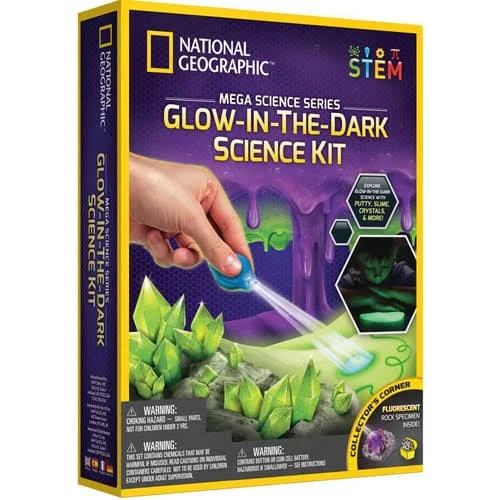
1. National Geographic Mega Science Kit
This is the one we’d hand a curious 8 to 12-year-old first. It bundles multiple experiment strands, crystal growing, basic chemistry reactions, and a few earth-science demonstrations, into one box rather than making you buy five separate kits to cover different interests. The instruction booklet explains the actual science behind each result rather than just “add A to B and watch”, which is the difference between a party trick and something that sticks for a school project.
The approx. RRP sits in the approx. $40 to $60 range depending on the specific edition, and it’s genuinely one of the better value-per-experiment kits we found, since most of the included materials are reusable rather than single-use sachets.
- Broad enough to suit kids who like chemistry one week and crystals the next
- Clear, readable instructions that explain the “why”, not just the steps
- Some experiments need a parent nearby for the heating or mixing steps
- Packaging promises more “wow” experiments than the everyday ones actually deliver
National Geographic Mega Science Kit
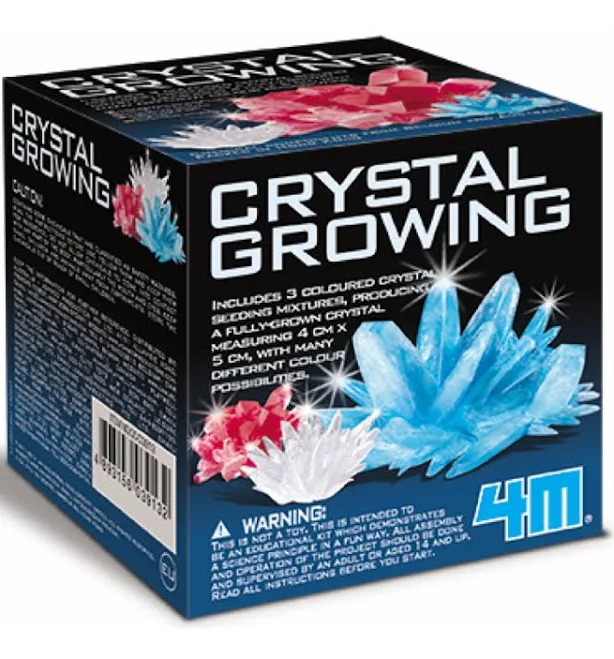
2. 4M KidzLabs Crystal Growing Kit
4M’s KidzLabs range is the budget workhorse of Australian toy aisles, and the crystal growing kit is the standout in the line. It’s a genuinely simple, low-mess concept: dissolve a supplied compound, let it sit, watch crystals form over several days. That waiting period is actually a feature for teaching patience and observation, not a flaw, though it does mean this isn’t an instant-gratification kit for a rainy afternoon.
Expect an approx. RRP in the approx. $15 to $25 range, which makes it an easy add-on for a kid’s science interest without committing to a big-ticket kit first.
- Genuinely low mess, contained in the supplied tray
- Good first “real” science kit for ages 6 to 10
- One-time use unless you buy separate crystal-growing refill solution
- The multi-day wait can lose younger kids’ interest before crystals fully form
4M KidzLabs Crystal Growing Kit
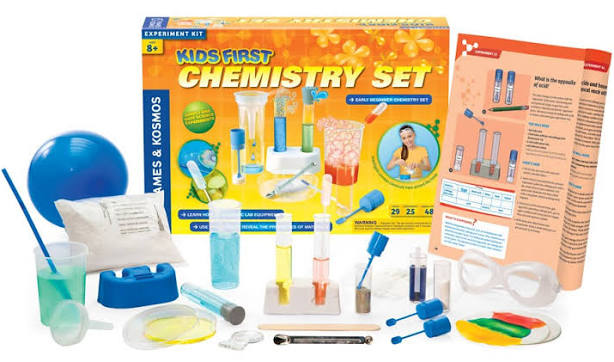
3. Thames & Kosmos Kids First Chemistry Set
If your child has worked through the beginner kits and wants something closer to an actual home chemistry set, this is the step up. Thames & Kosmos is a German-designed, widely distributed brand known for taking kids’ science more seriously than most, with a proper lab-style workbook and experiments that build on each other rather than existing as one-off tricks.
It sits at the premium end, approx. $70 to $100 RRP, and that’s the honest trade-off: you’re paying for depth and a curriculum-style structure, not just a bigger box of the same experiment types.
- Structured, progressive experiments rather than a grab-bag of unrelated activities
- Suits a genuinely science-curious 8 to 12-year-old who’ll actually work through the workbook
- Higher price point than most kits on this list
- Needs more supervision time from a parent than the simpler kits, at least initially
Thames & Kosmos Kids First Chemistry Set
4. Learning Resources Primary Science Lab Set
For preschool and early-primary kids (roughly 4 to 7), most “science kits” are actually too text-heavy or fiddly. Learning Resources built its Primary Science range specifically for this age group, with chunky, dishwasher-safe tools like magnifying pots, tweezers and a simple microscope rather than chemistry sachets. It’s less about experiments with a right or wrong answer and more about hands-on exploring, bugs in the backyard, water play, sorting by colour and texture.
Approx. RRP tends to land around approx. $30 to $50 depending on which set you choose, and it’s genuinely durable enough to survive a few years of use across siblings.
- Built for small hands, chunky and hard to lose small pieces
- No chemicals, so it’s low-anxiety for parents of younger kids
- Less “wow factor” for kids over about 7 who want visible reactions
- Relies on you supplying the actual specimens (bugs, leaves, water) to explore
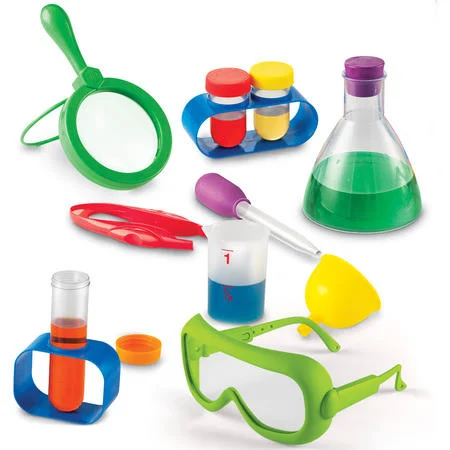
Learning Resources Primary Science Lab Set
5. Clementoni Science & Play Chemistry Lab
Clementoni’s Science & Play range is worth knowing about if your child needs something for a school science-fair style project rather than just at-home fun. The chemistry lab set leans into proper lab equipment, test tubes, a stand, measuring tools, and experiments that produce a result you could actually explain to a class, colour-change reactions, simple pH testing and basic separation experiments.
It’s mid-range on price, approx. $35 to $55 RRP, and the trade-off is that it’s more instructional and less “instant fun” than a volcano kit, so it suits a methodical kid better than one after quick thrills.
- Real lab-style equipment that doesn’t feel like a toy version
- Experiments translate well into school project write-ups
- Less immediate excitement than a volcano or slime kit for younger kids
- Some replacement chemicals aren’t easy to source locally once used up
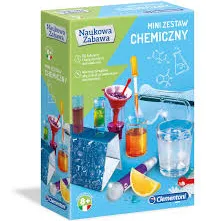
Clementoni Science & Play Chemistry Lab
How they compare
| Product | Brand | Approx RRP | Key features | Best for |
|---|---|---|---|---|
| Mega Science Kit #1 | National Geographic | approx. $40 to $60 | Multiple experiment strands, reusable materials, detailed explanations | Ages 8 to 12, broad curiosity |
| Crystal Growing Kit Budget | 4M KidzLabs | approx. $15 to $25 | Low mess, multi-day crystal formation | First science kit, ages 6 to 10 |
| Kids First Chemistry Set Premium | Thames & Kosmos | approx. $70 to $100 | Progressive, workbook-led experiments | Serious young scientists, ages 8 to 12 |
| Primary Science Lab Set | Learning Resources | approx. $30 to $50 | Chunky, durable exploring tools, no chemicals | Preschool and early primary, ages 4 to 7 |
| Science & Play Chemistry Lab | Clementoni | approx. $35 to $55 | Lab-style equipment, colour-change and pH experiments | School projects, methodical kids |
Matching the kit to the age and stage, not just the birthday number
Preschool and early primary (ages 3 to 6)
At this age, the win is sensory exploration, not correct results. Magnifying glasses, simple sorting trays and safe, non-toxic materials matter more than anything involving reactions. Look for sets explicitly marketed for this age bracket, as most “science kit” packaging defaults to 8+ and will frustrate a preschooler with small pieces and multi-step instructions.
Early to mid primary (ages 7 to 10)
This is the sweet spot for crystal kits, basic chemistry sets and simple physics demonstrations. Kids at this age can follow multi-step instructions with some help, and they’re old enough to remember and repeat an experiment for a sibling or grandparent, which is genuinely part of the appeal for them.
Tweens (ages 10 to 12+)
Look for kits that build a sequence of experiments rather than standalone tricks, and consider whether the kit ties into what they’re covering at school. A kit that helps with an actual assignment tends to get far more use than one that’s purely for entertainment.
Keeping the mess, and the mishaps, under control
Science kits are meant to be a little messy, that’s part of the fun, but a few checks before you hand one over will save you a bench full of stains and a call to poison information.
- Check the box for compliance with the relevant Australian Standard for toys, which covers choking hazards for small components and safe limits on any included chemicals.
- Read the ingredient list on chemistry-style kits before your child starts, particularly if anyone in the house has sensitive skin or asthma, since some reactions produce fumes best done near an open window.
- Keep any refill chemicals or extra ingredients (vinegar, bicarb, food dye) in their original containers, clearly labelled, away from younger siblings who might mistake them for something else.
- Do a supervised first run of any kit involving heat, staining dyes or anything that reacts quickly, even if the box says “independent play”, so you know what to expect before your child does it solo.
- Have a wipeable surface or an old towel ready. Even the “low mess” kits find their way onto a school jumper eventually.
mum. Approved: our top 3 for 2026
Broadest range of genuine experiments with explanations that actually teach, not just entertain.
Cheap, low mess, and a genuinely satisfying multi-day result for a first science kit.
Worth the extra dollars if your child is past the novelty stage and wants a real progression of skills.
Frequently asked questions
What age can kids start doing science experiments at home?
Most children can start simple, sensory-based exploration from around age 3 or 4, with tools like magnifying glasses and safe sorting activities. Chemistry-style kits with reactions and mixing generally suit ages 6 and up, and multi-step, workbook-led kits are better matched to ages 8 to 12.
Are science kits actually educational, or just a novelty that gets left in a cupboard?
It depends heavily on the kit. Ones that explain the reasoning behind a result, rather than just listing steps to follow, tend to hold interest longer and translate into genuine learning. Kits padded out with household-item “experiments” (mixing vinegar and bicarb repeatedly, for example) tend to get used once and forgotten.
Do I need to buy extra ingredients not included in the kit?
Some do, particularly crystal-growing and volcano kits, which are often single-use unless you buy separate refill chemicals. Check the box or product description for whether refills are needed, since this changes the real ongoing cost of a kit that looked cheap upfront.
Are these kits safe for kids with allergies or sensitive skin?
Most mainstream kits sold in Australia meet the relevant Australian Standard for toys, which sets limits on chemical content and choking hazards for small parts. Still, it’s worth checking the ingredient list on any chemistry-style kit if your child has known skin sensitivities or asthma, since some reactions can produce mild fumes.
How long do science kits typically last before they need replacing or refilling?
Reusable tool-based kits (like exploration or lab-equipment sets) can last for years across siblings. Consumable kits, crystal growing, volcano, slime, are generally single-use for the core chemicals, though some brands sell separate refill packs so you don’t need to buy the whole kit again.
If we had to choose one, the National Geographic Mega Science Kit is our 2026 pick for most families, wide enough to suit a range of interests and detailed enough to actually teach something. On a tighter budget, the 4M KidzLabs Crystal Growing Kit won’t let you down as a genuinely low-mess first step, and if your child has outgrown the basics, the Thames & Kosmos Kids First Chemistry Set is worth the extra spend for real progression.
Where to buy these picks
✓ Verified prices are checked live at the retailer. Otherwise we show the approximate RRP (an indicative recommended price, not a live retailer price), or “price pending” where we don’t have one.
National Geographic Mega Science Kit
★ Best for broad curiosity
4M KidzLabs Crystal Growing Kit
Best first science kit
Learning Resources Primary Science Lab Set
Best for early primary
Clementoni Science & Play Chemistry Lab
Best for school projects
Thames & Kosmos Kids First Chemistry Set
Best for serious young scientists
The shortlist, in your inbox
New winners, price drops and recalls worth knowing.