
Jengo Pram Australia 2026: Is the Instagram Stroller Hype Worth It?
If your For You page has been serving up sleek, pastel-toned prams next to influencer captions promising “the pram that changed everything,” you’re not imagining it. Jengo, Avna and Seed have all built loyal followings without ever setting foot in a traditional baby aisle, and if you’re third-trimester nesting or waiting for an EOFY sale to pull the trigger, it’s fair to wonder whether you’re buying a genuinely well-engineered pram or a very good ad.
The anxiety is real and specific: this is often the second-biggest purchase after the car seat, it needs to survive a Bunnings car park, a narrow terrace hallway and a packed tram, and a heavy fold you can’t manage one-handed with a toddler mid-tantrum is a daily tax you’ll pay for years. So we’ve dug into what Jengo, Avna and Seed actually offer against the safety standard every pram sold here has to meet, and how they stack up against the established names you already trust.
Short answer: some of the hype holds up, some of it doesn’t, and which one is “worth it” depends entirely on whether you need a pram for one baby or you’re planning ahead for two.
Why Instagram pram brands are everywhere right now
Jengo and Avna both follow the same playbook: sell direct, skip the traditional retail markup, and put the marketing budget into video ads instead of showroom floor space. That model genuinely can produce a cheaper, better-looking pram, because you’re not paying for three layers of distribution. It can also mean a brand disappears in eighteen months, taking its spare parts and warranty service with it, which matters far more for a pram than for a $40 dress you wore twice.
The standard that matters, regardless of the brand
Every pram and stroller legally sold in Australia, whether it’s a household name or a brand you found through a reel, is expected to meet AS/NZS 2088, the Australian/New Zealand standard covering structural strength, brake performance, harness anchorage points and stability (so it won’t tip when you hang a nappy bag off the handles). Before you buy from any newer brand, look for an explicit statement that the model meets AS/NZS 2088 on the product page or in the manual, not just a vague “safety tested” claim.
Seed is the outlier here
Seed isn’t actually new. It’s a UK-origin brand that has been selling in Australia for well over a decade, and it built its reputation on one clever idea: a single pram that converts into a double when baby number two arrives, so you’re not buying two prams eighteen months apart. That history is exactly why it sits in our premium tier rather than alongside the true Instagram newcomers.
What to actually check before you buy
- AS/NZS 2088 compliance: this is the pram and stroller standard covering brakes, stability and harness strength. Any brand worth your money should state it clearly.
- Folded dimensions, not just “compact”: get the actual centimetres and measure your boot and your hallway. Marketing photos make everything look small.
- Newborn compatibility: check whether the seat itself reclines flat enough for a newborn, or whether you need a separate bassinet or capsule adapter, and factor that extra cost in.
- Warranty length and where parts come from: a two-year warranty is only useful if the brand is still trading and still stocking spare wheels and harness clips in two years.
- Weight when empty: you’ll be lifting this in and out of a boot on your worst days, not just your best ones. Under 8kg is genuinely lighter to live with.
- Resale value: established brands hold value on the second-hand market far better than newer names, which matters if you’re only planning one child.
Jengo, Avna and Seed reviewed for 2026
1. Jengo Pram
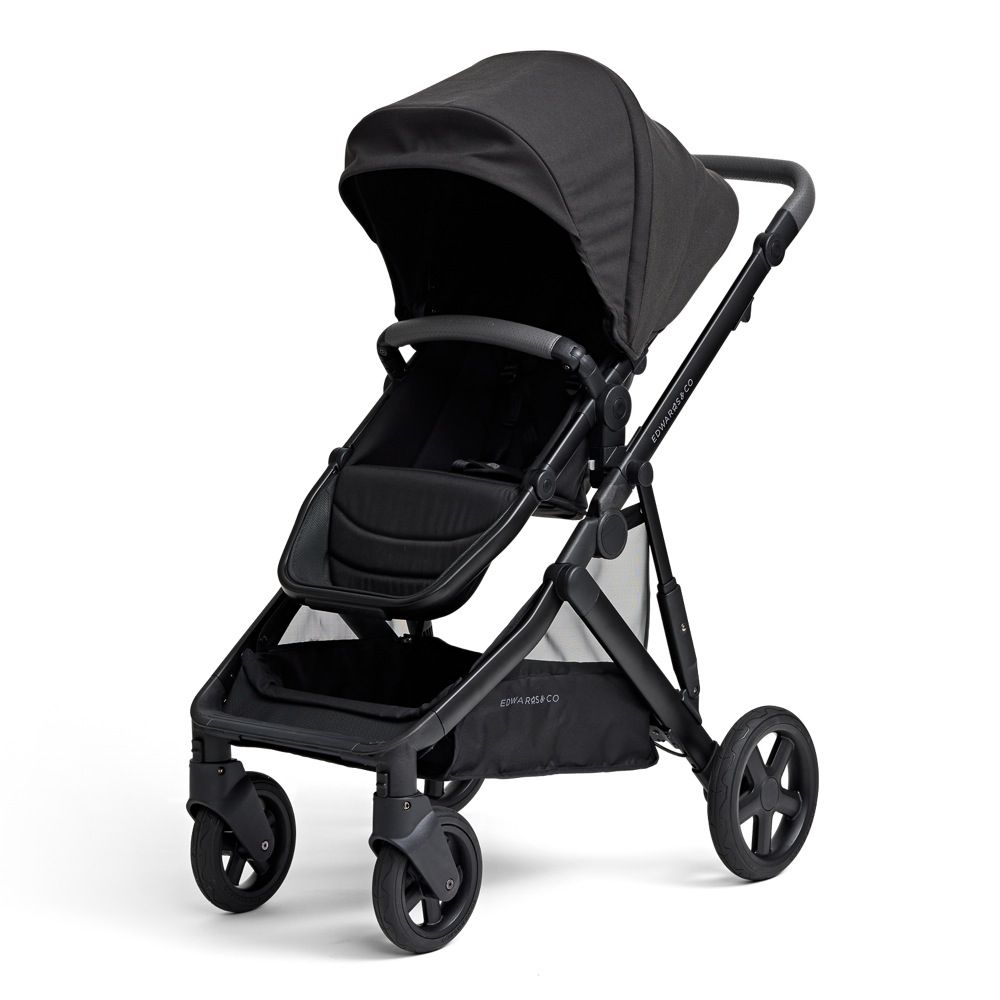
Jengo built its following by promising the look and feel of a premium European pram at a fraction of the price, and on the fundamentals it largely delivers. The aluminium frame keeps the empty weight reasonable, the canopy extends further than most in this price bracket, and the one-hand fold is genuinely one-handed, which matters the day you’re also holding a toddler and a coffee.
Where it shows its price point is in the smaller details: the recline mechanism feels less refined than a Seed or an established European brand, and the accessory range (rain cover, capsule adapters) is thinner, so budget for those as extras. As an approx. RRP, expect somewhere in the vicinity of $400 to $550 depending on the colourway and bundle.
- Genuinely compact fold that fits most sedan boots
- Extendable UPF50+ canopy, better than many prams twice the price
- Limited accessory ecosystem compared to established brands
- Newer brand, so long-term parts availability is an honest unknown
- Good for parents who want the aesthetic without the four-figure spend
Jengo Pram
2. Avna Stroller
The Avna Stroller is the newer, cheaper cousin in this comparison, an ultra-lightweight, umbrella-style fold built for parents who mostly need something for the sitting-up toddler stage rather than a full newborn travel system. It genuinely is one of the lightest options you’ll find in this price band, which makes it the easiest pram on this list to sling into an overhead locker or up a set of stairs.
The trade-off is a smaller seat, a shorter recline range and a less robust chassis than Jengo or Seed, so it’s better suited as a lightweight second pram or a grandparents’ house pram than the one pram doing everything from birth. As an approx. RRP, it typically sits around $250 to $350.
- Very light, easy to carry one-handed up stairs
- Compact umbrella-style fold, good for tram and train commutes
- Not designed for newborns without an additional capsule setup
- Smaller canopy offers less sun coverage than Jengo or Seed
- Strongest fit as a budget or secondary pram, not the sole family pram
Avna Stroller
3. Seed Papilio
The Seed Papilio’s whole reason for being is the double-pram conversion: buy it as a single now, add the second seat kit later, and you’ve avoided buying an entirely new pram when baby two arrives. For families who know they want two children reasonably close together, that maths can make the higher upfront cost worth it.
It’s also simply a more mature product than the newer Instagram entrants, with a sturdier chassis, better suspension over kerbs and cobblestones, and a longer track record of parts and servicing in Australia. The trade-off is size and weight: it’s not the pram you want if boot space or apartment storage is tight. As an approx. RRP, expect roughly $900 to $1,200 for the single configuration, with the second-seat conversion kit sold separately.
- Converts single to double, genuinely useful for close-together siblings
- Sturdier build and smoother ride than the newer DTC brands
- Bulkier fold, less ideal for small boots or narrow apartment hallways
- Higher upfront cost, though it can replace two separate prams
- Longer Australian track record than either Jengo or Avna
Seed Papilio
4. Baby Jogger City Mini2
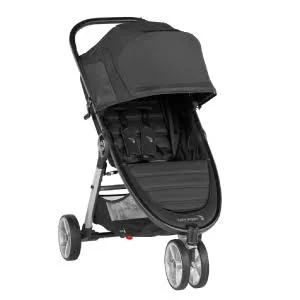
We’ve included one long-established benchmark for context, because the fairest way to judge whether an Instagram brand is “worth it” is against a pram that’s been proven over a decade of Australian use. The City Mini2 has a well-known one-hand fold, genuine all-wheel suspension for uneven footpaths, and an accessory range (bassinets, capsule adapters, rain covers) that’s easy to find years after purchase.
It costs more than Jengo and noticeably more than Avna, and it isn’t going to win the aesthetic contest on your feed. But the resale value and parts availability are hard to argue with. As an approx. RRP, it typically lands around $500 to $650.
- Proven all-wheel suspension, better on cracked footpaths and kerbs
- Wide, easy-to-find accessory range even years after purchase
- Higher price than Jengo for a similar single-pram use case
- Less visually distinctive than the newer Instagram-led designs
- Strong resale value if you’re only planning one child
Baby Jogger City Mini2
How they compare
| Product | Brand | Approx RRP | Key features | Best for |
|---|---|---|---|---|
| Jengo Pram #1 | Jengo | approx. $400 to $550 | Aluminium frame, one-hand fold, extendable UPF50+ canopy | Parents wanting a premium look on a mid-range budget |
| Avna Stroller Budget | Avna | approx. $250 to $350 | Ultra-lightweight umbrella fold, compact footprint | Toddler-stage outings, travel, or a second pram |
| Seed Papilio Premium | Seed | approx. $900 to $1,200 | Single-to-double conversion, sturdier chassis and suspension | Families planning two children close in age |
| Baby Jogger City Mini2 | Baby Jogger | approx. $500 to $650 | All-wheel suspension, wide accessory ecosystem | Parents who value a proven track record over aesthetics |
We’ve reviewed 62 prams & strollers in total — compare the full list before you decide.
mum. Approved: our top 3 for 2026
The rare Instagram pram where the fold, canopy and weight genuinely match the price point.
The lightest option here, ideal as a second pram or for the sitting-up toddler stage.
Worth the splurge if you’re planning two children and want one pram to cover both.
What we’d skip, and what to check in store
Not every Instagram-marketed pram deserves your card details, and not every established brand deserves a free pass either. A few honest cautions before you commit.
Red flags worth walking away from
- No clear statement anywhere that the model meets AS/NZS 2088
- A brand with no local phone number, ABN or Australian returns address listed
- Reviews mentioning wheels seizing or brakes failing within months
- No published folded dimensions, only lifestyle photos
- A warranty shorter than 12 months on the frame
What to physically check if you can see one in person
- Fold and unfold it yourself, one-handed, exactly as you would with a toddler on your hip
- Push it over a rough or angled surface to feel how the front wheels handle kerbs
- Recline the seat fully to check it’s flat enough for a newborn, if that’s how you plan to use it
- Lift it with one arm to gauge the real-world weight, not just the spec sheet number
Frequently asked questions
Is the Jengo pram safe and compliant with Australian standards?
Jengo states its models meet AS/NZS 2088, the Australian and New Zealand standard covering pram and stroller brakes, structural strength and stability. As with any brand, it’s worth checking the current listing or manual for the specific model you’re considering, since compliance can vary between versions.
Is the Jengo pram worth it compared to Seed?
It depends on your family plans. Jengo suits parents who want a lighter, more affordable pram for one child and like the streamlined look. Seed’s Papilio is worth the extra cost mainly if you’re planning a second baby close in age, since it converts to a double rather than needing to be replaced.
What age is the Avna stroller suitable for?
The Avna Stroller is best suited to babies who can sit up unassisted rather than newborns, given its shallower recline compared to a full travel system. If you need something from birth, pair it with a compatible capsule or wait until bub is a little older, or choose a pram with a flatter newborn recline instead.
Can the Seed Papilio really convert to a double pram?
Yes, that’s its core design. It starts as a single pram and Seed sells a second-seat conversion kit separately, which attaches to the same chassis so you’re not buying an entirely new pram when a second child comes along.
Are Instagram pram brands as good as established brands like Baby Jogger or Mountain Buggy?
Some are genuinely competitive on fold, weight and canopy coverage, but established brands still generally win on accessory availability, resale value and long-term parts and warranty support. Weigh the upfront saving against how long you expect to keep and rely on the pram.
If we had to choose one, the Jengo Pram is our 2026 pick for a single child, offering a premium feel without the premium price tag, and if you already know you’re having two children close together, the Seed Papilio is the smarter long-term spend even at its higher approx. RRP. On the tightest budget, the Avna Stroller won’t let you down as a lightweight second pram, provided you don’t expect it to do a newborn’s full-time job.
Where to buy these picks
✓ Verified prices are checked live at the retailer. Otherwise we show the approximate RRP (an indicative recommended price, not a live retailer price), or “price pending” where we don’t have one.
Jengo Pram
★ Best budget premium look
Avna Stroller
Best toddler travel stroller
Baby Jogger City Mini2
Best proven reliability
Seed Papilio
Best expandable for siblings
The shortlist, in your inbox
New winners, price drops and recalls worth knowing.