

Best Kids Water Bottles Australia 2026: Leak-Proof & School-Approved
Somewhere between the daycare orientation pack and the first week back at work, you realise the humble drink bottle is suddenly a battleground. It’s the thing that leaks through the side pocket of the daycare bag and soaks the spare undies. It’s the straw valve growing something suspicious by Thursday because nobody had time to pull it apart on Tuesday. And it’s the guilt-tinged question of whether your three-year-old is actually drinking enough water at kinder, or just carting around a full bottle all day because the spout is too stiff to use.
None of this is really about the bottle itself. It’s about one less thing to worry about in a week that already has plenty. So this guide skips the marketing spin and looks at what actually stops a bottle leaking in a bag, what a childcare educator or Australian primary school can realistically manage, and which bottles are genuinely easy to pull apart and get properly clean in the time you have before bed.
We’ve focused on real, current Australian products rather than generic “leak-proof” claims, because the gap between a bottle that’s marketed as spill-proof and one that actually survives an upside-down nap bag is enormous.
What to look for in a kids water bottle
Not every feature that sounds good on the shelf actually matters once the bottle is living in a school bag five days a week. Here’s what’s genuinely worth checking before you buy.
- A locking lid, not just a flip cap: a cap that clicks or twists to lock is the single biggest factor in whether a bottle survives being thrown in a bag upside down.
- Few parts, easy to dismantle: a straw valve, silicone bite bit and a gasket all need to come apart daily. If it’s fiddly, it simply won’t get cleaned properly, and mould in a straw is a real and common complaint.
- Dishwasher-safe components: top-rack dishwasher safe parts save enormous time versus hand-washing narrow straws with a bottle brush every night.
- A size that actually fits the bag pocket: daycare and prep-year school bags often have narrow, short side pockets. A tall 650ml bottle that doesn’t fit gets carried loose, and that’s when it leaks.
- Straw vs spout vs open sipper: toddlers transitioning from a bottle often do best with a soft silicone spout; kids at kinder and school generally manage a straw bottle more independently.
- Weight when empty: an insulated stainless steel bottle can add 200 to 300 grams to a bag a small child is carrying themselves.
The best kids water bottles in Australia for 2026
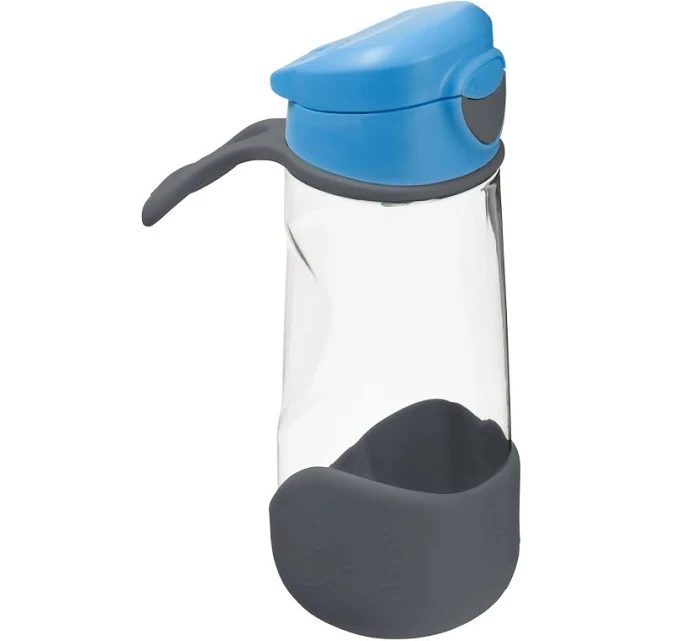
1. b.box Sports Spout Bottle
This is the bottle most Australian parents already know by sight, and for good reason: the combination spout and straw lid is genuinely one of the better-engineered leak solutions on the market, with a two-part valve that locks and a wide handle small hands can actually grip. It suits kids from around 12 months right through to early primary school, and the range now runs from the original insulated version to a lighter non-insulated bottle for kids who don’t want the extra weight.
The trade-off is the valve does need a firm push to lock properly, and if it’s not clicked in, it will weep in a bag. It’s approx. $20 to $30 depending on size and whether you choose the insulated version, which sits at the upper end for a plastic bottle but is justified by how well the seal holds up over daily use.
- Two-in-one straw and spout lid suits a wide age range
- Silicone sleeve options add grip and drop protection
- Wide mouth makes it easy to add ice or clean by hand
- Valve must be locked correctly or it will leak
- Insulated version is noticeably heavier for little kids to carry
b.box Sports Spout Bottle
2. Anko Kids Drink Bottle
Anko’s kids drink bottle range (the house brand you’ll recognise from the plastics and homewares aisle) is the sensible pick if you need three or four bottles for daycare, sport and the spare-in-the-car without spending big. It comes in straw and flip-top spout styles, in sizes suited to toddlers through to early primary schoolers.
It won’t survive years of daily abuse the way a more expensive bottle might, and the plastic can pick up staining and odour from cordial or milk over time if it’s not washed promptly. At approx. $5 to $12, it’s genuinely good value for a bottle that’s essentially disposable if lost at kinder, which, realistically, most kids’ bottles eventually are.
- Very affordable, so losing one at daycare doesn’t sting
- Simple design with few parts, easy for little hands to manage
- Limited insulation, so drinks warm up faster on a hot day
- Seals are less robust than premium brands over the long term
Anko Kids Drink Bottle
3. Frank Green Kids Smart Drink Bottle
Frank Green’s kids range takes the ceramic-lined, double-wall insulated technology from its adult bottles and scales it down with a straw lid designed for smaller mouths and a push-lock button that’s easier for a five or six-year-old to manage independently than a twist cap. It’s a genuine step up in insulation, keeping water cold for hours, which matters a lot for after-school sport pick-ups in an Australian summer.
It’s the most expensive bottle in this guide at approx. $30 to $40, and that’s a hard ask for something that will inevitably end up left on a bus or at a friend’s house. It suits families who’ve already had good luck with the adult version and want the same reliability scaled down, or kids old enough to take real ownership of a nicer bottle.
- Ceramic-reinforced lining keeps drinks cold significantly longer than standard plastic
- Push-button lid is genuinely easy for young kids to open one-handed
- Wide range of colours and sizes for personalisation
- Premium price point is a real risk if bottles regularly go missing
- Heavier than a basic plastic bottle when full
Frank Green Kids Smart Drink Bottle
4. Camelbak Eddy+ Kids
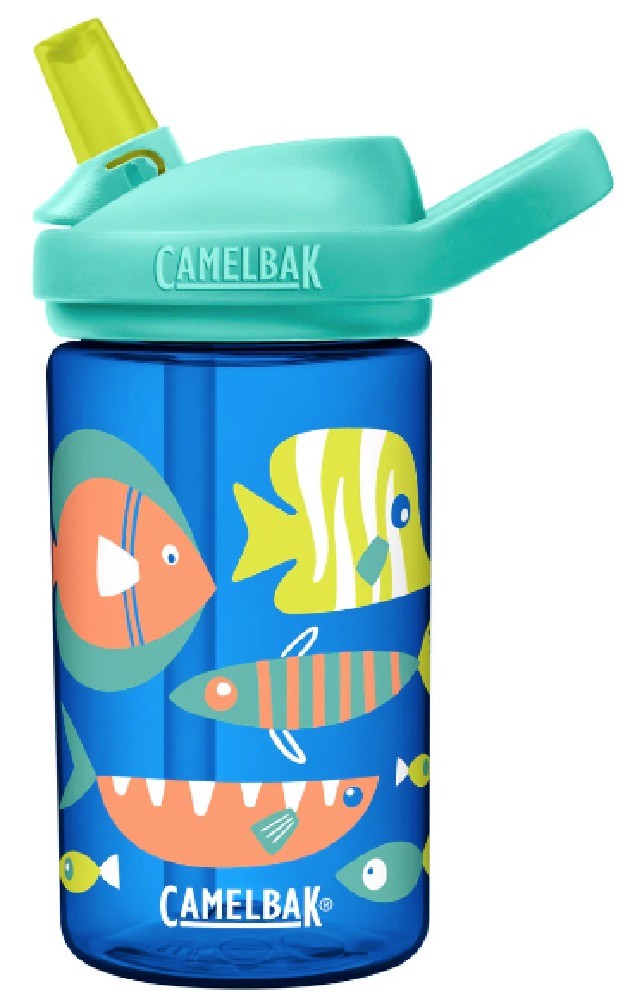
Camelbak’s bite-valve straw system is one of the most leak-resistant designs around because the straw itself seals shut when it’s not being actively bitten, rather than relying purely on a cap. That makes it a strong choice for kids who toss their bag around or ride it in a bike bottle cage. It’s aimed at kids from around three years and up who’ve already got the hang of a straw bottle.
The valve can feel stiff for younger or weaker mouths at first, and like any bite-valve design, kids do go through valves occasionally as they wear or get chewed. At approx. $18 to $25, it sits mid-range and is a solid option for active, sporty kids more than for toddlers just learning to sip.
- Bite valve seals automatically, reducing drips in a bag
- Straw is easy to pull out and hand wash separately
- Durable enough for bike rides and sports bags
- Requires a firmer bite/suck than a standard straw, tricky for some younger kids
- Replacement valves are an ongoing small cost
Camelbak Eddy+ Kids
5. Klean Kanteen Kids Classic Narrow
If you’re trying to cut down on plastic touching your child’s mouth, this stainless steel bottle is the simplest option here. The narrow-mouth design fits most standard sippy and straw lids from the wider Klean Kanteen range, so it can grow with your child from toddler sipper through to a straight-up water bottle for school, without buying a whole new bottle each stage.
It’s uninsulated in the basic version, so it won’t keep drinks cold like the Frank Green does, and stainless steel bottles do dent if dropped on concrete, though that’s mostly cosmetic. At approx. $20 to $28, it’s a good middle ground for parents who want durability and a plastic-free bottle without paying premium insulated pricing.
- Stainless steel body avoids plastic taste and staining
- Standard narrow-mouth lid fits multiple lid styles as kids grow
- Genuinely long-lasting; dents but doesn’t crack
- Basic version isn’t insulated, so no all-day cold water
- Metal can feel cold to hold on a chilly morning
Klean Kanteen Kids Classic Narrow
How they compare
| Product | Brand | Approx RRP | Key features | Best for |
|---|---|---|---|---|
| Sports Spout Bottle #1 | b.box | approx. $20 to $30 | Straw + spout combo lid, locking valve | Toddlers to early primary, all-round use |
| Kids Drink Bottle Budget | Anko | approx. $5 to $12 | Simple straw or spout, lightweight plastic | Spare bottles, daycare, low-stakes losses |
| Kids Smart Drink Bottle Premium | Frank Green | approx. $30 to $40 | Ceramic-lined insulation, push-button lid | Kids who need drinks cold for hours |
| Eddy+ Kids | Camelbak | approx. $18 to $25 | Self-sealing bite valve straw | Active kids, bikes and sport |
| Kids Classic Narrow | Klean Kanteen | approx. $20 to $28 | Stainless steel, standard narrow-mouth lid fit | Reducing plastic contact, long-term use |
Not sure yet? Put all 24 school essentials we rate next to each other.
mum. Approved: our top 3 for 2026
The rare bottle that genuinely suits a toddler through to an early primary schooler, with a lid seal that actually holds up.
Cheap enough to buy three, so a lost bottle at kinder is a shrug, not a drama.
Worth the splurge if all-day cold water for after-school sport actually matters in your house.
Getting leak-proof right for daycare and school
A bottle can be excellent on paper and still leak, usually because of how it’s used rather than how it’s made. A few practical checks make more difference than brand name.
Before it goes in the bag
- Push every part of the lid down until you hear or feel a click; a valve that’s “close enough” is the number one cause of leaks in a bag
- Fill to the marked line, not right to the brim; overfilling a spout bottle forces water past the seal when the bag gets jostled
- Store it upright in a side pocket where possible, particularly for spout-style lids
What childcare centres and schools actually expect
- A bottle labelled clearly with your child’s name, since bottles are the most commonly mixed-up item in a childcare fridge
- Something your child can open independently; educators generally won’t have time to open 20 different lid mechanisms at morning tea
- No glass bottles under any circumstances, for obvious safety reasons
What’s genuinely worth skipping
- Bottles with more than three separate small parts, they’re the ones that end up half-washed and growing mould in a straw by the end of the week
- Character-branded novelty bottles with unusual lid mechanisms that aren’t widely sold, replacement parts can be impossible to find later
- Anything advertised as “leak-proof” with no locking mechanism at all; a simple flip-top without a lock will eventually leak in a bag
There’s no single Australian Standard number specific to drink bottles the way there is for cots or car seats, but reputable brands sold in Australia do comply with the relevant Australian Standard for food-contact plastics and BPA-free materials, and it’s worth checking the packaging or brand website confirms this if you’re buying an unfamiliar bottle brand.
Frequently asked questions
What size water bottle does my child need for daycare or school?
Around 350ml to 500ml suits most toddlers and kinder-aged kids, while primary schoolers doing a full day plus sport often do better with 600ml so they’re not refilling constantly. Bigger isn’t always better though: a bottle too large for the bag pocket is more likely to be carried loose and leak.
Straw, spout or open-top: which is best for a toddler?
Most toddlers transitioning from a bottle manage a soft silicone spout more easily than a hard straw at first, since the sucking motion is closer to what they already know. Most kids move comfortably onto a straw bottle by around two to three years old, and straw bottles are generally easier for daycare educators to manage across a room of children.
How do I stop my child’s drink bottle growing mould in the straw?
Pull the straw and valve apart fully every single day rather than just rinsing the outside, and let all the parts air dry completely before reassembling, since trapped moisture in a closed straw is exactly what mould needs. A dedicated narrow bottle brush makes this quicker, and dishwasher-safe parts save a lot of nightly effort.
Are insulated water bottles worth it for kids?
They make a real difference on hot Australian days or for after-school sport, keeping water genuinely cold for several hours rather than warming up by recess. The trade-off is extra weight and usually a higher price, so they suit primary-aged kids carrying their own bag more than toddlers.
How many kids water bottles should I actually own?
Most families find two to three per child works well in practice: one in daily rotation, one washed and ready to swap in, and a cheap spare for the car or sports bag so a forgotten or lost bottle doesn’t derail the morning.
If we had to choose one, the b.box Sports Spout Bottle is our 2026 pick for the sheer stretch of ages and stages it covers without leaking in the bag, and on a tighter budget the Anko Kids Drink Bottle won’t let you down for daycare duty where losses are inevitable.
Where to buy these picks
✓ Verified prices are checked live at the retailer. Otherwise we show the approximate RRP (an indicative recommended price, not a live retailer price), or “price pending” where we don’t have one.
Anko Kids Drink Bottle
Best budget spare bottle
Klean Kanteen Kids Classic Narrow
Best plastic free choice
Frank Green Kids Smart Drink Bottle
Best for staying cold
Camelbak Eddy+ Kids
Best for active kids
The shortlist, in your inbox
New winners, price drops and recalls worth knowing.