Best Baby Shoes Australia 2026: First Walkers, Pre-Walkers and Booties That Stay On
Tiny shoes are one of the most tempting things in any baby section, and one of the most confusing. Does your baby need shoes yet? Will the booties actually stay on? Which shoes suit those first wobbly steps outside, and what size is your baby, anyway?
This guide works through it stage by stage: booties that stay on for babies who are not walking yet, soft pre-walker shoes for cruising, proper first walker shoes for those first steps outdoors, and when it is time to move up to toddler shoes. We compare the main brands you will find in Australian stores, from Kmart and Grosby to Bobux, Attipas and Vans, set out what Australian health guidance says about young feet, and show the price we have for each pick in the price block at the end of the page.
The short version: bare feet are best indoors, shoes are for protection once your baby walks outside, and when you do buy, flexibility and fit matter far more than the label.

Do Babies Actually Need Shoes? What Podiatrists Generally Advise
Here is the answer that might save you some money: babies do not need shoes until they are walking outdoors. The Victorian Government’s Better Health Channel advises that toddlers learning to walk should be barefoot or in a soft-soled shoe as much as possible, so they can feel the ground under their feet. The Australian Podiatry Association (APA) says much the same: once a child starts walking, shoes are only needed when the feet need protection from the ground, and going barefoot or wearing very soft shoes helps the foot develop and strengthens its muscles. Before your baby walks, the APA notes, feet only need protecting in cooler weather, with socks or soft natural-fibre shoes that sit loosely on the foot.
Life is not always lived on clean indoor floors, though. Once your baby is toddling around the park, the footpath or daycare, shoes are about protection: from hot pavement, prickles, gravel and the odd dropped toy. The aim is a shoe that gets in the way as little as possible, close to the barefoot feel, with plenty of room for little toes to spread.
What to look for in first shoes:
- A flexible, flat sole that bends easily near the toes. If you cannot bend it with one hand, it is too stiff for a new walker.
- A wide, foot-shaped toe box, wider at the front than at the heel, with no pointed tips.
- A firm heel counter, the cup at the back of the shoe that holds the heel in place.
- An adjustable fastening, such as velcro, a buckle or laces, so the shoe holds the foot without squeezing it.
- About 1 cm of growing room beyond the longest toe.
- Light, breathable materials, because heavy shoes tire little legs and Australian summers are hot.
Most of that list comes straight from Better Health and the APA. Better Health’s checklist for a toddler’s shoes asks for a flexible, flat sole that bends near the toe, a front wider than the heel, a solid heel counter, and laces, straps or fasteners to stop the foot moving or slipping inside the shoe. The APA’s fitting advice adds about 1 cm of growing room beyond the longest toe, toes that can move freely without being squashed from the top or the sides, a comfortable fit around the heel, and having both feet measured for length and width.
One more thing worth knowing: rigid, heavily structured “supportive” shoes are not something a healthy baby foot needs, and flat-looking feet are normal at this age (more on that in the FAQ below). If your child has foot pain, trips much more than other children their age, or one foot looks different from the other, that is a reason to see your GP or a podiatrist rather than to buy a stiffer shoe.
Pre-Walkers, First Walkers or Toddler Shoes? Match the Shoe to the Stage
Most of the confusion in the baby shoe aisle comes from shoes for different stages sitting side by side, all labelled “baby”. Every baby moves through these stages at their own pace, and first independent steps can come anywhere from around nine months to well after the first birthday, so go by what your baby is doing rather than their age.
- Newborn to crawling: lying, rolling, sitting and crawling. Nothing structured is needed. Socks or soft booties keep feet warm, and the only thing that matters is that they stay on without leaving marks. Simple cotton booties or Kmart’s soft-sole booties are plenty.
- Pre-walker (pulling up and cruising): bare feet are best indoors. Outside, or on slippery floors, choose a very soft shoe with grip: a suede sole or thin, flexible rubber. Bobux’s Xplorer stage, made for crawlers and cruisers, and Attipas sock shoes both sit here.
- First walker (first independent steps, including outdoors): this is the stage where fit and flexibility matter most, because your baby is still working out balance with every step. Look for a sole that bends near the toes, a firm heel counter, an adjustable strap and about 1 cm of room. Bobux Step Up and Grosby’s first walkers are our picks here.
- Confident walker (walking well, running, climbing): Better Health suggests moving to a firmer-soled shoe once a toddler has been walking confidently for a while. The sole should still flex at the toes, with an adjustable fastening. Bobux I-Walk suits this stage, and Vans toddler styles work for outings.
Put simply, pre-walker shoes are socks with a sole, for grip and a little protection, while first walker shoes are the first proper outdoor shoe and the one worth taking the time to get right.
If your little one is already a confident walker, our best toddler shoes guide picks up where this one ends, with sneakers, sandals and boots for busy toddlers.
Baby Booties That Stay On: What Actually Keeps Them On
If you have ever retraced your steps through a shopping centre looking for one tiny bootie, you already know the problem. Most booties come off for the same few reasons: they are too big, there is nothing holding them at the ankle, or they are a slippery knit that a determined kicker can wriggle out of in seconds.
What keeps booties on:
- An elasticated or drawstring ankle. Soft leather booties with an elasticated ankle, and knitted booties with a drawstring, such as Nature Baby’s merino drawstring booties, can be gently gathered at the ankle in a way a plain knit cannot.
- A cuff that comes up over the ankle. Taller, sock-style booties have more to hold on to than a low slipper shape.
- A strap across the top of the foot. A velcro strap over the instep stops the heel lifting out when your baby kicks.
- The right size. A bootie bought “to grow into” is the one that ends up on the floor. Buy for the foot your baby has now.
- A sock cover. Products such as Sock Ons slip over a sock to hold it in place, a cheap fix for the baby who pulls off everything.
Affordable booties that do the job: for newborns and babies who just need warm feet, there is no need to spend much. Simple cotton booties and socks from brands like Bonds, or Kmart’s soft-sole booties, cover warmth perfectly well. Save the bigger spend for the first walking shoe, which is where fit and flexibility start to matter.
Whatever holds a bootie on, it should not do it by squeezing: the APA advises that a baby’s socks and soft shoes should always be loose around the feet. Two quick checks whatever you buy: elastic should not leave red marks around the ankle when you take the bootie off, and any pom poms, bows or buttons should be firmly attached, because everything ends up in a baby’s mouth eventually.
Once your baby is walking, the advice shifts. Elasticated booties are fine for crawlers and cruisers, but Better Health’s checklist for a toddler’s shoes includes laces, straps or fasteners, to stop the foot moving or slipping inside the shoe, so for walking outdoors choose an adjustable fastening (velcro, a buckle or laces) over elastic or a slip-on.
Baby Shoe Sizes Explained: Getting the Right Fit in Australia
Australian baby shoe sizes can be genuinely confusing. Children’s shoe sizes here mostly follow UK sizing, but you will also see US sizes, EU sizes and plenty of labels that simply give an age range or a foot length in centimetres. The most reliable number is your baby’s foot length in centimetres, matched against the brand’s own size chart.
How to measure your baby’s feet at home:
- Stand your baby on a sheet of paper with their heel against a wall, holding their hands if they need support. Feet spread under body weight, so a standing measurement is more accurate than a sitting one.
- Mark the tip of the longest toe. It is not always the big toe.
- Measure from the wall to the mark in centimetres. Do both feet and use the longer one.
- Find that length on the brand’s size chart. Charts differ: some list the foot length and build in growing room, others list the inside length of the shoe, which should be about 1 cm longer than the foot. Check which one you are reading before you order.
As a rough starting point only (sizing varies between brands, so always check the brand’s own chart):
| Age (approx) | Foot Length (cm) | AU/UK Size | US Size | EU Size |
|---|---|---|---|---|
| 0–3 months | 9–10 cm | 0–1 | 1–2 | 16–17 |
| 3–6 months | 10–11 cm | 1–2 | 2–3 | 17–18 |
| 6–12 months | 11–12.5 cm | 2–3.5 | 3–4.5 | 18–20 |
| 12–18 months | 12.5–13.5 cm | 3.5–5 | 4.5–6 | 20–22 |
| 18–24 months | 13.5–14.5 cm | 5–6.5 | 6–7.5 | 22–23 |
Checking the fit: press gently at the front of the shoe to feel for about 1 cm between the longest toe and the end. The heel should stay put when your baby walks rather than slipping out, toes should be able to wiggle, and there should be no red marks when the shoes come off. Shoes that are too big are not a saving: they cause tripping and let the foot slide around inside.
If you are unsure: a fitting at a children’s shoe store that measures both length and width is the most reliable way to get it right, especially for that first walking shoe.
We’ve reviewed 5 baby shoes in total — compare the full list before you decide.
The Best Baby Shoes in Australia 2026: Our Picks Brand by Brand
Here are our picks across budgets and stages. Prices move, so rather than quote them in the text, we show the price we have for each pick in the price block at the end of the page: a checked retailer price where we have one, otherwise an approx. RRP.
Best Overall: Bobux Baby Shoes
Bobux is a New Zealand brand that has been making shoes for babies and young children since the early 1990s, and what sets it apart is how clearly its range follows your baby’s development. Soft Sole is its soft leather range for newborns, babies and early crawlers. Xplorer and Step Up cover cruising and first steps, I-Walk is for confident walkers and toddlers, and Kid+ follows for older, more active kids. That makes it easy to buy the right shoe for where your baby is now, which is why Bobux is our overall pick for first walkers.
- ✅ Flexible soles, from soft suede to bendy rubber as your baby grows
- ✅ Wide toe box designed for natural foot spread
- ✅ Breathable leather options, good for Australian heat
- ✅ Strapped fastenings once your baby is walking
- ❌ Premium price point
- ❌ The Soft Sole range is not made for confident outdoor walking, so expect to buy the next stage up
Best Budget Pick: Kmart Baby Shoes
Let’s be real: baby shoes at the pre-walker stage are outgrown in a season. Kmart’s soft-sole booties and canvas styles are absolutely fine for pre-walkers, indoor wear and keeping feet warm, for very little money.
- ✅ Very affordable
- ✅ Cute designs that change with the seasons
- ✅ Available nationwide
- ❌ Not our pick for regular outdoor walking: choose a flexible, strapped first walker once your baby walks outside
- ❌ Sizing can vary, so always measure
Best Mid-Range: Grosby Baby Shoes
Grosby is a long-running Australian brand, and its first walkers offer sensible flexibility and solid construction. A practical everyday shoe for daycare and errands once your baby is on their feet.
- ✅ Australian brand, widely available
- ✅ Good flexibility for the price
- ✅ Wide range of styles
- ❌ Not as flexible as premium options like Bobux Step Up
Best For Style: Vans Baby Shoes
Those tiny Old Skool sneakers make Vans baby shoes undeniably adorable. They work best as occasional shoes for confident walkers rather than everyday first walkers, because the sole is firmer than the soft sole Better Health suggests for toddlers still learning to walk. Perfect for photos and outings when you want the mini-me look.
- ✅ Very cute, in classic colourways
- ✅ Durable canvas upper
- ✅ Velcro closure on toddler sizes, easy on and off
- ❌ Sole firmer than ideal for first walkers
- ❌ Not always wide enough for chubby baby feet
Best Classic White Baby Shoes: Attipas
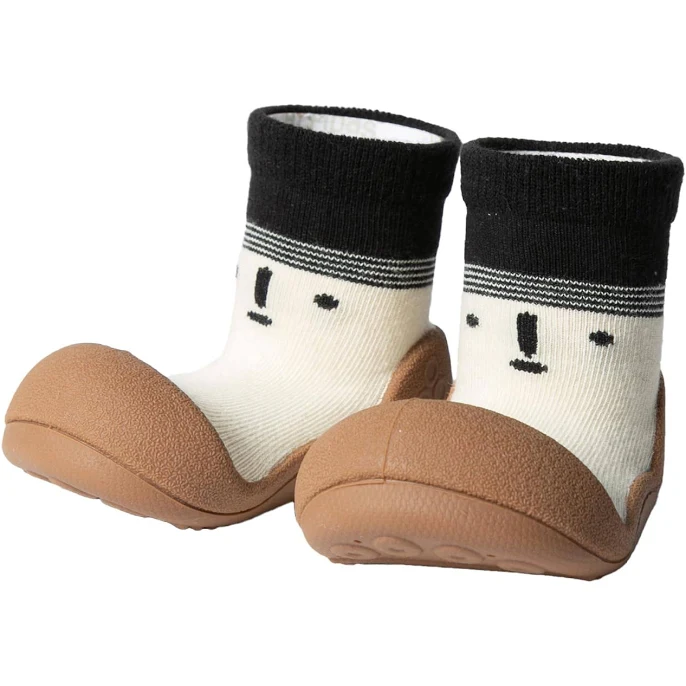
When it comes to white baby shoes for christenings, family photos and special occasions, Attipas does something genuinely different. It is a sock-shoe: a soft, sock-like fabric upper on a thin, flexible, anti-slip rubber sole, which gives great grip on floorboards and tiles and is shockingly easy to put on a wriggly baby.
- ✅ Sock-shoe design, no fuss to put on
- ✅ Extremely flexible and lightweight
- ✅ Anti-slip sole for cruisers on slippery floors
- ✅ Pretty white styles for special occasions
- ❌ Pull-on, with no adjustable fastening, so better for cruising and short outings than all-day outdoor walking
- ❌ Not as durable for rough outdoor use
Quick Comparison Table: Best Baby Shoes Australia 2026
| Brand | Best For | Stage | Sole | Fastening |
|---|---|---|---|---|
| Bobux | Overall best | Crawling to confident walking (range by stage) | Soft leather (Soft Sole) to firmer soles for walking | Varies by stage |
| Attipas | Special occasions, grip indoors | Cruising, short outings | Thin, anti-slip rubber | Pull-on sock design |
| Grosby | Everyday mid-range | First walkers and up | Flexible | Varies by style |
| Vans Baby | Style and occasions | Confident walkers | Rubber, firmer than ideal for new walkers | Velcro on toddler sizes |
| Kmart Baby | Budget, pre-walkers | Pre-walkers, indoor wear | Soft sole | Varies by style |
On price, Kmart is the budget option and Bobux the premium one. The price block at the end of the page shows the price we have for each pick.
Bobux vs Old Soles vs Attipas: How the First Walker Brands Differ
These three names often sit side by side when you are shopping for first walkers, and they suit different jobs.
- Bobux (New Zealand): the stage-based option. If you want one brand to carry you from crawling to confident walking, with each stage built for that stage, it is the simplest choice: soft leather, flexible soles and strapped fastenings once your baby is walking.
- Old Soles (Sydney): leather first walkers with soft, flexible soles, in styles that lean dressier, from Mary Janes and T-bars to little sneakers. Fastenings vary by style, from velcro straps to elasticated laces, so check you can adjust the fit. A good choice when you want a first walker that also works for a family event.
- Attipas: not a traditional shoe at all but a sock-shoe with an anti-slip sole. Brilliant for grip while cruising and quick to pull on, but with no adjustable fastening it is better for indoor use and short outings than for all-day walking outside.
Which to choose: for a baby walking outdoors every day, a flexible first walker from Bobux’s Step Up stage or Old Soles, checking that the pair you choose has an adjustable fastening. For cruising and grip indoors, Attipas or Bobux Xplorer. For a special occasion, Old Soles or white Attipas. And if budget matters most, Grosby or Kmart cover the basics.
Wide Feet, Hot Summers and Slippery Floors: Choosing for Australian Conditions
Wide or chubby feet. Look for a wide, foot-shaped toe box and a strap or opening that lets the foot go in without forcing it. Ask for width to be measured at a fitting, not just length, and do not go up a size to get more width: that leaves too much room at the front and makes tripping more likely. Some brands make children’s shoes in more than one width fitting, and a children’s shoe store can tell you which of its brands do.
Summer. Breathable leather, suede or canvas uppers keep feet cooler than plastic or synthetic linings. For new walkers, choose sandals with a back strap and an adjustable fastening over slides or thongs: a strap and fastening stop the foot slipping around inside the shoe, the same reason Better Health’s checklist asks for laces, straps or fasteners. Closed toes add protection for little toes still finding their way. Melbourne label Walnut, for example, makes sandals and canvas shoes in small sizes. Hot pavement, sand and play equipment can burn little feet on a summer day, so shoes matter more outside in January than they do in July. For the beach and the pool, neoprene reef booties with a rubber sole, such as Toshi’s swim reef booties, protect against hot sand and sharp shells.
Slippery floors. Smooth leather or plastic soles skid on floorboards and tiles. Suede and textured rubber soles grip much better, and for indoor cruising, socks with grip dots are a cheap alternative to shoes altogether.
What to Avoid: Red Flags When Buying Baby First Shoes
Some things are worth skipping however good the price or the design. Here is what we would leave on the shelf when it comes to baby first shoes:
- Rigid, stiff soles: if you cannot easily bend the shoe near the toes, put it back on the shelf. Stiff soles make early walking harder and limit the natural foot movement that builds strength.
- Pointed or narrow toe boxes: toes need room to spread, and narrow styles squash growing feet.
- Small decorations that could come loose: buttons, beads, bows and pom poms are a choking risk for babies who chew everything. Give them a firm tug before you buy, and check Product Safety Australia for recalls if you are unsure about a product.
- Non-breathable synthetics in summer: look for leather, suede or canvas uppers to avoid hot, sweaty feet.
- Hand-me-down walking shoes: worn shoes have already moulded to another child’s foot. Hand-me-downs are fine for pre-walkers, but once your child is walking, a new pair fitted to their own feet is the safer choice.
- Buying too big “to grow into”: it is tempting, but shoes that are too big cause tripping and let the foot slide around. About 1 cm of growing room is the target, not a starting point for more.
- Slip-ons and elastic-sided shoes for walkers: without laces, straps or fasteners (which Better Health’s checklist asks for), the shoe cannot be adjusted to hold the foot. Save them for crawlers and short outings.
mum.com.au Approved: Our Top Picks for Every Budget in 2026
✅ mum.com.au Approved Picks
Best Overall Baby Shoes Australia 2026: Bobux
The most complete range for the first years, organised by stage. The premium price is easiest to justify at the first walker stage, when fit and flexibility count most.
Best Budget Baby Shoes: Kmart soft-sole booties
For pre-walkers, indoor wear and warm feet, they do the job for very little.
Best Everyday Mid-Range: Grosby first walkers
Sensible flexibility for daycare and errands.
Best for Special Occasions: Attipas in white
For christenings, family portraits or any occasion where tiny white shoes make your heart melt, and easy on a wriggly baby.
Best “Cool” Baby Shoes: Vans toddler velcro styles
Because sometimes you just want the cute factor, and that is completely valid. Save them for confident walkers and outings rather than all-day wear.
Our top pick across the board for most Australian families.
The value choice when you want the essentials without overspending.
The splurge pick if you want the most features and finish.
Frequently Asked Questions: Baby Shoes in Australia
When should I buy my baby’s first shoes?
When your baby is walking outdoors. Before that, bare feet at home are best for development, and soft booties or socks are fine for warmth. If you need grip on slippery floors or a little protection at the park, a soft pre-walker shoe or sock shoe does the job without getting in the way.
What are the best shoes for a 1 year old who has just started walking?
A proper first walker: a flexible sole that bends near the toes, a firm heel counter, an adjustable strap and about 1 cm of growing room. From our picks, Bobux Step Up and Grosby’s first walkers fit that brief. Keep bare feet for indoors, and save the shoes for outside.
How often do I need to replace baby shoes?
Baby feet grow quickly: Better Health notes that children’s shoe sizes may need updating every few months, and the Australian Podiatry Association suggests a size check at least every one to three months up to the age of three. Check the fit every month or so: if there is less than about 1 cm between the longest toe and the end of the shoe, or the shoes leave red marks, it is time for the next size up.
Are Bobux shoes worth the price in Australia?
For a first walker who wears shoes outdoors every day, we think so: the flexible sole, roomy toe box and stage-by-stage range make it easy to buy the right shoe at the right time. For crawlers or occasional wear there is no need to spend that much, and a budget soft bootie works perfectly well.
Is it normal for my toddler to have flat feet or walk pigeon-toed?
Usually, yes. Better Health notes that flat feet are normal in infants and young children, with arches developing as muscles and ligaments strengthen, and that many toddlers walk pigeon-toed and it usually improves. See your GP or a podiatrist if there is pain, if it affects only one side, if it is severe or not improving, or if your child trips a lot.
Can I buy baby shoes online in Australia without trying them on?
Yes, as long as you measure your baby’s foot length in centimetres first and use the brand’s own size chart. Check the returns policy before you order so you can exchange for a different size. For a first walking shoe, a fitting in store is worth it if you can get to one.
What size should a new walker start in?
It depends entirely on your baby’s foot length, so measure rather than guess. As a rough guide, the size chart above puts 12 to 18 months at around AU size 3.5 to 5, but brands vary and every baby is different. Use the brand’s chart and allow about 1 cm of growing room.
The Bottom Line: Best Baby Shoes Australia 2026
The simplest version of everything above: your baby does not need shoes until they are walking outdoors, bare feet are best indoors, and when you do buy, choose flexibility and fit over the label.
If budget allows, Bobux is our overall pick, because its range follows your baby from crawling to confident walking. Grosby is the sensible mid-range choice, Attipas the grippy option for cruisers and special occasions, Kmart the budget pick for pre-walkers, and Vans the fun one for confident walkers on outings.
Measure in centimetres, check the fit every month or so, and move up to toddler shoes once your little one is walking confidently. Enjoy every wobbly step.
Where to buy these picks
✓ Verified prices are checked live at the retailer. Otherwise we show the approximate RRP (an indicative recommended price, not a live retailer price), or “price pending” where we don’t have one.
Bobux Baby Shoes
★ Best for early walkers
Kmart Baby Shoes
Best value
Grosby Baby Shoes
Best everyday all-rounder
Attipas
Best for special occasions
Vans Baby Shoes
Best for style
The shortlist, in your inbox
New winners, price drops and recalls worth knowing.