
Best Travel Cots Australia 2026: Porta Cot vs Portable – What’s Actually Worth Buying?
If you’ve ever tried to settle a baby in an unfamiliar hotel room, on the lounge room floor at Nan’s place, or at a chaotic family Christmas in the Hunter Valley, you’ll know exactly why a good travel cot is one of those unsung heroes of parenting. It’s not glamorous. It won’t get the oohs and aahs that a fancy pram does. But the night your little one finally drifts off in their own familiar, safe sleep space, even though you’re 600km from home, you’ll understand why it earns its place in the boot.
Here’s the thing though: the world of travel cots in Australia is genuinely confusing. Should you get a lightweight pop-up for the beach, a sturdy porta cot for grandparents to keep at their house, or a do-it-all portable cot that doubles as a playpen? And what on earth is the difference between a “porta cot”, a “portable cot” and the “porter cots” you keep seeing typed into search bars? (Spoiler: they’re mostly the same thing, just spelled a dozen different ways by exhausted parents at 2am.)
So I’ve done the research for you, mum-to-mum. In this guide we’ll walk through the real differences, the Australian safety standards that actually matter, and, most importantly, the specific travel cots worth your hard-earned money in 2026. Every pick below is a real product you can search by name. Let’s find the one that suits your family.
Porta Cot vs Portable Cot vs Camping Cot: What’s the Difference?
Let’s clear up the jargon first, because the terminology is genuinely all over the place.
A porta cot (also typed as “porter cots” or “porta-cot”) is the classic fold-up cot most of us picture, a rectangular frame with mesh sides, a padded mattress base and a fabric body that collapses down into a carry bag. These are the workhorses. They’re sturdy, they meet the proper cot safety standards, and many double as a playpen during the day.
A portable cot is essentially the same category, the words are used interchangeably in Australia. When people say “travel cots” or “portable cot”, they almost always mean this kind of folding mesh-sided cot.
A camping cot (or camp cot) is a different beast. These are ultra-lightweight, often pop-up tent-style cots designed for the beach, picnics, camping trips and quick day naps. They’re brilliant for sun protection and portability, but they’re generally for daytime supervised use and shorter trips rather than every-night sleeping.
The right choice comes down to how you’ll actually use it. Frequent flyer visiting interstate family? A compact travel cot. Grandparents wanting a permanent setup? A sturdy porta cot. Weekends camping at the coast over summer? A camp cot. Many families end up with two, and that’s completely normal.
Australian Safety Standards: What You Must Check Before Buying
This is the non-negotiable part, so stick with me. In Australia, folding portable cots are covered by a mandatory safety standard regulated by the ACCC (the Australian Competition and Consumer Commission). This is based on the Australian/New Zealand Standard AS/NZS 2195. Any portable cot legally sold here should comply.
What does that mean in practice? The cot must have secure latches that can’t accidentally collapse, no gaps that could trap little fingers or heads, mesh fine enough that tiny buttons can’t poke through, and clear warning labels. There’s also a permanently attached firmness and fit requirement for the mattress base.
A few golden rules from years of nagging friends about this:
- Never add an extra mattress or padding. It’s tempting because the supplied base feels thin, but adding a soft topper creates a suffocation risk. The firm base is firm on purpose.
- Only use the mattress that came with the cot, or a replacement made specifically for that model. A gap between mattress and sides is a genuine hazard.
- Check the latches lock fully every single time you set it up. The most common injuries come from partially collapsed cots.
- Buy new where you can. Second-hand porta cots can be a false economy if latches are worn or the mattress is missing.
Red Nose (Australia’s leading safe sleep authority) recommends the same safe-sleep principles for travel cots as for your cot at home: baby on their back, feet near the bottom, no loose bedding, pillows or soft toys.
The Best Travel Cots in Australia 2026: Our Top Picks
Here are the travel cots I’d genuinely recommend to a friend this year. I’ve included honest pros and cons for each, plus an approximate RRP range, these are rounded guides only, and for live pricing and where to buy, check the comparison link at the end of the section.
Joie Kubbie Sleep, Best for Low-to-the-Ground Bassinet Setup
The Joie Kubbie Sleep is a clever portable cot with a unique low-sitting bassinet insert, meaning newborns sit higher and closer to you, which is a back-saver for those endless night feeds. It folds compactly and the bassinet level is genuinely useful in those early months.
Pros: Excellent for newborns, raised bassinet option saves your back, compact fold, sturdy build.
Cons: Heavier than a true camp cot, the carry bag is a touch bulky for air travel.
Approx. RRP: around $250–$320 (approximate only).
Phil & Teds Traveller, Best for Air Travel & Frequent Flyers
If you fly a lot, the Phil & Teds Traveller is the one to beat. It packs down small enough to fit in a carry-on-sized bag and weighs around 2.8kg, which is remarkable for a full cot. It uses a self-inflating mattress and clips onto a frame.
Pros: Incredibly light and compact, brilliant for planes and small cars, quick setup once you’ve practised.
Cons: Lower to the ground (not ideal for newborn feeds), the mattress is firmer/thinner than a traditional porta cot.
Approx. RRP: around $230–$300 (approximate only).
4moms Breeze Plus, Best One-Second Setup
The 4moms Breeze Plus lives up to its name, it genuinely opens and closes with one smooth push, no fiddly individual latches. It includes a removable bassinet and changer, making it a fantastic all-rounder for the home and for visiting grandparents.
Pros: Effortless one-motion setup, bassinet and changer included, very stable.
Cons: Heavy and bulky, this is a stay-at-Grandma’s cot, not a fly-with-it cot. Premium price.
Approx. RRP: around $450–$550 (approximate only).
Valco Baby Zee Sleep, Best Value Porta Cot
An Aussie favourite, the Valco Baby Zee Sleep offers a removable raised bassinet, a second-tier toddler option and a solid, no-nonsense build at a friendlier price. It’s the porta cot I’d suggest for parents who want reliability without the premium spend.
Pros: Great value, raised newborn bassinet, well-made, easy to source.
Cons: Standard weight (not a travel-light option), setup takes a few goes to master.
Approx. RRP: around $200–$260 (approximate only).
BabyBjörn Travel Cot Light, Best Premium Lightweight
The BabyBjörn Travel Cot Light is beloved for a reason: at roughly 6kg it’s light, it sets up and folds in a single movement, and the quality of the fabrics and mattress is a cut above. It comes in its own neat carry bag.
Pros: Premium materials, genuinely easy one-hand fold, machine-washable fabrics, lovely mattress.
Cons: Single level only (no raised bassinet), premium price point.
Approx. RRP: around $450–$560 (approximate only).
Bubba Nest Pop-Up, Best Camp Cot for Beach & Day Naps
For summer at the coast, picnics in the park or supervised day naps, a pop-up camp cot like the Bubba Nest is a winner. It springs open instantly, includes UV-protective mesh canopy options and folds back into a flat disc.
Pros: Featherweight, instant pop-up, great sun and insect protection, ideal for the beach.
Cons: For supervised daytime use rather than every-night sleeping, not as sturdy as a framed porta cot.
Approx. RRP: around $70–$120 (approximate only).
Travel Cot Comparison Table
| Product | Brand | Key features | Best for |
|---|---|---|---|
| Kubbie Sleep | Joie | Raised bassinet, compact fold | Newborns & night feeds |
| Traveller | Phil & Teds | 2.8kg, packs into carry-on | Air travel & frequent flyers |
| Breeze Plus | 4moms | One-second setup, bassinet & changer | Grandparents’ house |
| Zee Sleep | Valco Baby | Raised bassinet, solid build | Best value porta cot |
| Travel Cot Light | BabyBjörn | ~6kg, one-motion fold, washable | Premium lightweight |
| Nest Pop-Up | Bubba | Instant pop-up, UV canopy | Beach & day naps |
Not sure yet? Put all 21 cots & cribs we rate next to each other.
How to Choose the Right Travel Cot for Your Family
With so many solid options, it comes down to honestly matching the cot to your lifestyle. Ask yourself:
- How will you transport it most? If it’s flying, weight and pack-down size are everything, lean toward the Phil & Teds Traveller or BabyBjörn Travel Cot Light. If it lives in the boot for road trips to see family, a sturdier porta cot like the Valco Baby Zee Sleep is fine.
- How old is your baby? Newborns benefit enormously from a raised bassinet level (Joie Kubbie Sleep, 4moms Breeze Plus, Valco Zee Sleep). Once they’re sitting and rolling, a single-level cot is perfectly fine.
- How often will you use it? Occasional overnighters justify a budget pick. If you’re travelling monthly, the premium ease of a BabyBjörn pays for itself in 2am sanity.
- Do you need a daytime playpen too? Many porta cots double as a safe play space, which is gold when you’re cooking dinner at the holiday house.
- Summer adventures? If beach days and camping are your thing, add a pop-up camp cot to the mix, they’re cheap enough to own alongside a main cot.
One practical tip: practise setting up and folding your travel cot at home before your trip. There is nothing more deflating than wrestling with an unfamiliar frame in a dim hotel room while a tired baby protests. Do a dry run on the lounge room floor with a cuppa first.
Travel Cot Tips for Aussie Adventures
A few hard-won tips to make travel sleep smoother, wherever you’re headed:
- Bring the familiar. A fitted sheet from home that smells like their usual cot, plus their regular sleeping bag, helps babies settle faster in a new place.
- Mind the temperature. Australian conditions swing wildly, a stinking-hot Queensland summer night versus a frosty Victorian winter. Dress baby for the room temperature, not the cot, and skip loose blankets.
- Position it wisely. Away from windows, blind cords, heaters and direct air-con flow. Blind and curtain cords remain a serious strangulation hazard.
- Pack a travel-sized cot sheet set. Most standard cot sheets won’t fit portable cots, buy sheets made for your specific model.
- Black-out matters. A portable black-out blind or even a dark muslin over a window can be the difference between a 6am wake and a 5am one in our long summer daylight.
- Camp cot in the shade. If you’re using a camp cot at the beach or campsite, keep it shaded, slip-slop-slap baby anyway, and never leave them unsupervised.
mum.com.au Approved: Our Standout Recommendation
If I had to put just one travel cot in your boot for 2026, my mum.com.au Approved pick for the best all-round option is the BabyBjörn Travel Cot Light. The genuinely one-motion setup and fold, the quality washable fabrics, the comfortable mattress and the manageable weight make it the cot most families will actually use, and a cot you use beats a cheaper one gathering dust in the cupboard.
That said, two honourable mentions deserve a shout. For newborns and value, the Valco Baby Zee Sleep delivers a raised bassinet and solid build without the premium price tag. And for frequent flyers, nothing beats the featherweight, carry-on-friendly Phil & Teds Traveller.
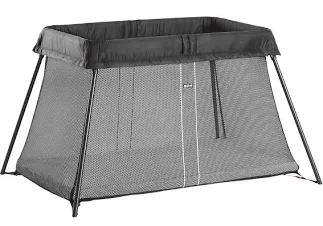
Our top pick across the board for most Australian families.
The value choice when you want the essentials without overspending.
The splurge pick if you want the most features and finish.
Frequently Asked Questions
Are travel cots safe for babies to sleep in every night?
For short-term and travel use, yes, a compliant portable cot that meets the Australian standard is safe for overnight sleep. However, travel cot mattresses are firmer and thinner than a standard cot mattress, so most families use them for trips and visits rather than as a permanent everyday bed. Always follow safe-sleep guidance: baby on their back, no loose bedding, and only the mattress supplied with the cot.
What’s the difference between a porta cot and a portable cot?
Honestly, nothing, in Australia the terms “porta cot”, “portable cot”, “porter cots” and “travel cots” are all used to describe the same fold-up mesh-sided cots. A “camping cot” or “camp cot” is different: those are ultra-light pop-up cots for supervised daytime use, the beach and camping.
Can I add my own mattress to make the travel cot more comfortable?
No, and this is really important. Adding an extra mattress, foam topper or padding creates a suffocation risk and can leave dangerous gaps. The firm base is firm by design. Only ever use the mattress that came with your cot or an official replacement made for that exact model.
How much should I spend on a travel cot in 2026?
Budget pop-up camp cots start at an approximate RRP of around $70–$120, solid value porta cots sit around $200–$260, and premium lightweight or feature-rich models run to around $450–$560 (all approximate RRP only). What you spend should reflect how often you’ll use it, frequent travellers get more value from a premium, easy-fold cot.
Do travel cots meet Australian safety standards?
Portable cots sold legally in Australia must comply with the mandatory safety standard regulated by the ACCC, based on AS/NZS 2195. Always check for compliance, buy new where possible so latches and mattresses are in good condition, and confirm all latches lock fully every time you set it up.
The Bottom Line
A travel cot is one of those purchases that quietly makes family life easier, turning chaotic trips, grandparent sleepovers and summer holidays into something genuinely manageable. The best one for you depends on how you’ll use it, but you can’t go far wrong with our standout pick, the BabyBjörn Travel Cot Light, for its blend of quality and effortless setup.
If you’re watching the budget, the Valco Baby Zee Sleep is a brilliant value porta cot with a newborn-friendly bassinet, and frequent flyers should look straight at the Phil & Teds Traveller. Whatever you choose, prioritise the safety basics, practise the setup before you go, and pack a familiar sheet from home.
Sweet dreams to your little one, wherever the road takes you this year. For up-to-date pricing and where to buy, head to our live comparison pages.
Where to buy these picks
✓ Verified prices are checked live at the retailer. Otherwise we show the approximate RRP (an indicative recommended price, not a live retailer price), or “price pending” where we don’t have one.
All 3 prices we track for this pick
- Whole Bubs $449 checked 17 Oct 2026
- Baby Kingdom $449.99 checked 17 Oct 2026
- Baby Village $479 checked 17 Oct 2026
Phil & Teds Traveller
Best for frequent flyers
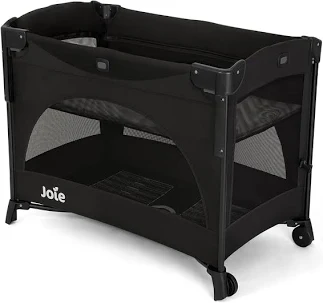
Joie Kubbie Sleep
Best low bassinet setup
4moms Breeze Plus
Best all-in-one travel cot
The shortlist, in your inbox
New winners, price drops and recalls worth knowing.