
Baby Walkers Australia 2026: Are They Safe? What Paediatric Physios Say
If you’ve been standing in the baby aisle at Baby Bunting lately, chances are you’ve paused in front of the baby walker section and wondered: are these actually okay? You’re not alone. Baby walkers are one of the most googled, most debated, and most gifted baby products in Australia, and yet so many mums aren’t entirely sure whether they’re doing more good than harm.
The honest answer? It’s complicated. And that’s exactly why we’ve looked at what Australian paediatric physiotherapists and safety authorities actually say, to get the real story in 2026. We’ve also pulled together everything you need to know about the safest options available right now, what Australian safety standards say, and how baby walkers fit into the bigger picture of your little one’s development.
Whether you’ve already got one sitting in the corner of your lounge room, or you’re weighing up whether to buy one this summer, this guide is here to help you make a confident, informed decision, no mum-guilt included.
Price checked 12 Jul 2026
What Exactly Is a Baby Walker, and Why Are They So Popular?
A baby walker is a frame with a seat in the centre that lets babies sit upright and move around using their feet, usually before they can walk independently. They typically have wheels on the base, a tray for toys, and various interactive features. The VTech baby walker range, for example, is hugely popular in Australia thanks to its bright lights, music, and educational buttons that keep babies engaged while they scoot around the kitchen.
Not sure yet? Put all 5 walkers & activity centres we rate next to each other.
Compare walkers & activity centres: prices, specs & safety →
There are also push-along baby walkers, sometimes called activity walkers or push walkers, which babies stand behind and push forward. A wooden baby walker in this style has become especially popular with parents who prefer natural, Montessori-inspired toys. These are a different category entirely from the seated wheeled style, and as we’ll see, they’re viewed very differently by health professionals too.
Baby walkers first became popular in the 1970s and 80s as a way to keep babies occupied and “help” them walk. Decades on, they remain one of Australia’s top-selling baby products. Big W, Kmart, Target AU, Baby Bunting, and even Chemist Warehouse all stock a range of options, with prices starting from around $49 for a basic model up to $179 or more for a premium VTech First Steps baby walker with full activity panels.
What Do Paediatric Physios Actually Think About Baby Walkers in 2026?
Here’s where things get nuanced, and where a lot of online content gets it wrong by presenting one extreme view or the other. The truth is, paediatric physiotherapists in Australia have a more measured, evidence-informed perspective.
The concerns are real. Australian paediatric physios consistently flag a few key issues with traditional seated baby walkers with wheels:
- They can delay walking, not help it. Research has shown that babies who spend significant time in seated wheeled walkers may actually reach independent walking milestones slightly later. This is because they’re not building the core strength, balance, and proprioception (body awareness) that comes from crawling, pulling to stand, and cruising along furniture.
- They encourage tip-toe walking. In a wheeled walker, babies often push off on their toes rather than using a heel-to-toe gait. Over time, this can reinforce patterns that physios then have to work to correct.
- Safety risks are significant. The ACCC (Australian Competition and Consumer Commission) has issued multiple warnings about baby walkers with wheels. Babies can reach dangerous heights, access hot drinks, open fireplaces, or swimming pools, and can fall down stairs at speed. These accidents can happen in seconds.
But it’s not all black and white. Physios are also clear that short, supervised periods in a baby walker are unlikely to cause lasting harm for most babies.
The consensus among Australian physios in 2026 is this: push walkers (the kind baby stands behind and pushes) get a much better tick than seated wheeled walkers. Push walkers support upright posture, encourage a more natural gait, and help babies build the real strength they need for independent walking. Seated wheeled walkers should be used sparingly, if at all, and always with close supervision and safety modifications in your home.
ACCC Safety Standards: What Australian Parents Need to Know
Australia has mandatory safety standards for baby walkers, regulated by the ACCC under the Competition and Consumer (Baby Walkers) Safety Standard. If you’re buying a baby walker in Australia in 2026, here’s what to look for:
- The walker must have a braking mechanism that stops it from going over a step or ledge.
- It must meet minimum stability and strength requirements.
- It must carry clear warnings about supervision requirements and age/weight limits.
- It must comply with Australian Standards (AS/NZS) where applicable.
Always check that any walker you buy, whether from Baby Bunting, David Jones, or an online marketplace, meets these Australian standards. Be especially cautious with second-hand walkers purchased through Facebook Marketplace or garage sales, as older models may predate current safety requirements. When in doubt, check the ACCC Product Safety Australia website for recalls and compliance information before buying.
One practical safety tip from physios and child safety experts: if you do use a wheeled baby walker, use it only on smooth, level floors, never near stairs, ramps, swimming pools, or outdoor areas. Door barriers or safety gates at every stair and hazard point are non-negotiable.
The Best Baby Walker Options in Australia Right Now
So what’s actually worth buying in 2026? Here’s a breakdown of the most popular categories available at Australian retailers right now.
Push-Along Baby Walkers (What Physios Recommend)
These are the walkers that paediatric physios genuinely get behind. Baby stands behind a frame or trolley shape and pushes it forward, building balance, leg strength, and coordination.
- Wooden baby walker options like those from Bigjigs, PlanToys, and Hape are widely available at Baby Bunting and David Jones, ranging from around $59 to $119 AUD. They often double as shape-sorters or activity tables, adding excellent play value.
- VTech First Steps Baby Walker is one of Australia’s most popular push walkers. It features a removable activity panel, music, and lights, and can be adjusted for speed resistance, a key feature that helps babies build strength rather than zooming off too fast.
- Look for push walkers with adjustable resistance on the wheels. A walker that rolls too freely can actually cause babies to fall forward rather than building their own balance.
Seated Baby Walkers with Wheels
If you choose to use one of these, look for models that meet all ACCC standards and have solid braking features.
- VTech baby walker seated models range from simple entry-level options up to more feature-rich versions with adjustable speed resistance.
- Look for wide bases (more stable), friction strips on the bottom of the wheels, and adjustable seat heights so baby isn’t hunching or stretching uncomfortably.
- Age and weight limits vary, most are suitable from around 6 months (when baby has good head and trunk control) up to around 12 months or when baby begins walking independently.
The honest bottom line from our research: if budget allows, a best baby walker pick from the push-along category is the smarter developmental choice. If you already have a seated wheeled walker, use it in short bursts on safe surfaces with you in the room.
Baby Walking Shoes: Do You Actually Need Them?
While we’re on the topic of baby walking, let’s talk about feet, because this is another area where there’s a lot of conflicting advice out there.
The good news is that most Australian paediatric physios agree: babies learning to walk indoors are best off barefoot. Walking without shoes allows babies to feel the ground beneath them, which is essential for developing balance and strengthening the small muscles of the feet and ankles. On safe indoor surfaces, bare feet win every time.
That said, baby walking shoes and best baby walking shoes do have their place, mainly for outdoor surfaces, hot pavement (especially relevant in the Australian summer), rough ground, or when visiting places where bare feet aren’t practical.
If you’re shopping for baby walking shoes in Australia in 2026, look for:
- Flexible, thin soles that allow the foot to feel the ground (avoid stiff or heavily cushioned soles)
- Wide toe boxes that let little toes spread naturally
- Lightweight materials, heavy shoes tire little legs out quickly
- Secure fastenings, velcro works better than laces for wriggly babies
Popular options available in Australia include Bobux, Attipas, and Stonz, all available through Baby Bunting and specialty baby boutiques, ranging from around $45 to $95 AUD. Avoid handing down old, worn walking shoes, the shape of one child’s foot will have moulded the shoe, which isn’t ideal for another child’s development.
mum.com.au Approved: Our Top Picks for 2026
After reviewing ACCC safety compliance and researching what’s available at Australian retailers right now, here are our honest recommendations:
- ✅ Best Overall Baby Walker (Push Style): VTech First Steps Baby Walker, widely available at Baby Bunting, Big W, and Kmart for around $79–$99. Adjustable wheel resistance, removable activity panel, and solid safety features make this a genuine winner for developmental support.
- ✅ Best Wooden Baby Walker Hape Wonder Walker for. Beautiful, Montessori-friendly design with adjustable resistance and excellent stability. A great option if you prefer natural materials.
- ✅ Best Budget Push Walker: The Kmart push walker range starts from around $29 and while simpler in features, meets Australian safety standards and does the developmental job well.
- ⚠ Seated Wheeled Walkers Use with caution and always follow ACCC guidelines. Short, supervised sessions only. The VTech seated walker range is compliant with Australian standards if you do choose this option.
- ✅ Best Baby Walking Shoes: Bobux Step Up range. Flexible, wide-toed, and designed specifically for new walkers.
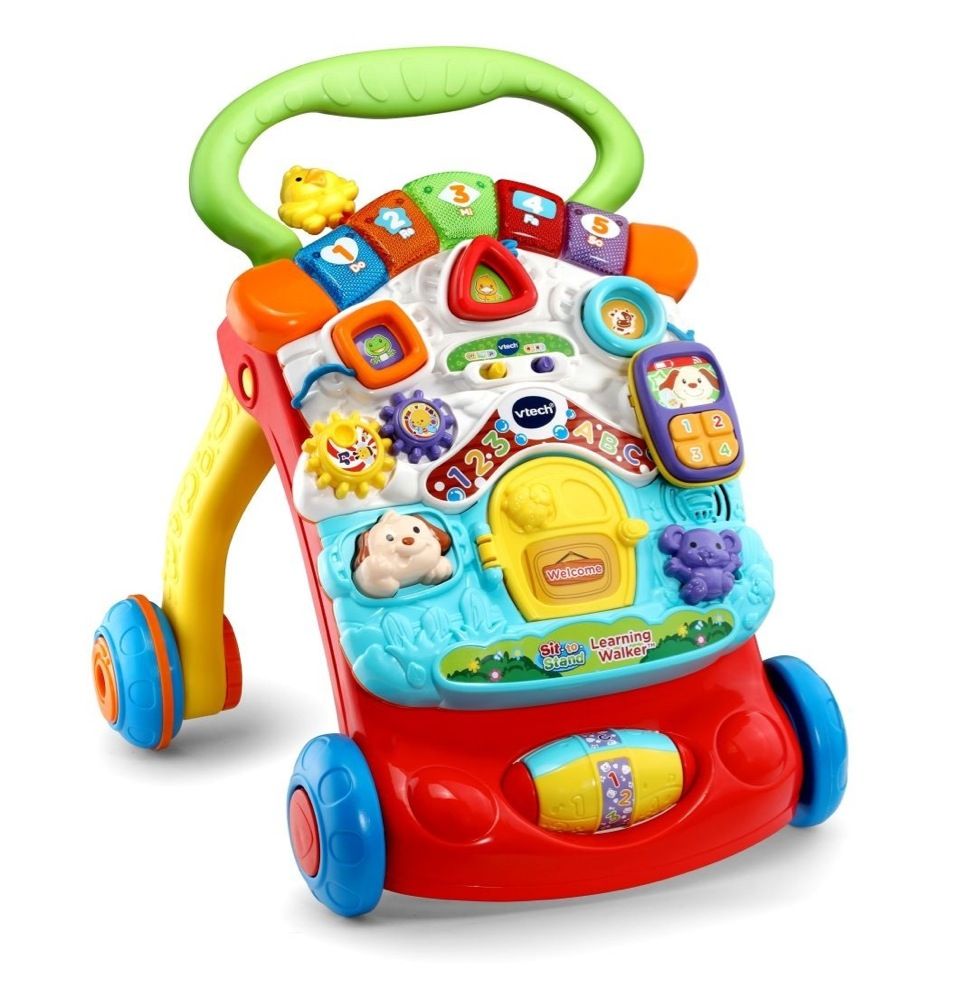
Our top pick across the board for most Australian families.
Price checked 12 Jul 2026
The value choice when you want the essentials without overspending.
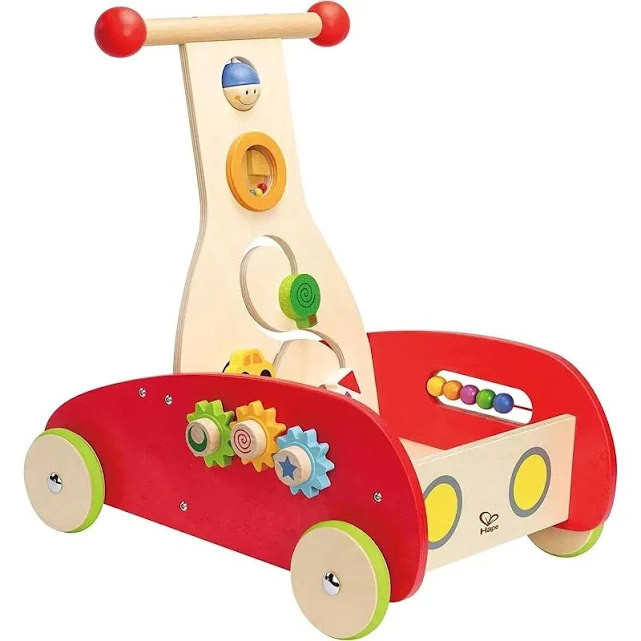
The splurge pick if you want the most features and finish.
Frequently Asked Questions About Baby Walkers in Australia
Are baby walkers banned in Australia?
No, baby walkers are not banned in Australia, unlike Canada, which banned them in 2004. However, the ACCC has strict mandatory safety standards that all baby walkers sold in Australia must meet. Always check compliance before purchasing, especially for second-hand items.
At what age can my baby use a walker?
Most baby walkers are designed for babies from around 6 months of age, when they have sufficient head and neck control and can sit with support. However, developmental readiness varies between babies. Check your specific product’s age and weight guidelines, and chat with your child health nurse or GP if you’re unsure.
Will a baby walker help my baby walk faster?
Despite what many people assume, research suggests that seated wheeled walkers do not speed up walking milestones, and may slightly delay them. Push-along walkers are a better choice if your goal is to support natural walking development, as they build the core strength and balance babies actually need.
Is a wooden baby walker better than a plastic one?
From a developmental perspective, what matters most is the walker’s design (push-along style with adjustable resistance) rather than the material. That said, wooden baby walkers tend to be heavier and more stable, which can be a safety advantage. They’re also more durable and better for the environment. The choice often comes down to budget and personal preference.
What should I look for when buying baby walking shoes?
Look for flexible, thin soles, a wide toe box, lightweight materials, and secure fastenings. Avoid stiff soles or heavily padded designs. Remember that barefoot is best indoors, shoes are mainly for outdoor protection and practical situations.
The Bottom Line
Baby walkers are not the developmental villains they’re sometimes made out to be, but they’re also not the walking shortcut many parents hope for. The key takeaway from Australian paediatric physios in 2026 is clear: push-along walkers are a genuinely helpful tool for supporting baby walking development, while seated wheeled walkers should be used with care, in short sessions, with full safety precautions in place.
Whatever you choose, trust your instincts as a mum. You know your baby best. Use the expert guidance as a framework, not a guilt trip. And if you ever have concerns about your baby’s walking development, your local child health nurse or a paediatric physiotherapist is always worth a visit, most are covered by Medicare or private health in Australia, so it’s more accessible than you might think.
Happy walking, little ones.
Where to buy these picks
✓ Verified prices are checked live at the retailer. Otherwise we show the approximate RRP (an indicative recommended price, not a live retailer price), or “price pending” where we don’t have one.
VTech First Steps Baby Walker
★ Best for new walkers
All 2 prices we track for this pick
- Baby Bunting $69.95 checked 4 Oct 2026
- Babies R Us $69.95 checked 7 Oct 2026
Hape Wonder Walker
Best wooden walker
The shortlist, in your inbox
New winners, price drops and recalls worth knowing.