
Best Baby Food Makers Australia 2026: Steam & Blend vs Just a Regular Blender?
Somewhere between the 4-month check-up and the first spoonful of mush, most Australian parents hit the same fork in the road: buy a dedicated baby food maker, or just dig out the blender that’s already sitting in the cupboard. It’s not a small decision when you’re already juggling sleep deprivation and a dozen open browser tabs comparing prices, and the marketing for steam-and-blend machines makes it sound like solids simply won’t work without one.
The truth, after digging through the actual specs, manuals and what thousands of Australian owners report, is more nuanced. A proper baby food maker earns its keep for some families and is genuinely unnecessary for others. This guide walks through what separates a good baby food steamer and blender from an average one, when your existing NutriBullet or food processor is honestly fine, and which specific machines are worth your money in 2026.
What to look for in a baby food maker
Every steam-and-blend machine on the shelf claims to make weaning easier. The differences that actually matter show up once you’re three weeks in, standing at the bench with a screaming baby in the next room, trying to get a batch of pumpkin puree done before the next feed.
- Real batch size: a 400ml bowl sounds fine in the shop but means cooking again every second day. Check the actual capacity against how many meals you want to freeze in one go.
- One-appliance workflow: steaming and blending in the same bowl (rather than steamer basket in one gadget, blender jug in another) is the entire point of a dedicated baby food maker. If a model makes you transfer food between two separate vessels, ask whether it’s really saving you a step over a saucepan and a stick blender.
- BPA-free, dishwasher-safe parts: purees are messy and daily. Anything that needs hand-washing every night will get resented fast.
- Compatibility with baby food containers: look for machines sold with, or compatible with, freezer trays or pots sized for baby portions, so you’re not decanting puree into a dozen mismatched tubs.
- Noise and speed: some steam-and-blend machines run a 15 to 20 minute steam cycle before blending even starts. If you’re batch-cooking at nap time, that window matters.
- Electrical safety compliance: as with any small kitchen appliance sold here, it should meet the relevant Australian Standard for household electrical appliances (AS/NZS 60335), which covers things like insulation, heating element safety and overheating protection.
Steam & blend vs just a regular blender: the real trade-off
What a dedicated baby food maker actually gets you
The pitch behind machines like the Beaba Babycook or Philips Avent range is genuinely useful for the first six to eight weeks of solids: steam a small amount of veg or fruit, then blend it in the same bowl without touching a hot saucepan or transferring anything. For a newborn-to-6-month household running on fumes, that one-appliance simplicity is worth something real, especially if nobody else in the house is free to hover over a stove.
Where a regular blender or food processor holds up fine
Once your baby moves past smooth first purees (usually somewhere between 6 and 9 months, per Australian Dietary Guidelines on introducing solids), most families are cooking bigger batches of family food and blending or mashing portions off to the side, rather than steaming tiny single servings. At that point a full-size food processor like a Breville Kitchen Wizz, or even a countertop blender you already own, does the job just as well and holds far more volume per batch, meaning fewer cook-ups per week.
- Choose a dedicated steamer and blender if you’re starting solids from scratch, want the fewest steps possible, and will genuinely use the steam function weekly rather than twice.
- Stick with your regular blender if you already batch-cook family meals, want bigger portions per session, or you’re past the smooth-puree stage and moving into mashed and lumpy textures.
- Consider baby food pouches for the days cooking simply isn’t happening. Reusable squeeze pouches you fill yourself from your own puree, or shop-bought pouches for on-the-go, both have their place and neither is a failure.
- Organic baby food, whether homemade from organic produce or bought in pouches, is a personal call rather than a nutritional necessity. The bigger factor for babies’ nutrition is variety and iron-rich foods introduced from around 6 months, not organic certification specifically.
The best baby food makers in Australia for 2026
1. Beaba Babycook Neo
The Babycook Neo is the one most Australian parenting circles land on when they want a single, well-built machine that does the whole steam-then-blend job without fuss. Its bowl handles a reasonable batch for a young baby, the digital display takes the guesswork out of steam timing, and the keep-warm function means you’re not reheating from cold every feed.
It’s not cheap, sitting at an approx. RRP of roughly $260 to $300, and the bowl still isn’t large enough for a full week’s meals in one hit if you’ve got a hungry older baby. But for the first stretch of purees, it’s the machine most owners report actually keeps getting used rather than shoved in a cupboard after month two.
- One bowl for both steaming and blending, minimal cleanup
- Digital timer removes guesswork on steam duration
- BPA-free bowl and dishwasher-safe parts
- Premium price point relative to the category
- Batch size still modest for a big appetite baby

Beaba Babycook Neo
2. Philips Avent 4-in-1 Healthy Baby Food Maker
Philips Avent’s combined steamer and blender adds reheat and defrost cycles to the standard steam-and-blend function, which is handy once you’ve got a freezer stash of baby food containers to work through. It’s a familiar, widely reviewed name in Australian nurseries, and parts are easy to find if a seal or blade needs replacing down the track.
Expect an approx. RRP around $150 to $180, sitting comfortably as the mid-to-premium option. The blending motor is noticeably less powerful than a standalone blender when purees include fibrous veg like broccoli stalks, so some parents strain or pre-chop stringier vegetables first.
- Four functions in one unit: steam, blend, reheat, defrost
- Widely available spare parts and accessories
- Dishwasher-safe bowl and lid
- Blending power can struggle with fibrous vegetables
- Steam cycle takes longer than boiling on the stovetop
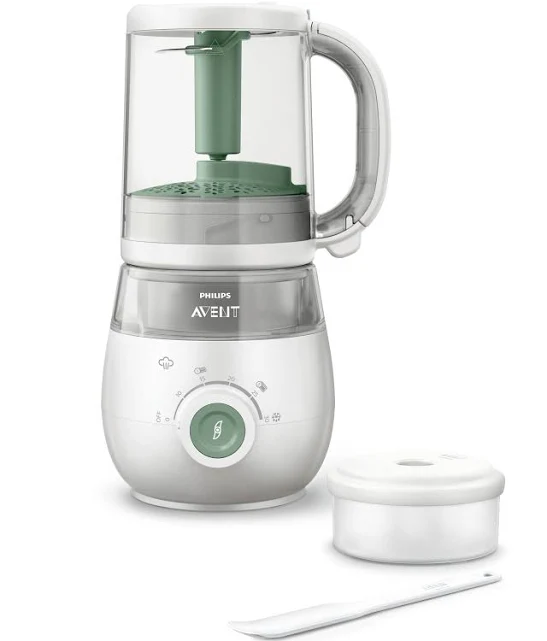
Philips Avent 4-in-1 Healthy Baby Food Maker
3. NutriBullet Baby Complete Food Maker
If the NutriBullet twist-and-blend action already lives in your kitchen for smoothies, the NutriBullet Baby line applies the same familiar mechanism to a baby-sized steamer and blending cup set, usually bundled with freezer storage pots and a basic recipe guide. It’s the most affordable steam-and-blend option worth naming here, and the twist-lock cup system means less faffing with buttons one-handed while holding a baby on your hip.
Approx. RRP typically sits around $120 to $150, making it the clear budget pick among dedicated machines. The steaming capacity is small, so multiple short batches are the norm rather than one big weekly cook-up, and the plastic cups can cloud or scratch with heavy dishwasher use over time.
- Familiar twist-blend mechanism if you already own a NutriBullet
- Comes with baby food containers for freezing, so nothing extra to buy
- Most affordable of the dedicated steam-and-blend machines
- Small steaming capacity means more frequent, smaller batches
- Plastic components need replacing sooner than metal-bowl rivals
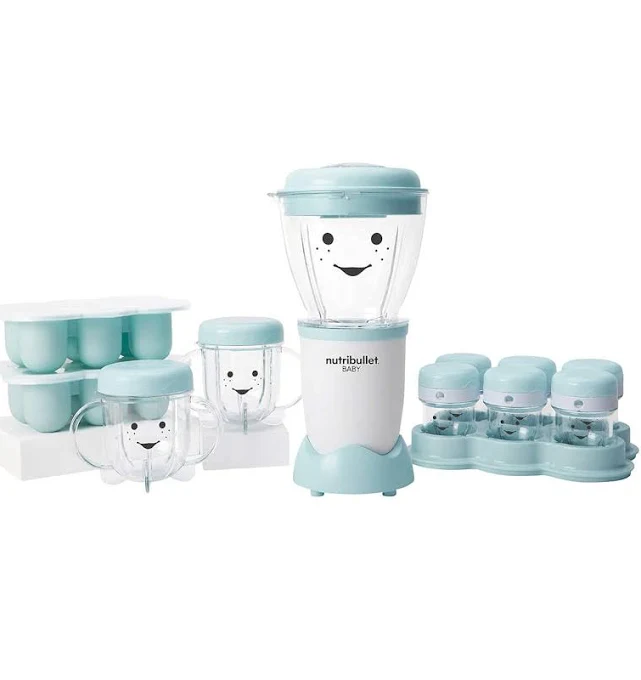
NutriBullet Baby Complete Food Maker
4. Breville the Kitchen Wizz Pro Compact
This is the honest \”just a regular blender\” answer, and it deserves a genuine spot on this list rather than a footnote. A full-size food processor like the Kitchen Wizz Pro Compact steams nothing itself, so you’ll need a stovetop steamer basket or microwave steamer alongside it, but the bowl capacity dwarfs any dedicated baby machine, meaning one Sunday session can fill a week of baby food containers plus leftovers for family meals.
Approx. RRP runs roughly $150 to $220 depending on the specific model, and unlike single-purpose baby gadgets, it keeps earning its bench space for years after weaning finishes, chopping, pureeing and processing everyday family cooking. The trade-off is genuinely two appliances and two washing-up jobs instead of one.
- Large bowl capacity, ideal for big batch cook-ups
- Doubles as a long-term kitchen appliance well beyond baby food
- Powerful motor handles fibrous vegetables with ease
- No integrated steaming, needs a separate steamer or saucepan
- Bulkier to store than a compact baby-specific machine
Breville the Kitchen Wizz Pro Compact
How they compare
| Product | Brand | Approx RRP | Key features | Best for |
|---|---|---|---|---|
| Babycook Neo #1 | Beaba | approx. $260 to $300 | One-bowl steam and blend, digital timer, keep-warm | Parents starting solids who want minimal steps |
| 4-in-1 Healthy Baby Food Maker Premium | Philips Avent | approx. $150 to $180 | Steam, blend, reheat and defrost in one unit | Families reheating from a freezer stash regularly |
| Baby Complete Food Maker Budget | NutriBullet | approx. $120 to $150 | Twist-blend cups, includes storage pots | Existing NutriBullet households on a budget |
| the Kitchen Wizz Pro Compact | Breville | approx. $150 to $220 | Large-capacity food processor, no steaming function | Big batch cooks and post-weaning family meals |
mum. Approved: our top 3 for 2026
The most seamless one-bowl steam-and-blend workflow of the group, and the machine owners keep using past month two.
Comes bundled with storage containers, so there’s nothing extra to add to the shopping list.
The extra reheat and defrost functions make working through a freezer stash genuinely easier.
Frequently asked questions
Do I actually need a dedicated baby food maker, or will my regular blender do the job?
Neither answer is wrong. A dedicated steam-and-blend machine saves time and mess in the first few weeks of purees, but a regular blender or food processor you already own, paired with a stovetop or microwave steamer, produces the same result and is often more economical if you’re already batch-cooking family food.
What’s the safest age to start puree and which textures should I move through?
Australian guidelines generally recommend introducing solids around 6 months, alongside continued breastmilk or formula, starting with smooth purees before moving to mashed and then soft finger foods as your baby develops the ability to chew and self-feed. Any baby food maker’s steam-and-blend cycle is designed around this smooth-to-lumpy progression.
Are baby food pouches okay to use instead of homemade puree?
Yes, in moderation. Store-bought pouches are convenient for outings and busy weeks, and reusable squeeze pouches filled with your own puree work well for the same reason. Many families use a mix: homemade batches from a baby food maker at home, pouches for the car or daycare bag.
What baby food containers should I use for freezing purees?
Small silicone or BPA-free plastic trays with individual portion pots (often sold alongside or included with dedicated baby food makers) freeze and pop out more cleanly than ice cube trays, and many stack neatly in a standard freezer door. Look for ones that are dishwasher and microwave safe if you’ll be reheating straight from frozen.
Is a book like The Baby Food Bible worth reading alongside a new machine?
Resources like Nadia Felsch’s \”The Baby Food Bible\” are a genuinely useful companion to any baby food steamer and blender, since the machine handles the mechanics of steaming and blending but a good guide covers the sequencing, allergen introduction and portion sizes that new parents usually have questions about.
If we had to choose one, the Beaba Babycook Neo is our 2026 pick for families starting solids from scratch who want the fewest steps between raw veg and a bowl of puree. On a tighter budget, the NutriBullet Baby Complete Food Maker won’t let you down, especially if a NutriBullet already lives on your bench. And if you’re already batch-cooking family meals, don’t feel pressured into a single-purpose gadget: a full-size processor like the Breville Kitchen Wizz Pro Compact paired with a simple steamer basket does the job just as well, and keeps earning its keep long after the purees stop.
Where to buy these picks
✓ Verified prices are checked live at the retailer. Otherwise we show the approximate RRP (an indicative recommended price, not a live retailer price), or “price pending” where we don’t have one.
All 3 prices we track for this pick
- Baby Village $399 checked 7 Oct 2026
- Baby Kingdom $399.99 checked 7 Oct 2026
- Whole Bubs $449 checked 7 Oct 2026
NutriBullet Baby Complete Food Maker
Best value
Philips Avent 4-in-1 Healthy Baby Food Maker
Best for freezer stashes
Breville the Kitchen Wizz Pro Compact
Best for big batch cooking
The shortlist, in your inbox
New winners, price drops and recalls worth knowing.