

Best Kids Digital Camera Australia 2026: VTech vs Real Cameras
It usually starts the same way. You are at the beach, or the zoo, or halfway up a bush track, and a small hand appears in front of you asking for your phone “just for one photo”. Twenty minutes and three hundred blurry shots of a lorikeet later, you start googling kids cameras, and that is where the trouble begins: a wall of chunky plastic toys with cartoon dinosaurs on them, next to a wall of “40 megapixel” no-name gadgets, next to actual cameras that cost more than your last pram.
The question underneath all of it is a fair one. Is a VTech a real camera, or is it a toy that happens to take pictures? And if it is the second thing, is there something out there that a six or eight year old can use without you flinching every time they swing it by the strap?
Below is the shortlist, sorted by the two things that actually matter at the shelf: how old your child is, and whether you care about the photos being any good. We have not handled these cameras ourselves. What follows is built from published specifications, Australian safety standards, the design trade-offs each one makes, and what owners consistently report living with them.
VTech vs a real camera: what you are actually choosing between
This is the fork in the road, and almost every disappointed purchase comes from picking the wrong side of it. A VTech KidiZoom is a toy first and a camera second. A compact camera is a camera first and takes no interest at all in whether a four year old drops it on the driveway.
What a VTech KidiZoom really is
VTech’s KidiZoom range is built around a tiny sensor, a fixed plastic lens, a chunky rubberised body with two hand grips, and a software layer stuffed with silly filters, a voice changer and built-in games. The megapixel figures quoted on the box are generous: these are small sensors doing a lot of upscaling, so photos look soft, noisy in low light, and best viewed on a phone screen rather than printed above the couch.
That is not a criticism so much as a description of the job. A KidiZoom exists so a three to six year old can press a button, see themselves with a dinosaur head on, and not cry when it hits the tiles. For that job it is excellent, and because it is sold as a toy it is designed to meet AS/NZS ISO 8124, the Australian and New Zealand toy safety standard covering things like small parts, sharp edges, cords and flammability.
What a real camera gives you
A basic compact such as the Kodak PixPro FZ45 has a larger sensor, a genuine optical zoom and normal photographic controls. Your child’s photos of the dog will look like the dog. It will also survive a drop exactly as well as any other piece of consumer electronics, which is to say, sometimes, and it is not covered by the toy standard at all.
The honest summary
- Under 5: buy the toy. A KidiZoom, or nothing. Image quality is not the point at this age and a real camera will not last the term.
- 5 to 7: the grey zone. If your child is careful and genuinely interested in photos, a cheap real compact is the better buy. If the camera is going to live in a school bag or a sandpit, stay with VTech.
- 8 and up: buy a real camera. Kids this age notice that their photos look worse than the ones on your phone, and a toy camera gets abandoned in a drawer within a month.
- Any age, around water: only a properly rated waterproof body will do. “Splash resistant” and “comes with a case” are not the same thing as a metre rating.
What to look for in a kids digital camera
Ignore the megapixel number on the front of the box. These are the things that decide whether the camera gets used in February or forgotten by Boxing Day.
- Realistic age match: VTech labels most KidiZoom models for roughly 3 to 9 years, but the sweet spot is far narrower. A seven year old will outgrow the games and filters fast.
- Battery type: AA cells mean you can swap them anywhere at 7am on a holiday morning. A built-in rechargeable means a USB cable you will absolutely lose. Neither is wrong, but decide which suits your household.
- Memory card included, or not: most kids cameras hold only a handful of photos in internal memory. A microSD card is usually essential and usually not in the box, so budget for one.
- No wi-fi, no accounts, no ads: a standalone camera cannot upload anything, show anything, or ask for a login. For many families that is the single biggest advantage over handing over an old phone.
- Screen you can see in Australian sun: small, dim LCDs are hopeless at a midday cricket game or on white sand. Bigger and brighter wins.
- A water rating in metres: if beach, pool and rockpool holidays are your reality, look for a stated depth rating rather than vague splash-proof wording.
- Sensible strap: a short wrist strap is safer for little ones than a long neck cord. Check anything cord-like on a camera used by a child under three.
- Consumables you can actually keep buying: instant-print cameras are brilliant until the refills run out. Film and thermal paper are ongoing costs, so factor them in before you commit.
- How it feels in small hands: two grips and a big shutter button beat a slim metal body for anyone under about seven, regardless of what the specs say.
The best kids cameras in Australia for 2026
Seven picks, covering toddlers through to teenagers, with the trade-offs spelled out. Prices are approximate recommended retail ranges only, because real-world pricing moves constantly.
1. Kodak PixPro FZ45
This is our best overall pick for one unglamorous reason: it is a genuine camera at a price where a scratched body is annoying rather than devastating. With a 16MP sensor, a 4x optical zoom starting at a usefully wide 27mm equivalent and a straightforward point-and-shoot interface, it does the thing a toy camera cannot, which is produce photos your child can print, stick on the fridge and feel proud of.
It runs on two AA batteries, which is quietly one of the best features on this list. No proprietary charger, no flat camera on day three of a camping trip, just a spare pair in the glovebox. Approximate RRP sits in the region of approx. $130 to $180, which puts it in the same money as a mid-range toy camera while taking dramatically better pictures.
The catch: it is not ruggedised, not weather sealed, and has no toy-standard drop testing behind it. It is a slim little compact. Suited to roughly seven years and up, or a careful six year old with supervision.
- Real optical zoom, so distant subjects stay sharp rather than turning to mush
- AA batteries make it genuinely holiday-proof
- Light and slim enough for small hands and small bags
- Video is basic and is not the reason to buy it
- No water or shock protection at all, so sand and pools are a real risk
Kodak PixPro FZ45
2. VTech KidiZoom Duo DX
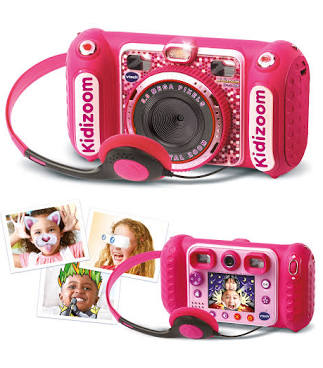
If your child is three to six, this is the one. The Duo DX has a rear camera and a front-facing selfie lens, a 2.4-inch colour screen, a fat rubberised body with a grip on each side, and enough silly effects, voice-changing and photo frames to keep a preschooler entertained on a long drive down the coast. VTech positions the range for roughly 3 to 9 years, and it comfortably meets the toy safety expectations set out in AS/NZS ISO 8124, which covers mechanical and physical properties, sharp edges and small parts for toys sold here.
Approximate RRP lands around approx. $90 to $120. Photos are exactly what you would expect from a toy sensor: fine outdoors in good light, soft and grainy indoors, and best kept at screen size. Owners consistently report the games are as much of a draw as the camera, which is either a bonus or a nuisance depending on your screen-time rules.
It charges over USB rather than eating a drawer full of batteries, though VTech’s wider line-up mixes rechargeable and AA models, so it is worth glancing at the packaging before you commit. Add a microSD card or the internal memory fills quickly.
- Built to be dropped, which is the entire point at this age
- Front and rear lenses, so selfies work without an awkward flip
- Filters, frames and voice effects that genuinely delight a four year old
- Photo quality is toy-grade, so do not plan on framed prints
- The built-in games can quietly turn it into a handheld console
VTech KidiZoom Duo DX
3. OM System Tough TG-7
The premium pick, and the one that solves the problem no toy camera can: Australian summer. The TG-7 is waterproof to 15 metres, shockproof from around 2.1 metres, crushproof, freezeproof and dustproof, with a bright f/2.0 lens and a set of macro and microscope modes that turn a rockpool into an afternoon’s entertainment. It shoots RAW and 4K video, so it is a camera you will happily use yourself.
Approximate RRP is in the region of approx. $850 to $1,000, which is a serious amount of money to hand an eight year old. The honest way to think about it is as a family camera the kids are allowed to use, not a kids camera. Bought that way it makes complete sense, because it is the only camera here that can go snorkelling, get buried in sand, be rinsed under a tap and keep working.
Image quality from its small sensor is good rather than extraordinary in low light, and you are paying mostly for the armour. If your holidays involve water, the armour is the feature.
- Proper depth rating, not a case, so no leaks from a badly closed door
- Survives drops, sand and salt water with a rinse
- Macro modes that make bugs, shells and rockpools genuinely exciting
- Expensive enough that letting a child carry it takes nerve
- Small sensor means indoor and night shots are only average
OM System Tough TG-7
4. VTech KidiZoom PrintCam
The instant-print idea, done at a price that suits primary school. The PrintCam takes a photo and then prints it on the spot in black and white on thermal paper, which children can colour in, cut up and stick in a scrapbook. For a five to nine year old the magic of a photo appearing in your hand is a completely different thrill from another file on a memory card.
Approximate RRP is roughly approx. $170 to $230. It runs the usual KidiZoom mix of filters, frames and games alongside the printing, and like the Duo DX it is built as a toy first, with the drop tolerance that implies.
The trade-off is the paper. Thermal rolls are a consumable, they are not free, and thermal prints fade over months rather than lasting decades, so anything precious should be printed properly from the digital file as well. Kids also print constantly at first, so buy spare rolls with it.
- Instant physical prints that children can colour in and keep
- Saves the digital file too, so the good shots are not lost when the paper fades
- Chunky toy build that handles the school holidays
- Ongoing paper cost, and the first roll disappears fast
- Prints are black and white only and will fade over time
VTech KidiZoom PrintCam
5. Fujifilm Instax Mini Evo
The tween and teen pick, and the most stylish thing on this list by a wide margin. The Mini Evo is a hybrid: it takes digital photos, shows them on a rear screen, and lets you choose which ones to print onto Instax Mini film. That single feature is the reason it earns its place, because it stops the heartbreak of a full pack of film spent on blurry photos of somebody’s shoe.
There are ten lens effects and ten film effects that combine into around a hundred looks, dialled in with a satisfying physical lever and dial. Approximate RRP is in the region of approx. $300 to $350, plus film. Expect film to cost roughly approx. $1 to $1.50 per shot depending on pack size, which is a real ongoing cost worth mentioning to a child before the birthday.
It is not rugged and not waterproof, and the digital files it saves are low resolution by modern standards, so treat the digital side as a preview rather than an archive. This is a camera for a careful ten year old and up.
- Print only the shots worth printing, which saves a fortune in film
- Effects dials make it feel like a proper camera, not a toy
- Instax Mini film is easy to keep buying in Australia
- Digital files are low resolution, so back up the prints by scanning
- No weather sealing and a premium price for a school bag
Fujifilm Instax Mini Evo
6. Fujifilm Instax Mini 12
Included honestly: this is not a digital camera at all. It is pure film, with no screen, no memory card and no undo. Every press of the shutter costs money. And yet it remains one of the most requested items on Australian birthday lists for eight to fourteen year olds, because a photo you can hand to a friend at the end of a party beats a photo that lives in a folder.
Approximate RRP sits around approx. $110 to $150. Operation could not be simpler: twist the lens to turn it on, twist again for close-up mode, and the automatic exposure handles the rest. That simplicity is exactly why it works for kids who are not remotely interested in settings.
The discipline it teaches is real, because ten shots per pack forces a child to think before shooting. The flip side is the cost per photo and the total absence of a screen to check what they got.
- Dead simple, with almost nothing to learn or break
- Physical prints to swap with friends, which is most of the appeal
- Cheerful colours and a light body that suits smaller hands
- No screen, no deleting, no second chance at a bad shot
- Film cost adds up quickly, and there is no digital copy at all
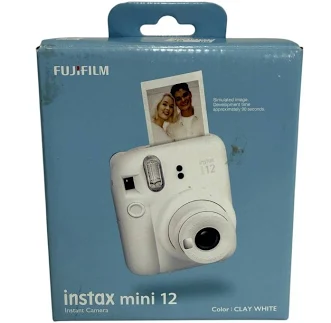
Fujifilm Instax Mini 12
7. GoPro HERO13 Black
For the child who does not want to take photographs so much as film themselves going down a hill at speed. The HERO13 Black is waterproof to around 10 metres without a housing, tough enough for bikes, skateboards and surf, and shoots very high resolution video with stabilisation that smooths out the chaos of an eight year old running.
Approximate RRP is roughly approx. $600 to $750 before you add mounts, spare batteries and a fast microSD card, which you will. It is a genuinely capable camera that a parent will borrow constantly, and its ultra-wide look is unmistakable, for better and worse.
Consider the trade-offs honestly: there is no optical zoom, the wide lens distorts faces at close range, battery life drops noticeably in Australian heat, and getting footage off it usually means a phone app and an account. For still photos of the family it is the weakest camera here. For a water-obsessed kid it is the most fun.
- Waterproof without a housing, so pool and surf use is straightforward
- Excellent stabilisation for bike, scooter and skate footage
- Enormous range of mounts for helmets, boards and chest harnesses
- Hot weather and long clips drain the battery fast, so buy a spare
- Wide-angle look is not flattering for ordinary photos of people
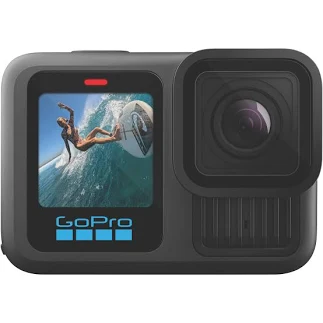
GoPro HERO13 Black
Kids camera comparison at a glance
| Product | Brand | Approx RRP | Key features | Best for |
|---|---|---|---|---|
| PixPro FZ45 #1 | Kodak | approx. $130 to $180 | 16MP, 4x optical zoom, runs on AA batteries | First proper camera, roughly 7 years and up |
| KidiZoom Duo DX Budget | VTech | approx. $90 to $120 | Dual lenses, 2.4in screen, filters and games, toy-grade build | Ages 3 to 6, first camera that survives drops |
| Tough TG-7 Premium | OM System | approx. $850 to $1,000 | Waterproof to 15m, shockproof, macro modes, 4K video | Beach and holiday families who share one camera |
| KidiZoom PrintCam | VTech | approx. $170 to $230 | Prints black and white thermal photos instantly, saves digital files | Ages 5 to 9 who love making things |
| Instax Mini Evo | Fujifilm | approx. $300 to $350 | Hybrid digital and instant, 100 effect combinations, print-what-you-choose | Tweens and teens who want prints without waste |
| Instax Mini 12 | Fujifilm | approx. $110 to $150 | Film only, automatic exposure, close-up mode, no screen | Party and friendship photos, ages 8 and up |
| HERO13 Black | GoPro | approx. $600 to $750 | Waterproof to 10m, strong stabilisation, huge mount range | Bikes, skateparks, surf and pool video |
We’ve reviewed 37 kids toys in total — compare the full list before you decide.
Age by age: which camera suits which stage
Most of the regret around kids cameras comes from buying a stage ahead or a stage behind. Here is the rough map.
Ages 3 to 5
- Buy a toy camera and accept toy-grade photos. The VTech KidiZoom Duo DX is the obvious choice.
- Prioritise grip shape and drop tolerance over everything else.
- Use a short wrist strap rather than a neck cord at this age.
- Expect several hundred photos of the floor, the cat’s tail and the inside of the car. This is normal.
Ages 6 to 9
- The crossover years. A cheap real compact such as the Kodak PixPro FZ45 starts to make sense if your child is careful.
- If the novelty of making something is the draw, the VTech KidiZoom PrintCam holds attention longer than a plain toy camera.
- Teach the memory card routine early: photos come off the card and onto a computer, so nothing is lost when the card fails.
Ages 10 and up
- Toy cameras are done. Kids this age compare their photos to phone photos and lose interest instantly if they look worse.
- The Fujifilm Instax Mini Evo suits the social, print-it-and-share-it instinct without burning a pack of film per party.
- For sport, surf and skate, the GoPro HERO13 Black earns its keep, but set expectations about mounts and batteries being extra.
- If the interest is genuinely photography, a rugged real camera like the OM System Tough TG-7 will keep up for years.
What we would skip
There is a large category of kids cameras that exists mostly to hit a low price point at gift time. A few patterns are worth recognising before you spend.
- Wildly inflated megapixel claims. A no-name camera advertising 40 or 50 megapixels from a sensor smaller than a fingernail is interpolating, not resolving. The photos will look worse than a KidiZoom, not better.
- Unbranded cameras with no importer behind them. If nobody local is responsible for the product, a fault in month three is your problem. House-brand toys from established Australian brands such as Anko are a different matter, because there is a company standing behind them.
- “Waterproof” with no depth rating. Splash resistance and a rubber flap are not a rating in metres. Sand in a poorly sealed door ends a camera permanently.
- Toy cameras bought for eight to ten year olds. The single most common complaint is that an older child used it twice and abandoned it. Spend the same money on a basic real camera instead.
- Instant-print cameras with obscure refills. Before you buy, make sure the paper or film is a mainstream format you can keep buying in Australia, not a proprietary roll from a brand nobody has heard of.
- Long neck cords on cameras for under-threes. If a cord is included, check it or swap it for a short wrist strap.
Safety, standards and the fine print
Kids cameras sit in an odd regulatory gap, and it is worth understanding which side of the line your purchase falls on.
Toy cameras are covered by the toy standard
VTech KidiZoom models and similar products marketed to children are toys, so they are designed against AS/NZS ISO 8124, the toy safety standard covering mechanical and physical properties, sharp points and edges, small parts that present a choking hazard, cords and flammability. That is part of what you are paying for when you choose a chunky toy camera over a cheap compact.
Real cameras are not toys, and are not tested like toys
The Kodak, Fujifilm, OM System and GoPro models here are consumer electronics. No toy standard applies, nobody has drop-tested them with a preschooler in mind, and their straps, battery doors and memory card slots are designed for adult hands. That does not make them unsafe for an older child, but it does mean the responsibility for supervision sits with you.
Batteries, chargers and the boring bits
- Australia’s mandatory button battery safety and information standards have been in force since 2022. Cameras rarely use button cells, but remotes and accessories sometimes do, so check any extras that come in the box.
- Charge lithium batteries on a hard surface, not on a bed or a beanbag, and use the supplied cable with a good-quality Australian-approved plug pack.
- Lithium camera batteries must travel in carry-on baggage, not checked luggage, on Australian flights. Worth knowing before the school holidays.
- Rinse salt water and sand off rugged cameras with fresh water and dry them fully before opening any door, which is the single biggest cause of “waterproof” cameras failing.
What to check before you hand it over
- Is a microSD card included, and if not, what size does it take?
- Does it charge by USB-C, or does it need a proprietary cable you will need to keep track of?
- Can you get the photos off it easily on the computer you actually own?
- Are refills, film or thermal paper a format you can keep buying without hunting?
- Is the strap appropriate for your child’s age, or does it need swapping out?
mum. Approved: our top 3 for 2026
A real camera with optical zoom and AA batteries, at a price where a scratch is not a disaster.
Built to be dropped, made to a toy safety standard, and perfect for the three to six year old stage.
The only pick here that handles sand, salt water and snorkelling, and one the whole family will use.
Frequently asked questions
What age should a child get their first camera?
Around three is the earliest a toy camera makes sense, because that is when a child can reliably hold a device and press a shutter button while looking at a screen. Most families find the real enthusiasm kicks in between four and seven. If your child is already eight or older, skip the toy stage entirely and start with a basic real camera, because toy-grade photos disappoint older kids quickly.
Are VTech kids cameras good enough to print photos from?
For small prints, sometimes. KidiZoom photos taken outdoors in bright light can print acceptably at postcard size or smaller. Anything indoors, in shade or enlarged will look soft and noisy, because the sensor is tiny and the quoted megapixel figure involves upscaling. If printing family photos matters to you, a basic real compact like the Kodak PixPro FZ45 is the better tool.
Do kids cameras need a memory card?
Almost always, yes. Internal memory on most kids cameras holds only a small number of photos before it fills, and a card is rarely included. A modest microSD card is plenty for years of photos, and it is worth checking the maximum card size the camera supports before buying, since some toy cameras cap out at a lower capacity than modern cards.
Is an old phone better than buying a kids camera?
It depends on what you are trying to avoid. An old phone takes far better photos than any toy camera and costs nothing if you already have one. What it also brings is a browser, an app store, ads and the temptation of connectivity, even with wi-fi off and parental controls on. A standalone camera cannot upload anything or ask for an account, and that simplicity is exactly why many Australian families choose one anyway.
Which kids camera actually survives the beach?
Only one with a stated waterproof depth rating and a sealed body. The OM System Tough TG-7 is rated for use underwater to around 15 metres and is built to shrug off sand and knocks, while the GoPro HERO13 Black handles around 10 metres without a housing. Toy cameras and standard compacts are not sealed, and fine sand in a memory card slot is usually the end of them.
If you want one camera that takes photos worth keeping without the fear of a $900 mistake in a school bag, the Kodak PixPro FZ45 is our 2026 pick: real optical zoom, AA batteries and a price that lets you relax. For a three to six year old, the VTech KidiZoom Duo DX is still the right answer and no real camera will do the job better at that age. And if your summers revolve around water, the OM System Tough TG-7 is the one purchase here that everyone in the house will end up using.
Where to buy these picks
✓ Verified prices are checked live at the retailer. Otherwise we show the approximate RRP (an indicative recommended price, not a live retailer price), or “price pending” where we don’t have one.
Kodak PixPro FZ45
★ Best first real camera
VTech KidiZoom Duo DX
Best for easy use
Fujifilm Instax Mini 12
Best for birthday parties
VTech KidiZoom PrintCam
Best for budding crafters
Fujifilm Instax Mini Evo
Best for tweens and teens
GoPro HERO13 Black
Best for serious action sports
Show all 7 picksShow fewer
OM System Tough TG-7
Best for family beach holidays
The shortlist, in your inbox
New winners, price drops and recalls worth knowing.