

Kmart Play Mat Review 2026: Is the $25 Mat Actually Good Enough?
Every parenting forum has the same thread this time of year: “is the leading retailers play mat actually any good, or should I be spending three times as much?” It’s a fair question. A play mat is one of those purchases you make before you really know your baby yet, usually somewhere between the newborn haze and the first proper tummy-time session, and nobody wants to drop real money on something that ends up as a folded square in the wardrobe by month four.
The honest answer is more nuanced than a straight yes or no. The budget foam mat sold under leading retailers’s own Anko label genuinely does the basic job for a lot of families, but it isn’t the same product as a padded developmental mat, and the gap matters more at some ages than others. Below we’ve pulled apart what the low-cost option gets right, where it cuts corners, and which alternatives are worth the extra outlay if your baby is a rolling, grabbing, mouth-everything kind of customer.
We’re not going to tell you where to buy anything below, that’s what the live comparison links throughout this guide are for. What we will do is give you the actual specs, the trade-offs, and the safety context so you can decide with your eyes open.
Is the $25 leading retailers play mat actually good enough?
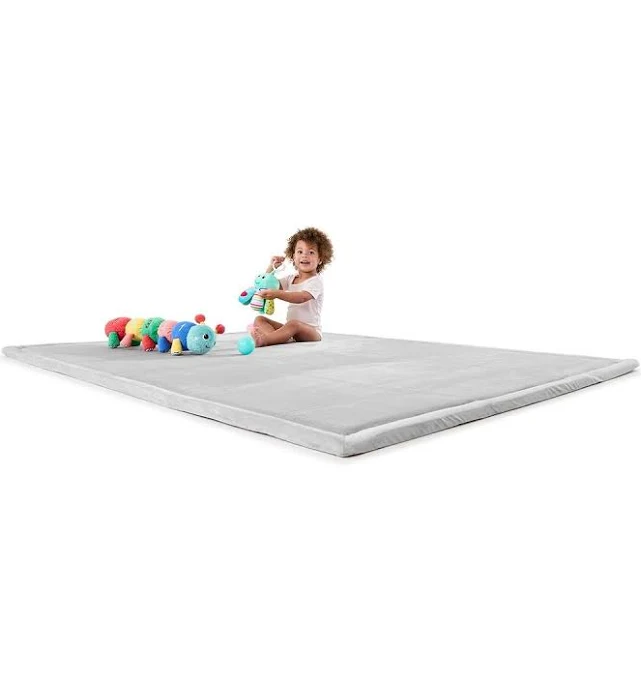
leading retailers’s own-brand nursery range sits under the Anko label, and the foam puzzle mat that keeps popping up in parenting groups is the Anko Foam Puzzle Play Mat, a set of interlocking EVA foam tiles that usually retails for an approx. RRP of $20 to $30 depending on the size pack. At that price it is doing the same essential job as mats costing four or five times as much: giving a baby a soft, slightly cushioned surface that’s kinder on knees and heads than bare floorboards or tile.
Where it genuinely earns its keep is thickness for the price. Most packs run around 1cm to 1.2cm per tile, which is thinner than premium padded mats but still enough to soften a wobbly sit-up or a face-plant during early crawling. The tiles interlock jigsaw-style, so you can size the mat to your lounge room rather than being stuck with one fixed shape, and individual tiles wipe down easily, which matters a lot when you’re dealing with dribble, weetbix and the occasional nappy leak.
Where it falls short
The trade-offs are real, though, and worth knowing before you buy rather than after. The foam is firmer and thinner than a dedicated padded activity mat, so for a very young baby doing supervised tummy time on a hard floor, it offers less cushioning than a bolstered mat designed specifically for that stage. The edges of interlocking tiles can also lift or curl over time, and once a baby is mobile and pulling up on furniture, some parents report the tile edges becoming a trip or catch point if they’re not taped or weighted down.
- Chemical and choking safety: foam play mats aren’t covered by one single mandatory Australian Standard the way cots or car seats are, but if a mat comes with attached rattles, rings or teething toys, those attachments should meet the toy safety requirements in AS/NZS ISO 8124, which covers small parts, choking hazards and material toxicity.
- Tile thickness: thicker foam (1.5cm plus) cushions falls better once your baby is sitting, standing and eventually toddling.
- Edge finish: interlocking puzzle tiles need edge pieces that lie flat, otherwise they become a trip hazard for early walkers.
- Wipeability: a textured or embossed surface looks nice but traps spills; smooth-finish foam or a wipe-clean laminate top is easier to keep hygienic.
- Size versus your floor space: measure before you buy, a mat that’s too small won’t contain a rolling six-month-old for long.
What to look for in a play mat
Before you compare specific products, it helps to know what actually separates a decent mat from a mediocre one, because the price tag alone doesn’t tell you much.
- Foam density and thickness: this is what determines whether a mat genuinely softens a fall or just looks the part. Anything under 1cm is really a floor protector, not a cushioned play surface.
- Reversible or dual-sided design: mats that flip between a plain pastel side and a patterned or textured side stretch the useful life from newborn through toddler.
- Non-toxic, low-odour materials: a strong “new foam” smell that lingers for weeks is worth avoiding, especially for a baby who will be face-down on it and mouthing the edges.
- Developmental extras: arches, mirrors, hanging toys and contrast-pattern designs matter far more in the first six months than most parents expect, since newborn vision responds best to high-contrast shapes.
- Ease of cleaning: wipeable surfaces beat fabric-topped mats for the first year at least, before you graduate to something plush for older toddlers.
What to skip
- Ultra-thin “picnic style” foam mats marketed for babies but really designed for outdoor use, they don’t cushion falls adequately once a baby is sitting unsupported.
- Mats with strong synthetic odour straight out of the packaging that hasn’t faded after a few days of airing.
- Interlocking tile sets with no dedicated straight-edge border pieces, the raw jigsaw edges are harder to keep flat.
What to check in store or before you click buy
- Ask what the total assembled size is, not just the size of a single tile, so you know it’ll actually fit your lounge or nursery.
- Check whether replacement tiles are sold separately, useful if one gets damaged or heavily soiled down the track.
- Look at the underside grip, a mat that slides on floorboards is a hazard once a baby starts pulling up on it.
Our picks for 2026
1. Anko Soft Play Mat
This is the padded, bolster-edge version of leading retailers’s nursery mat range, and for newborns through early crawling it’s the more sensible of the two Anko options. The raised foam border and thicker base (typically 2cm to 3cm of cushioning) give a genuinely softer landing zone than the flat puzzle tiles, which matters most in the first four to six months when tummy time face-plants are frequent and a baby has no control over how they fall.
It usually sits at an approx. RRP of $40 to $55, still well under most dedicated developmental mats, and the wipeable vinyl-style top handles milk dribble and reflux far better than a fabric-topped alternative. The trade-off is that the bolster shape takes up a fixed footprint, so it doesn’t adapt to odd-shaped rooms the way interlocking tiles do, and the printed designs are fairly simple compared to the high-contrast patterns found on developmental-brand mats.
- Thicker, more forgiving foam than the puzzle-tile version
- Wipeable surface copes well with the newborn stage
- Fixed rectangular shape, doesn’t tile or extend
- Simpler patterns, less visual stimulation for a very young baby than purpose-built developmental mats
- Approx. RRP $40 to $55
Anko Soft Play Mat
2. Anko Foam Puzzle Play Mat
This is the interlocking tile set most people mean when they search for the leading retailers play mat, and it’s genuinely the best pick if floor space, budget or flexibility is your main concern. Because the tiles interlock, you can size the mat to an odd-shaped playroom or extend it as your child grows into toddlerhood and needs more room to roam, something a fixed-shape padded mat simply can’t do.
At an approx. RRP of $20 to $30 for a standard pack, it’s hard to argue with the value, and it remains one of the most searched leading retailers soft play mat alternatives precisely because it’s cheap enough to buy two packs and double the coverage. The compromise is thinner cushioning than the bolster mat above, and tile edges that need occasional checking once a baby is cruising along furniture nearby.
- Extends and reconfigures to fit almost any room shape
- Lowest cost per square metre of any option here
- Thinner foam than a dedicated padded activity mat
- Edge tiles can lift over time and need occasional re-seating
- Approx. RRP $20 to $30 per pack
Anko Foam Puzzle Play Mat
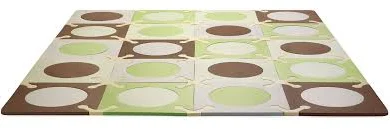
3. Skip Hop Playspot Interlocking Foam Floor Tiles
If you like the interlocking tile format but want thicker, denser foam and a more considered design, Skip Hop’s Playspot range is the step up. The tiles run noticeably thicker than most budget sets, with a reversible print (usually a geometric pattern on one side and a plain neutral on the other), which means the mat can look like a piece of furniture rather than a toy once your toddler moves on to other activities.
Expect an approx. RRP of $60 to $90 for a starter pack. It suits families who want one mat to last from early tummy time right through to toddler floor play, rather than upgrading mats as the baby grows. The main downside is cost per tile compared with the Anko puzzle set, and pack sizes can be smaller, so covering a large room means buying multiple sets.
- Denser, more supportive foam than most budget interlocking tiles
- Reversible print extends its useful life and its living-room aesthetics
- Meaningfully pricier per square metre than the Anko puzzle mat
- Smaller pack sizes may mean buying two sets for a bigger room
Skip Hop Playspot Interlocking Foam Floor Tiles
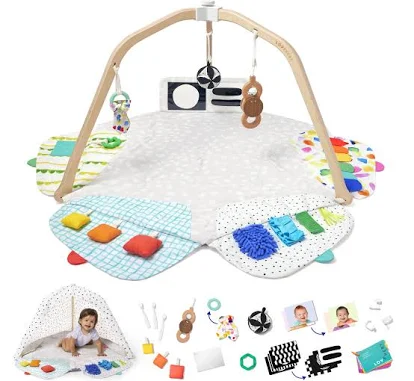
4. Lovevery The Play Gym
This is the premium end of the market, and it’s a genuinely different product category to a foam floor mat rather than just a pricier version of one. The Play Gym is a padded activity mat built around developmental stages, with detachable hanging toys, a mirror, teething ring and high-contrast patterns designed around what researchers know about newborn vision and motor development, rather than a generic printed pattern chosen for looks.
Expect an approx. RRP of $220 to $260, which is a significant step up from anything else on this list. It’s aimed squarely at parents who want a mat that actively supports developmental milestones rather than just providing a soft surface, and the attached toys and rings should meet the safety requirements set out in AS/NZS ISO 8124 for small parts and material safety. The trade-off is obvious: it’s a considered investment rather than an impulse buy, and a baby will still eventually graduate off it onto open floor space regardless of price paid.
- Genuinely developmental design, not just a soft surface
- High-contrast patterns and attachments suited to newborn vision stages
- Significantly pricier than any foam mat on this list
- Still a finite-stage product, most babies move on within the first year
Lovevery The Play Gym
How they compare
| Product | Brand | Approx RRP | Key features | Best for |
|---|---|---|---|---|
| Anko Soft Play Mat #1 | Anko (leading retailers) | $40 to $55 | Bolstered edge, thicker padded foam, wipeable top | Newborns through early crawling |
| Anko Foam Puzzle Play Mat Budget | Anko (leading retailers) | $20 to $30 | Interlocking tiles, extends to fit room | Budget-conscious families, flexible floor space |
| Skip Hop Playspot Interlocking Foam Floor Tiles | Skip Hop | $60 to $90 | Denser foam, reversible print, furniture-like finish | Families wanting one mat from baby to toddler |
| Lovevery The Play Gym Premium | Lovevery | $220 to $260 | Developmental stages, hanging toys, high-contrast patterns | Parents prioritising active developmental support |
Not sure yet? Put all 7 play mats we rate next to each other.
mum. Approved: our top 3 for 2026
Thicker padding than the puzzle-tile version, wipeable and genuinely comfortable for early tummy time.
Cheapest way to cover real floor space, and it reconfigures as your child grows.
Built around developmental stages rather than just a soft surface, worth it if that’s your priority.
For most Australian families, the honest answer is that the leading retailers play mat, in its padded Anko Soft Play Mat form, does the job well enough to justify its place as our best overall pick for the newborn to early-crawling stage. If floor space or budget is tighter still, the Anko Foam Puzzle Play Mat is genuinely good value and simply extends to fit your room. But if you want a mat that’s actively designed around developmental milestones rather than just a cushioned surface, the Lovevery The Play Gym is the one worth the extra spend, and it’s the pick we’d recommend without hesitation for parents who see it as a first proper investment in play.
Frequently asked questions
Is the leading retailers play mat safe for babies?
The foam tiles and padded mats sold under leading retailers’s Anko label are designed for supervised infant play and use low-odour EVA foam. There’s no single mandatory Australian Standard covering plain foam play mats, but any attached toys, rings or rattles included with a mat should meet the small parts and chemical safety requirements set out in AS/NZS ISO 8124. As with any foam floor product, always supervise tummy time and check tile edges regularly once your baby starts pulling up on nearby furniture.
How thick should a baby play mat be?
For newborns and early tummy time, look for at least 1.5cm to 2cm of foam thickness, which gives a genuinely softer landing than a thin puzzle-tile mat. Once your baby is sitting unsupported and eventually cruising, thicker padding (2cm to 3cm) matters even more, since falls become more frequent and less controlled.
Can you wash a leading retailers soft play mat?
The padded Anko Soft Play Mat has a wipeable vinyl-style top that handles spot cleaning with a damp cloth and mild detergent well. The interlocking Anko Foam Puzzle Play Mat tiles can generally be wiped individually and, depending on the specific product, some tiles can be rinsed, though foam should never be fully submerged or machine washed, as it can trap moisture and develop mould.
What age is a play mat good for?
Most padded activity mats are aimed at newborns through to around 12 months, covering tummy time, rolling, sitting and early crawling. Interlocking foam tile mats have a longer useful life, often through to age three or four, since they can be reconfigured to cover more floor space as a toddler needs room to run, build and play.
Is a padded play mat better than a foam puzzle mat for a newborn?
For the newborn and early tummy-time stage, yes, a padded bolster-style mat generally offers more cushioning and a defined boundary that keeps a rolling baby contained. Foam puzzle tiles come into their own once your baby is mobile and needs a larger, reconfigurable play area, so many families end up owning both at different stages.
Where to buy these picks
✓ Verified prices are checked live at the retailer. Otherwise we show the approximate RRP (an indicative recommended price, not a live retailer price), or “price pending” where we don’t have one.
Anko Soft Play Mat
★ Best easy clean
Anko Foam Puzzle Play Mat
Best for small spaces
Skip Hop Playspot Interlocking Foam Floor Tiles
Best reversible design
Lovevery The Play Gym
Best premium first year
The shortlist, in your inbox
New winners, price drops and recalls worth knowing.