
Baby Probiotics in Australia: What the Evidence Supports and What to Skip
A pharmacy shelf of baby probiotics, a mothers’ group chat swearing by one brand, and a child health nurse who says “they’re not essential”. That is the usual state of play by the time a mum starts searching, usually at the end of a long run of unsettled nights and fussy feeds.
We have done the reading so you do not have to. The short version is that the evidence is strain-specific and modest, so the strain on the label and whether your baby resembles the babies in the research matter far more than the brand. This guide covers what probiotics can reasonably do, how pharmacy-counter products compare with health-food shelf products, and two probiotics sold in Australia that have a named strain and a clear label.
Only two products make the list, and we would rather name two we can describe properly than pad it out.

When to skip probiotics
This is research-based guidance, not medical advice. Do not start a probiotic, and see your GP or pharmacist instead, if:
- Your baby was born prematurely, or has a serious medical condition or a weakened immune system.
- There is blood in the poo, a fever, green or forceful vomiting, or poor feeding. These are not probiotic problems.
- Your baby is formula-fed and the main goal is colic relief. That is the weaker-evidence case, so a feeding review is a better first step.
What baby probiotics can (and can’t) do
The realistic upside
Probiotics are live bacteria. The research is not “probiotics work” or “probiotics don’t”: it is “this strain, in this group of babies, for this problem”. That is why a product’s strain name matters more than its marketing.
- Infant colic: some trials of Lactobacillus reuteri DSM 17938 found shorter daily crying times, mostly in breastfed babies. Trials in formula-fed or mixed-fed babies found little or no benefit, so the evidence is mixed.
- Gut flora support: some Bifidobacterium strains are studied for how they shape early gut bacteria. The long-term health payoff is still being researched.
- After antibiotics: certain strains have evidence for reducing antibiotic-associated diarrhoea, but this is strain-specific, so ask your pharmacist rather than guessing.
What they won’t do
- They will not fix reflux, a cow’s milk protein allergy or a tongue-tie. Those need a proper assessment.
- They are not a substitute for a feeding review if your baby is gassy, unsettled or not gaining weight well.
- Probiotics are not considered essential for healthy babies, so treat them as optional.
What to look for, and the pharmacy vs natural question
Probiotics sold in Australia are complementary medicines regulated by the TGA. That is where this checklist comes from.
- Named strain, not just a species: “Lactobacillus reuteri DSM 17938” tells you which research applies. “Lactobacillus blend” tells you nothing.
- An AUST L number on the label: this means the product is listed on the Australian Register of Therapeutic Goods. It does not prove the product works for your baby’s problem.
- CFU count to expiry: live organisms die over time, so look for a count guaranteed until the expiry date, not just at manufacture.
- Storage that suits an Australian summer: some products need the fridge, others do not. A pram bag or hot car boot is hard on live bacteria either way.
Pharmacy counter vs health-food “natural” range
Both are TGA-listed when sold legally in Australia, and the line between them is blurrier than the shelves suggest.
- Where it is sold varies by product, so ask the pharmacist. They can check your baby’s age, medications and history before you buy.
- “Natural” on the front of a pack has no regulatory meaning. Judge by strain, count, AUST L and the age stated on the label.
The baby probiotics worth considering
1. BioGaia Protectis Baby Drops
This is the pick with the clearest research trail. It contains Lactobacillus reuteri DSM 17938, the strain behind the colic trials described above. Check the label for the CFU count per dose rather than relying on a number quoted elsewhere.
It is a drop format, so there is no mixing or measuring beyond counting drops, which is a real advantage at 6am. Keep it out of heat and follow the label’s storage instructions.
- Strength: a specific, well-studied strain rather than a generic blend.
- Strength: a simple once-daily routine you can manage one-handed.
- Trade-off: single strain only, so it does not cover the Bifidobacterium side of things.
- Age, dose and how long to try: check the label for the minimum age and the number of drops per day. Pick a stop date before you start. About four weeks is a reasonable trial window, and if nothing has changed by then, stop.
- Ingredients and allergens: drops are typically suspended in an oil base, so check the label for the oil type and the allergen statement.
BioGaia Protectis Baby Drops
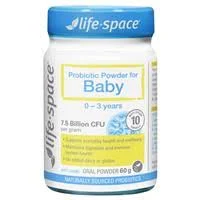
2. Life-Space Baby Probiotic Powder
Life-Space is an Australian brand, and this baby powder is positioned as a multi-strain formula for general gut-flora support rather than a single colic strain. We have not confirmed the strain list or the CFU count from the current label, so read both on the pack before you buy. Treat it as a true multi-strain blend only if the label names each strain.
The powder can be stirred into a small amount of milk or water, which suits babies who push away a dropper or dummy. The trade-off is that a blend does not have the same single-strain trial evidence for colic that BioGaia does.
- Strength: powder format can be stirred into a small amount of milk or water, handy if your baby refuses drops.
- Strength: designed as a blend, so it is aimed at general gut support rather than one problem.
- Trade-off: strains and counts not confirmed here, so the label is your only guide to what the research applies to.
- Trade-off: less direct evidence for colic, and more fiddling than drops at 3am.
- Age, dose and how long to try: check the label for the minimum age, the amount per serve and how to prepare it. The same stop-date rule applies: about four weeks, then stop if nothing has changed.
- Ingredients and allergens: powders can contain carrier ingredients, so check the allergen statement, particularly if a cow’s milk protein allergy is suspected.
Life-Space Baby Probiotic Powder
Side by side
| Product | Brand | Key features | Best for |
|---|---|---|---|
| BioGaia Protectis Baby Drops #1 | BioGaia | L. reuteri DSM 17938, drops, once daily | Unsettled breastfed babies; simple routine |
| Life-Space Baby Probiotic Powder | Life-Space | Multi-strain powder (check label for strains and count) | General gut-flora support; mixing into a feed |
Comparing cost per day
Pack sizes differ, so compare per day rather than per pack. Take the current price on the comparison card and divide it by the number of daily doses on the label. Drops and sachets do not last the same number of days.
Want to see how these stack up? We’ve reviewed 34 health & safety in total.
Questions parents ask about baby probiotics
Can I mix it into a bottle or breast milk, and is warm milk a problem?
Heat is hard on live bacteria, so use milk that is lukewarm or cooler, never hot. Some labels suggest a small amount of liquid rather than a full bottle, so a baby who does not finish the feed still gets the whole dose. Follow the label for your product.
Do I stop when my baby starts solids?
Not automatically. Starting solids does not on its own mean the probiotic must stop. If you began it for colic, which usually eases with age, set a stop date and review it with your pharmacist rather than continuing indefinitely.
Can I give it with antibiotics, and how far apart?
Many labels and pharmacists suggest spacing the probiotic from the antibiotic dose, and a gap of a couple of hours is a common suggestion. Check the label for your product, and ask the pharmacist when the antibiotic is dispensed.
Can I switch brands or give two at once?
Switching is fine, but change one thing at a time so you can tell whether it helps. Giving two products together adds nothing the research supports, and it makes it harder to work out what is doing what. Stick to one.
If you want one product to ask your pharmacist about, make it BioGaia Protectis Baby Drops: it has a named strain, trial evidence behind that strain and a routine you can manage half-asleep. If your baby refuses drops, or you would rather a blend aimed at general gut support, Life-Space Baby Probiotic Powder is the other option. Read its label for the strains and count before you commit.
Where to buy these picks
✓ Verified prices are checked live at the retailer. Otherwise we show the approximate RRP (an indicative recommended price, not a live retailer price), or “price pending” where we don’t have one.
BioGaia Protectis Baby Drops
★ Best for unsettled babies
Life-Space Baby Probiotic Powder
Best for mixing into feeds
The shortlist, in your inbox
New winners, price drops and recalls worth knowing.