
Baby Fever in Australia 2026: When to Worry and When to Wait
It’s 2am, the house is dark except for your phone torch, and your baby feels hot under your hand. You’re standing there doing the maths: is this a normal immune system doing its job, or is this the fever that means an emergency department at 3am? Most Australian parents have had this exact moment, usually alone, usually exhausted, and usually without a doctor to call until the sun comes up.
This guide is built for that moment. It pulls together what Australian paediatric guidance (Royal Children’s Hospital Melbourne, Health Direct Australia and the Australian Immunisation Handbook) actually says about baby fever, so you can make a calm, informed call about whether to treat at home, ring a nurse line, or get in the car. It also covers the practical bits every tired parent Googles at 2am: how to read a baby temperature chart properly, safe baby Nurofen dosage, baby paracetamol basics, and how to treat baby fever after vaccination without second-guessing every degree on the thermometer.
One thing this guide will not do is replace a real assessment of your specific baby. If you are ever unsure, calling your GP, a maternal child health nurse, or 13 HEALTH (13 43 25 84) costs nothing and settles the nerves fast.
What is baby fever, really?
A fever isn’t an illness in itself, it’s a symptom: your baby’s immune system has detected something (usually a virus) and deliberately raised the body’s core temperature to make it a less hospitable environment for the bug. In babies, a temperature is generally considered a fever once it reaches 38.0°C or above, measured properly. Below that, a baby who feels warm but is feeding, settling and behaving normally is very likely just warm from a jumpsuit, a warm room, or a big cry, not unwell.
Why babies run hotter than adults expect
Babies regulate their temperature less efficiently than older children and adults, and their normal baseline sits a touch higher. A reading that would alarm you in an adult (say, 37.8°C) can be completely unremarkable in a six-month-old who’s just had a bottle or been swaddled tightly.
- Overheating vs fever: check the back of the neck or chest, not just the hands and feet, which run cooler naturally.
- Teething: genuine teething can nudge temperature up slightly, but a true fever above 38°C is rarely teething alone and deserves a proper look.
- Age matters enormously: a fever in a baby under 3 months is treated far more seriously than the same reading in a 2 year old, because their immune systems and ability to fight infection are still developing.
Reading the numbers: a baby temperature chart, and how to take it properly
Where you take a baby’s temperature changes the number you get, sometimes by close to a full degree. Getting the method right matters more than the fanciest thermometer on the shelf.
A simple baby temperature chart
| Reading | What it usually means |
|---|---|
| Below 36.0°C | Possibly too cool, check room temperature and layers, recheck in 15 minutes |
| 36.0°C to 37.4°C | Normal range for most babies |
| 37.5°C to 37.9°C | Low grade, watch and reassess, especially if baby seems well |
| 38.0°C to 38.9°C | Fever, treat symptoms and monitor closely |
| 39.0°C and above | High fever, seek medical advice, sooner if under 6 months or unwell in other ways |
Which method to trust
- Axillary (armpit): safest and easiest for wriggly babies, but reads roughly 0.5°C lower than a true core temperature, so a 37.5°C armpit reading is more like 38°C internally.
- Tympanic (ear): fast and reasonably accurate once a baby is over about 6 months and their ear canal is a suitable shape, but a poor seal gives an unreliable low reading.
- Forehead/temporal: convenient for a sleeping baby, useful for a quick check, best confirmed with a second method if the number seems off.
- Rectal: the most accurate for babies under 3 months, but many Australian parents understandably prefer axillary for daily use and rectal only when a GP recommends it.
Do you need a dedicated baby temperature monitor?
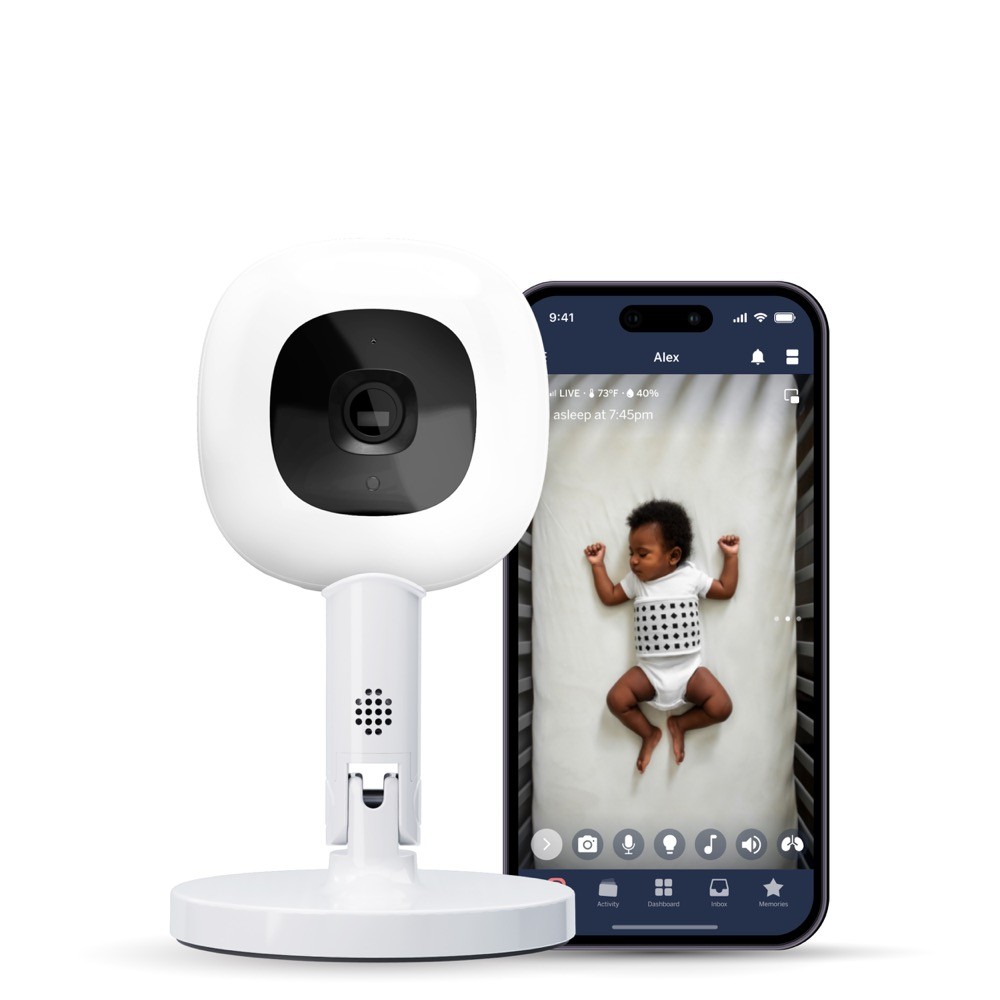
A standalone digital thermometer is genuinely all most families need. Devices marketed as a baby temperature monitor, continuous wearable patches or smart thermometers like the Withings Thermo Smart Temporal Thermometer, can be handy for parents managing a chronically unwell child or wanting overnight trend data, and they typically sit in the approx. $80 to $150 range. For everyday fever-checking though, a reliable ear or forehead thermometer such as the Braun ThermoScan 7, usually approx. $60 to $90, does the job without the ongoing app subscriptions some continuous monitors carry.
- Skip: novelty forehead strips, they’re too imprecise to make a treatment decision from.
- Check in store: that the thermometer is TGA listed as a medical device, not a general household gadget.
- Worth it: a thermometer with a memory function if you’re tracking a fever over several days for your GP.
When to worry: red flags that need same-day care
Most baby fevers are caused by common viruses and resolve within a few days with rest, fluids and simple comfort measures. But there’s a specific list of signs that should move you from “watch and wait” to “call now”, and knowing this list in advance is the whole point of not googling at midnight.
Where to buy these picks
✓ Verified prices are checked live at the retailer. Otherwise we show the approximate RRP (an indicative recommended price, not a live retailer price), or “price pending” where we don’t have one.
Withings Thermo Smart Temporal Thermometer
Best smart thermometer

Braun ThermoScan 7
Best for fast fever checks
See a doctor today if your baby has a fever and any of these
- Is under 3 months old with any temperature of 38°C or above, this age group always needs same-day medical assessment
- Is unusually floppy, difficult to wake, or not responding normally to you
- Has a rash that doesn’t fade when you press a glass against it
- Is refusing all fluids or has had significantly fewer wet nappies than usual
- Is breathing fast, working hard to breathe, or grunting with each breath
- Has a fever that has lasted more than 48 hours without improvement
- Has had a febrile convulsion (seizure caused by fever)
What
Keep reading
The shortlist, in your inbox
New winners, price drops and recalls worth knowing.