
Baby Bunting Car Seat Installation 2026: Is the $99 Fitting Worth It? (Plus Free Alternatives)
If you’ve spent any time wandering the aisles of a baby store with a growing belly (or a wriggling newborn on your hip), you’ll know that car seats can feel like the most overwhelming purchase of the entire baby journey. They’re expensive, they come with thick instruction manuals, and the stakes feel impossibly high, because, well, they are. This is the one bit of baby gear standing between your precious cargo and a 60km/h impact.
So when you hear that a professional car seat fitting service exists for around $99, you might feel two things at once: relief that someone qualified can do this properly, and a niggling worry that maybe you’re being upsold something you could manage yourself. You’re not alone. It’s a fair question, is the leading retailers car seat fitting actually worth it, or can I do this myself for free?
In this honest, no-judgement guide, we’ll walk through exactly what a professional fitting includes in 2026, what it costs, the genuinely free alternatives available across Australia, and how to know which option is right for your family. Grab a cuppa, by the end of this, you’ll feel calm and confident about getting that seat installed safely.
Why Car Seat Installation Matters More Than You Think
Here’s a statistic that tends to stop new parents in their tracks: research repeatedly shows that the majority of child car seats in Australia are not installed or used correctly. Estimates have long sat at around 7 in 10 seats having at least one error, anything from a twisted harness to a loose anchor bolt or a seat that moves more than the allowed amount side to side.
The frustrating part is that many of these errors are invisible to the untrained eye. Your seat might look perfectly secure, the buckle clicks, bub seems snug, but the recline angle could be slightly off, the seatbelt path could be wrong, or the top tether might be looped through the wrong anchor point. Small mistakes that you’d never notice can dramatically reduce how well a seat protects your child in a crash.
All car seats sold in Australia must comply with the mandatory Australian/New Zealand Standard AS/NZS 1754, which is regulated by the ACCC. This standard is one of the strictest in the world, which is part of why Australian-sold seats often differ from those overseas (and why you should never buy a car seat from an international site). But here’s the catch, a seat that meets the standard on the shelf only protects your child if it’s installed correctly in your specific car.
That’s exactly why professional fitting services exist, and why so many Australian parents weigh up whether to pay for the peace of mind.
What’s Included in a leading retailers Car Seat Fitting?
A professional leading retailers car seat install is carried out by a trained and accredited fitter, someone who has completed recognised child restraint fitting training. When you book a leading retailers car seat installation, here’s broadly what you can expect to be included in 2026:
- Assessment of your vehicle: Not every seat suits every car. The fitter checks your anchor points, seat depth, seatbelt configuration and available space.
- Correct positioning: They’ll determine the safest seating position for your restraint, factoring in airbags, other passengers and the type of seat.
- Secure installation: The seat is fitted using either the ISOFIX-compatible system or the seatbelt method, plus the all-important top tether strap connected to the correct anchor point.
- Recline and angle adjustment: Especially crucial for newborns, who need the correct recline to keep their airway open.
- Harness sizing: The fitter adjusts the harness height and tension to suit your child right now.
- A demonstration: A good fitter will show you how to buckle bub in, adjust the harness as they grow, and re-secure the seat if you ever remove it.
The typical cost for a professional in-store fitting sits at around $99 (approx.) in 2026, though some services offer a reduced rate when you purchase the seat at the same time, and prices can vary by location. There are also at-home fitting services available through various providers around Australia, which generally cost more than an in-store appointment because the fitter travels to you.
It’s worth noting that a fitting is not the same as buying the seat, it’s a separate service you book, usually requiring an appointment so the accredited fitter is available.
Is the $99 Fitting Actually Worth It? An Honest Take
Let’s be real with each other, mum to mum. The honest answer is: it depends on you, your confidence, your car and your seat.
The $99 fitting is genuinely worth it if:
- You’re a first-time parent and the manual reads like a foreign language.
- You have an older or unusual vehicle where anchor points or seatbelt configurations are tricky.
- You’re installing a complex convertible or multi-mode seat with lots of adjustment options.
- You simply want the reassurance of an accredited professional confirming it’s right, and let’s be honest, peace of mind during those exhausting early weeks is priceless.
- You’re time-poor, sleep-deprived, and the thought of lying upside down in the back seat wrestling a tether strap fills you with dread.
You might reasonably skip the paid fitting if:
- You have a modern car with clearly labelled ISOFIX points and top tether anchors.
- Your seat has a straightforward, well-designed installation system (many newer models are fabulously intuitive).
- You’re practical, patient, and happy to follow video tutorials carefully.
- You can access one of the free or low-cost checking services we cover below.
Here’s the key thing many parents don’t realise: even if you install the seat yourself, getting it checked by a qualified person is the real safety net. So the question isn’t always “pay $99 or risk it”, it’s often “pay for a full fitting, or install it myself and have it inspected for free.” That changes the maths considerably.
One more honest note: car seats need re-checking as your child grows and as you move the seat between cars. A one-off fitting is brilliant for the initial setup, but you’ll want to feel confident adjusting things yourself over the months and years ahead. A good fitter teaches you to fish, so to speak.
Free and Low-Cost Alternatives to a Paid Fitting
Now for the part every budget-conscious Aussie family wants to hear, yes, there are genuinely free and low-cost ways to get your seat checked or fitted. Availability varies enormously by state and even by council, so it’s always worth a quick search for your local area, but here’s what to look for:
Council and community fitting days
Many local councils across Australia run free or heavily subsidised child restraint checking and fitting days, sometimes in partnership with road safety organisations. These pop up periodically throughout the year, often promoted through council newsletters and community Facebook groups. Spaces fill quickly, so book early.
State road safety and motoring organisations
Several state-based motoring and road safety bodies offer accredited fitting and checking services, occasionally at no cost or for a modest fee, sometimes free or reduced for members. These are run by professionally trained fitters and are an excellent, trustworthy option.
Authorised fitting stations
Australia has a network of accredited child restraint fitting stations. Some charge a fee, but others, particularly those tied to community health or safety programs, offer free checks. A quick online search for “authorised restraint fitting station” plus your suburb will point you in the right direction.
Maternal and child health services
In some areas, maternal and child health nurses or hospital programs can point you toward free fitting events, especially for new parents bringing a first baby home.
Friends, family and the DIY-plus-check approach
If you know someone who has installed multiple seats correctly (and ideally been trained or checked themselves), they can be a wonderful resource. Pair their help with one of the free checking services above and you’ve got a robust, budget-friendly plan.
The bottom line: a paid fitting is convenient and reliable, but it’s far from your only safe option. If money is tight, and for many families in 2026 it absolutely is, a free council check combined with a careful DIY install can give you the same safety outcome.
How to Install a Car Seat Yourself: A Step-by-Step Guide
If you’ve decided to give it a go yourself, well done, it’s more manageable than it looks once you break it down. Always follow your specific seat’s manual first and foremost, but here’s a general roadmap to build your confidence.
- Read the manual fully before you start. Yes, all of it. Each seat is slightly different, and the manual tells you the correct seatbelt path, ISOFIX procedure and recline settings for your model.
- Choose the safest seating position. The rear centre seat is often considered the safest spot if it has a suitable top tether anchor and the right belt or ISOFIX setup, but only if your seat fits securely there. Never install a rear-facing seat in front of an active airbag.
- Locate your anchor points. Find your car’s top tether anchor points (usually behind the back seats, on the parcel shelf, or on the floor in some vehicles) and your ISOFIX points if you’re using them.
- Install the base or seat. Using either ISOFIX connectors or the vehicle seatbelt, secure the seat following the manual. Push down firmly with your body weight to remove slack as you tighten.
- Connect the top tether. This is non-negotiable in Australia and one of the most commonly forgotten steps. Route the strap correctly (avoiding head rests where instructed) and clip it to the proper anchor, then tighten.
- Check the recline angle. Newborns especially need the correct recline indicated on the seat. Many seats have a level indicator or angle adjuster to help.
- Do the wobble test. Grip the seat at the belt path and try to move it side to side and front to back. It should not move more than a couple of centimetres. If it wobbles, it’s too loose.
- Adjust the harness. For rear-facing, the harness slots should be at or just below your baby’s shoulders; for forward-facing, at or just above. The harness should be snug, you shouldn’t be able to pinch a fold of strap at the shoulder.
Then, and this is the golden rule, get it checked. Even the most careful DIY install benefits from a second set of qualified eyes through one of the free services above. There’s no shame in it; even seasoned parents do this.
Choosing the Right Car Seat for Your Family
Of course, a perfect installation only matters if you’ve chosen a seat that genuinely suits your child’s age and size, your car, and your lifestyle. In Australia, seats are matched to your child’s age and measured against the seat’s shoulder height markers rather than purely by weight, so always check those.
Here’s a quick comparison of the main types of seats Australian families consider, to help you find your fit before you even think about installation.
| Product Type | Brand Examples | Key Features | Best For |
|---|---|---|---|
| Infant capsule | Maxi-Cosi, Britax Safe-n-Sound, Joie | Rear-facing, portable, clicks into a base and often a pram; lightweight carry handle | Newborns up to around 6–12 months; parents wanting easy transfers without waking bub |
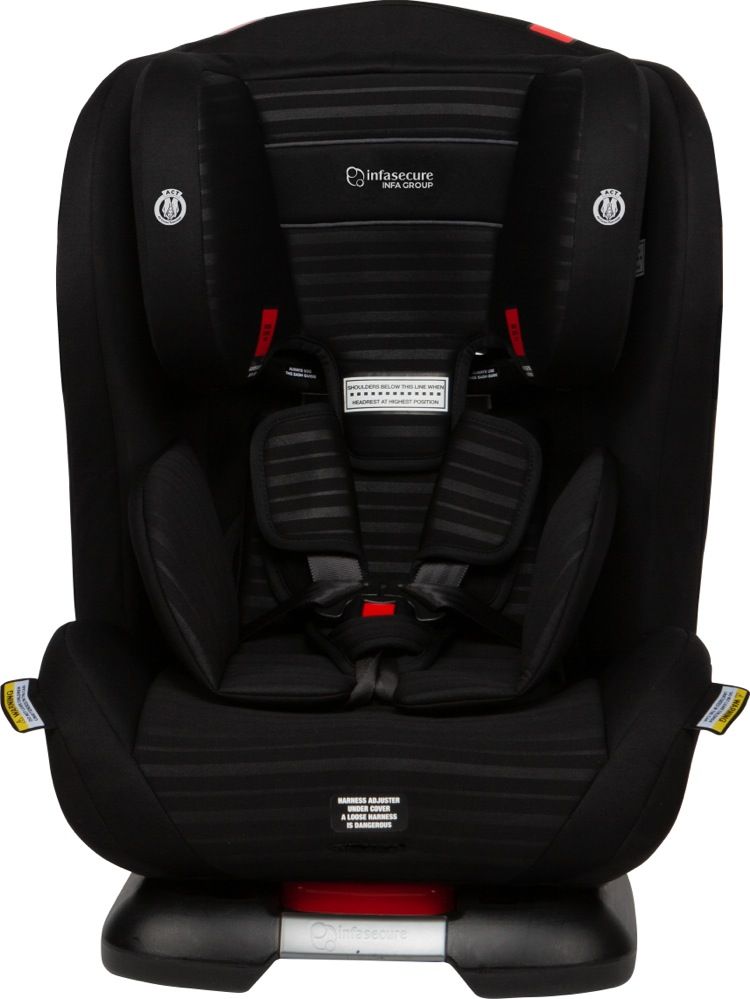
| Convertible seat (0–4) | Britax Safe-n-Sound, Maxi-Cosi, Infasecure | Rear then forward-facing, grows with child, stays fitted in the car | Families wanting one seat for the long haul; multiple-car households |
| Multi-mode / all-in-one | Britax, Joie, Infasecure | Covers newborn through to booster stage in one seat | Budget-savvy families wanting maximum longevity from a single purchase |
| Booster seat | Britax Safe-n-Sound, Infasecure, Maxi-Cosi | Uses the adult seatbelt with a harness or guide; lighter and more compact | Older children who have outgrown their forward-facing harness |
When you’re weighing up options, think about how many cars the seat needs to move between, whether you want it to integrate with your pram, the size of your back seat, and how long you want the seat to last. A more expensive convertible can sometimes work out cheaper over time than buying several stage-specific seats.
Want to see how these stack up? We’ve reviewed 18 baby car seats in total.
mum.com.au Approved: Our Honest Recommendation
After weighing everything up, here’s where we land, and you’ll notice it’s not a one-size-fits-all answer, because mums and families simply aren’t.
For first-time parents or anyone feeling unsure: A professional fitting (around $99 approx.) is absolutely worth it for your first seat. The reassurance, the hands-on demonstration, and knowing an accredited fitter has confirmed it’s correct is worth every dollar during a period when you’re already carrying so much mental load. Consider it an investment in sleeping a little easier.
For confident, practical parents or those on a tight budget: Install it yourself carefully following the manual, then book a free check through your local council, a state road safety service, or an authorised fitting station. You’ll get the same safety outcome and save your money for the approximately one thousand other things a baby needs.
Our universal advice for every family: Whichever route you choose, never skip the checking step. Learn to do the wobble test, the harness pinch test and the recline check yourself, because you’ll be adjusting things countless times as your little one grows. The single most valuable skill isn’t paying someone once, it’s understanding your own seat well enough to keep it correct over time.
So is the leading retailers car seat fitting worth it? For the right family, in the right circumstances, yes, genuinely. For others, the free alternatives are equally safe. Both are mum.com.au approved, because the only wrong choice is an unchecked seat.
Frequently Asked Questions
How much does a leading retailers car seat fitting cost in 2026?
A professional in-store fitting typically costs around $99 (approx.) in 2026, though this can vary by location and some services offer a reduced rate when you buy the seat at the same time. At-home fitting services, where an accredited fitter comes to you, generally cost more because of the travel involved. Always confirm the current price and book an appointment in advance, as accredited fitters aren’t always available on a walk-in basis.
Can I install a car seat myself in Australia, or is it legally required to use a professional?
You are legally allowed to install a car seat yourself in Australia, there’s no law requiring a professional fitting. What the law does require is that your child is correctly restrained in a seat appropriate for their age and size that meets AS/NZS 1754. So the responsibility for a correct, secure installation sits with you regardless of who does it. Many parents install it themselves and then have it checked for free, which is a perfectly safe and legal approach.
How do I know if I’ve installed my car seat correctly?
Do the wobble test: grip the seat at the belt path or ISOFIX point and try to move it, it shouldn’t shift more than a couple of centimetres. Check that the top tether is connected and tight, the recline angle matches your seat’s indicator, and the harness is snug enough that you can’t pinch a fold of strap at your child’s shoulder. If in any doubt, a free check through your council or a road safety organisation will confirm it for you.
Are free car seat fitting services as good as paid ones?
Reputable free services are run by the same kind of accredited, professionally trained fitters as paid ones, so the quality of the check itself is comparable. The main differences are convenience and availability, free council and community fitting days happen periodically and book out fast, while paid appointments can usually be arranged sooner and on your schedule. If you can secure a free accredited check, it’s an excellent and safe option.
How often should I have my car seat re-checked?
It’s wise to re-check the installation whenever you move the seat to a different car, after any significant adjustment, and as your child grows into a new stage (for example, switching from rear-facing to forward-facing). Even if nothing has changed, giving it a quick wobble and harness check every few weeks is a great habit. Straps can loosen and children grow surprisingly fast.
The Bottom Line
Installing a car seat can feel like one of the most daunting jobs of early parenthood, but here’s the comforting truth: there’s no single “right” way to get it done, only the goal of getting it done safely. The roughly $99 leading retailers car seat installation offers genuine value and reassurance, particularly for first-time parents or anyone with a tricky car, and there’s absolutely no shame in choosing convenience and peace of mind during such a busy season of life.
Equally, if you’re confident and budget-conscious, a careful DIY install paired with a free council or road safety check is just as safe and will keep more money in your pocket for nappies, wipes and the endless coffee that parenthood demands.
Whatever you choose, promise yourself one thing: never skip the check. Learn the wobble test, the harness pinch and the recline check, because those simple skills will protect your little one every single day for years to come. You’ve got this, mum, and your bub is lucky to have someone who cares enough to get it right.
The shortlist, in your inbox
New winners, price drops and recalls worth knowing.