
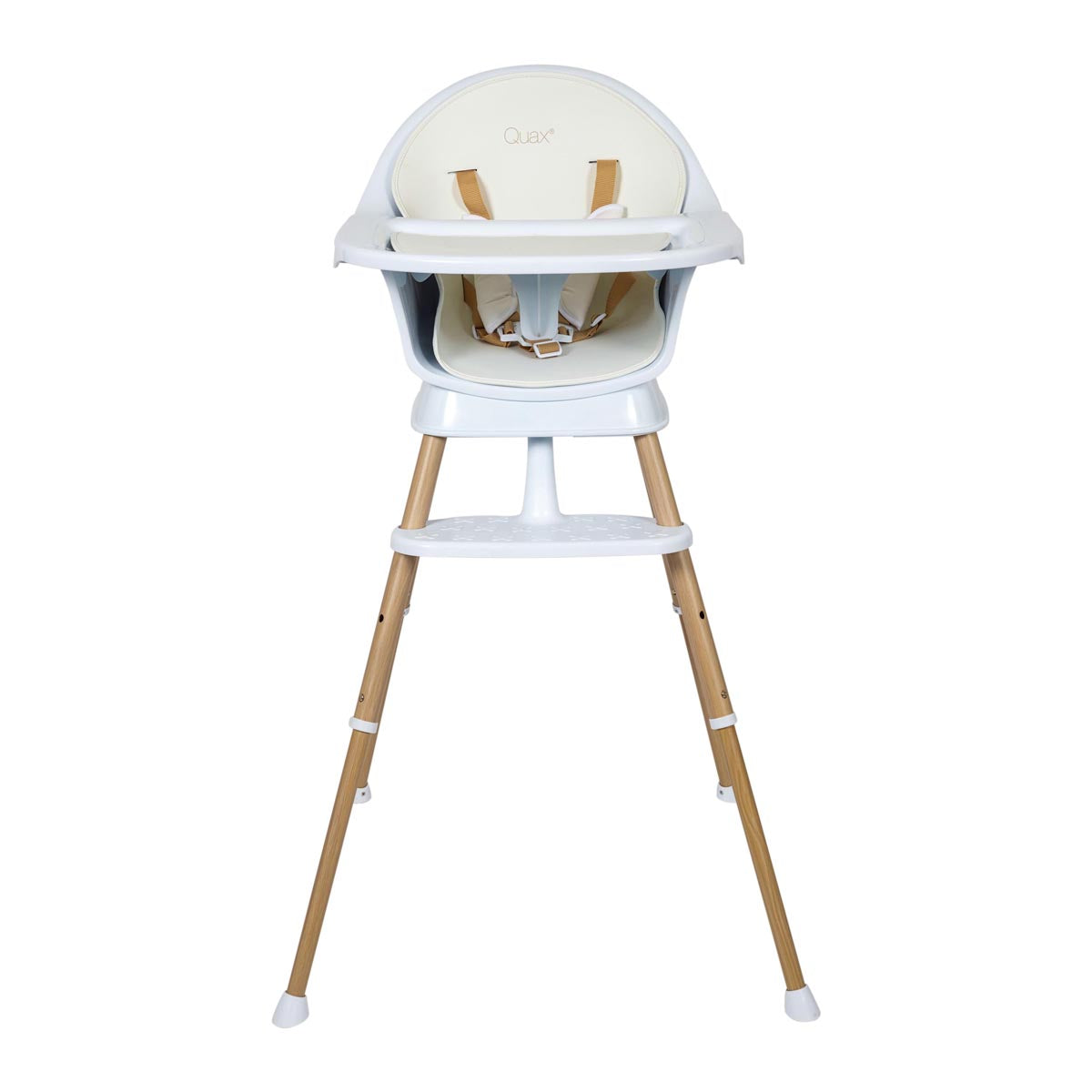
Stokke Tripp Trapp Review Australia 2026: Is It Worth $449, and the High Chairs Worth Cross-Shopping
You are standing in the kitchen at 6pm, there is pureed pumpkin on the wall, the floor, and somehow in your hair, and the little person responsible for it is grinning at you. Around the six-month solids mark, that mess is relentless, and if you are also worrying about reflux, juggling combi-feeding, or counting down to a return-to-work date, the last thing you want is a high chair that adds to the load. The wrong one means daily crumb archaeology in a hundred plastic crevices. The right one grows with your child and wipes clean in ten seconds.
The Stokke Tripp Trapp is the wooden high chair that keeps coming up in every parent group, usually followed by the same question: is it really worth around $449 when a perfectly good high chair costs a fraction of that? It is a fair question, and a big spend. So we have done the research a time-poor parent cannot: the specs, the safety standards, the genuine trade-offs, and the high chairs actually worth cross-shopping before you commit.
Here is the honest short version, then the full breakdown.
Is the Stokke Tripp Trapp worth $449?
Let us deal with the sticker shock first, because it is the whole reason you are here. The Tripp Trapp chair on its own sits at an approximate RRP of around $400 to $450, and that is before you add the parts most newborns-to-toddlers actually need. It has been in continuous production since 1972, which is genuinely rare in baby gear, and that longevity is the strongest argument in its favour: this is not a chair you replace at 18 months.
What you are actually paying for
The Tripp Trapp is a solid beech (or oak, on the pricier finishes) adjustable high chair with a seat plate and footplate that both slide up and down through a series of grooves. The child sits with feet supported and back straight, which matters more than it sounds. A supported, upright posture helps with feeding control and is often mentioned by parents worried about reflux, because slumping in a reclined plastic seat is exactly what an unsettled little tummy does not want.
The costs nobody mentions upfront
Here is where the maths gets real. The bare chair is not usable for a six-month-old on its own. To seat a baby who is just starting solids you need the Stokke Baby Set (harness and rails), and most parents also want the Tray. Budget for those as separate purchases:
- The chair itself: approx. $400 to $450 RRP, the core purchase that lasts into adulthood
- Baby Set: approx. $90 to $120 RRP, essential for babies roughly 6 to 36 months
- Tray: approx. $70 to $90 RRP, optional but wanted by most families at the solids stage
- Newborn Set or Cushion: further optional extras that push the all-in cost past $600
So the honest picture is that a genuinely ready-to-use Tripp Trapp for a six-month-old lands closer to $550 to $600 all in, not $449. That is the number to weigh. If your child uses it from six months to the teenage years (Stokke rates the chair to a hefty weight capacity, well beyond childhood), the cost-per-year is low. If you suspect you will move it on at toddlerhood, the sums look very different.
What to look for in a high chair
Before we get to the picks, here is what actually matters when you are choosing, framed around the things that keep parents up at night rather than a marketing spec sheet.
- Cleanability: fewer seams, crevices and fabric pads mean less trapped food. At the height of solids-stage mess, a wipe-clean surface is the difference between a ten-second job and a resentful scrub
- Adjustability: a seat and footplate that move with your growing child support good posture and can genuinely extend the years of use, which is the entire value case for a wooden high chair
- Footplate support: feet planted on a surface (not dangling) helps stability, feeding focus and comfort, and parents of refluxy babies often find an upright supported seat settles things
- Harness and restraint: look for a secure five-point or three-point harness. A confident climber needs proper restraint, not just a tray to lean against
- Stability and footprint: a wide, stable base matters in a busy kitchen, but so does whether it tucks under your table when you are short on space
- Meets the relevant Australian Standard: high chairs sold in Australia are covered by AS/NZS 4684, which addresses structural stability, restraint and the reduction of finger and limb entrapment. Treat it as a baseline touchstone, not a nice-to-have
- Long-term value: if you plan more than one child, or want a chair that converts to a toddler and then a big-kid seat, the higher upfront spend can be the cheaper choice over five years
The high chairs worth cross-shopping in 2026
These are the real, currently sold products we would put on any Australian parent’s shortlist against the Tripp Trapp. Each one earns its place for a specific reason, and we have been honest about the trade-offs.
1. Stokke Tripp Trapp
This is the one you came to research, and it remains our overall pick for a reason. It is the original adjustable wooden high chair, and the design has barely needed changing in over fifty years. The seat and footplate slide to fit your child from the baby-set stage (roughly six months) right through to a seated adult, and it holds a genuinely high weight capacity. For a family thinking about the long game, or a second baby, that longevity is where the price justifies itself.
Where it wins for the solids-stage parent is cleanability and posture. A smooth timber seat wipes clean fast, there is no bulky fabric pad harbouring last week’s Weet-Bix, and the upright, feet-supported position is genuinely helpful for babies who struggle with reflux or need to stay focused on feeding. The trade-off is honest: the bare chair is not baby-ready, so factor in the Baby Set and likely the Tray, which pushes the real cost well past the headline figure.
- Grows from around 6 months to adulthood, so cost-per-year can be very low over multiple children
- Smooth timber seat wipes clean in seconds, no crumb-catching fabric
- Supported footplate and upright posture suit feeding focus and unsettled tummies
- Chair alone (approx. $400 to $450 RRP) is not usable for a baby without the extra-cost Baby Set
- All-in with Baby Set and Tray realistically lands closer to $550 to $600
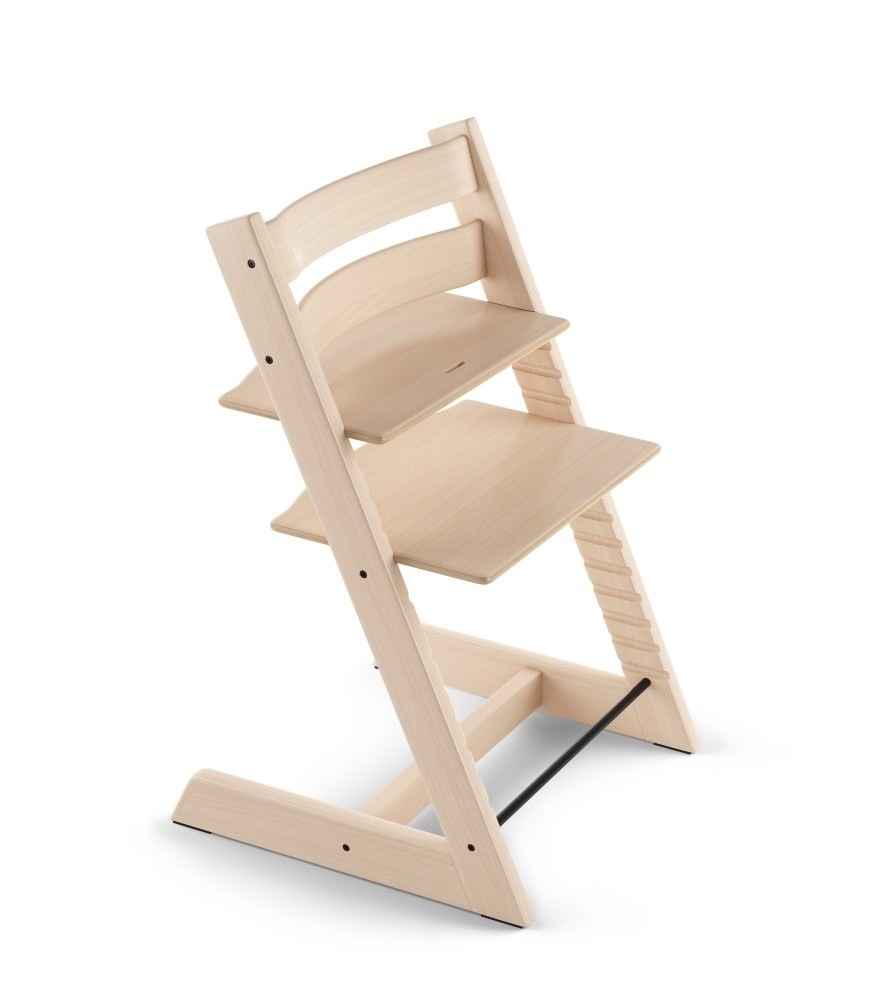
Stokke Tripp Trapp
2. IKEA Antilop
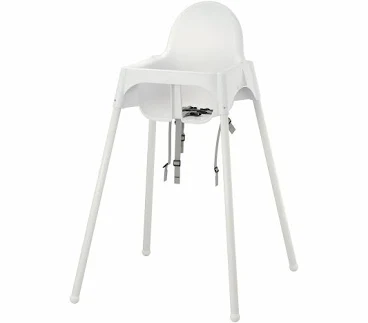
The Antilop is the answer to the whole “do I really need to spend $449” question, and for a lot of families it is a resounding no. It is a molded plastic seat on splayed steel legs, sold at an approximate RRP of around $30 to $50 including a matching tray. It is not adjustable and it will not last into the school years, but for the actual mess and function of feeding a six-month-old, it is quietly brilliant.
Because it is one smooth plastic shell with detachable legs, it is arguably the easiest high chair on this list to clean: the whole seat rinses under a tap or wipes down flat, with almost nowhere for food to hide. For combi-feeding parents wracked with guilt about spending, or anyone tight on budget after the newborn stage, this takes the pressure off entirely. The trade-offs are real: the standard tray sits a bit far from baby, the seat has no recline or height adjustment, and it does not fold, though it is very light to carry and stash.
- Exceptional value at approx. $30 to $50 RRP with tray included
- Smooth one-piece seat is possibly the easiest on this list to hose down and wipe clean
- Very light, legs pop off for storage or transport to grandparents
- No height adjustment, no recline, and it does not fold
- Suits roughly 6 months to around 3 years, then you replace it rather than convert it
IKEA Antilop
3. Stokke Tripp Trapp with Baby Set and Tray
This is the same chair as our overall pick, and we are being upfront that it appears twice on purpose, because the fully kitted Tripp Trapp is genuinely the premium configuration most parents end up buying rather than a different, fancier product. With the Baby Set (harness and support rails) and the Tray added, it becomes a complete, baby-ready adjustable high chair from around six months, and the whole thing lands at an approximate RRP of around $550 to $600 all in.
If you are going to buy the Tripp Trapp at all, this is the honest real-world spend, and it is worth understanding that before you fall for the lower chair-only figure. What you get is the full package: secure restraint for a wriggly baby, a tray for independent self-feeding, and a seat that still converts to a footplate-only setup once your toddler can climb in and pull up to the table. It is a big outlay in one go, but it is the version that actually does the job from day one and keeps doing it for years.
- The genuinely baby-ready configuration, no further essential purchases needed
- Five-point harness in the Baby Set keeps a determined climber secure
- Removable tray lifts off for self-feeding, then the chair converts as your child grows
- All-in cost of approx. $550 to $600 RRP is the real number to plan for
- Same core chair as pick #1, so this is a configuration choice, not a different product
Stokke Tripp Trapp with Baby Set and Tray
4. Boori Tidy Highchair
If you love the idea of a wooden high chair that grows with your child but the Stokke look is not for you, the Australian-designed Boori Tidy is the closest genuine alternative. It is a solid-timber adjustable high chair with a removable tray, and it converts to a junior chair as your child gets bigger. It typically sits at an approximate RRP of around $250 to $350, undercutting a fully kitted Tripp Trapp while offering a similar grow-with-me promise.
The Tidy suits a parent who wants that warm timber aesthetic and long-term use without the full Stokke ecosystem spend. The honest trade-off is that the Stokke has a longer track record and a broader range of accessories, and resale demand tends to be stronger. But as a wooden, adjustable, tray-included option that is baby-ready with less add-on cost, the Boori is a smart middle path.
- Solid timber, adjustable, converts to a junior chair for extended use
- Removable tray included, so less add-on cost than the Stokke to get started
- Australian-designed brand with a warm aesthetic that suits open-plan kitchens
- Smaller accessory range and shorter track record than the Tripp Trapp
- Approx. $250 to $350 RRP positions it neatly between budget plastic and full Stokke spend
Boori Tidy Highchair
5. Ingenuity Beanstalk Baby to Big Kid 6-in-1 High Chair
For the parent who wants maximum versatility from a plastic chair without the wooden-heirloom price, the Ingenuity Beanstalk is worth a look. It reclines for younger babies, adjusts in height, and later separates into a toddler seat and booster, so it stretches its usefulness across several stages. Expect an approximate RRP of around $150 to $200.
Where it earns its place is the recline function, which some parents of very young or refluxy babies value in the early days, plus the fact that it converts rather than being binned at toddlerhood. The trade-off is inherent to feature-packed plastic chairs: more parts, seams and a fabric pad mean more places for food to lodge, so cleaning takes longer than the wipe-flat Antilop or the smooth timber Stokke. If versatility matters more to you than minimal cleaning, it is a sensible pick.
- Reclines, adjusts in height, and converts to a toddler seat and booster
- Covers a long age span at a mid-range approx. $150 to $200 RRP
- Recline can suit very young or unsettled babies in the early weeks of solids
- More seams and a fabric pad mean more cleaning than a one-piece or timber seat
- Bulkier footprint than the minimalist options here
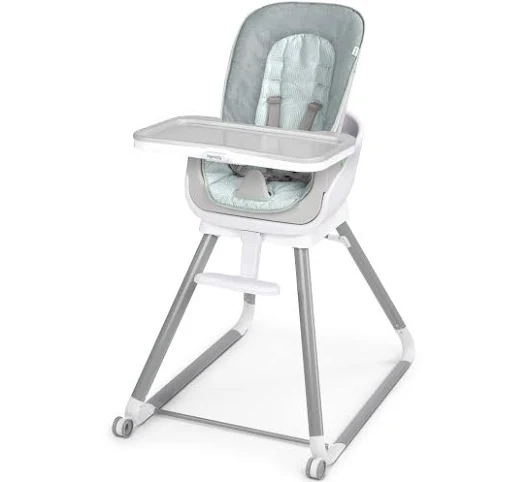
Ingenuity Beanstalk Baby to Big Kid 6-in-1 High Chair
High chairs compared at a glance
| Product | Brand | Approx RRP | Key features | Best for |
|---|---|---|---|---|
| Tripp Trapp #1 | Stokke | $400 to $450 (chair only) | Solid timber, adjustable seat and footplate, grows to adulthood | Long-term value across multiple children |
| Antilop Budget | IKEA | $30 to $50 | One-piece plastic seat, tray included, hoses clean | Easy cleaning on a tight budget |
| Tripp Trapp with Baby Set and Tray Premium | Stokke | $550 to $600 all in | Baby-ready with harness and tray, converts as child grows | Buying the full Stokke setup from day one |
| Tidy Highchair | Boori | $250 to $350 | Timber, adjustable, tray included, converts to junior chair | Wooden grow-with-me at a lower spend |
| Beanstalk 6-in-1 | Ingenuity | $150 to $200 | Reclines, adjustable height, converts to toddler seat and booster | Versatility across many stages |
Cleaning, reflux and the real daily reality
The specs matter, but what wears a parent down day to day is the mess and the settling. Here is how these choices play out once the food starts flying.
The cleaning verdict
- Smoothest to clean: the IKEA Antilop (one-piece shell) and the timber Stokke seat both wipe or rinse fast with nowhere for food to hide
- Slowest to clean: any chair with a padded fabric insert and multiple plastic seams, which is the inherent cost of feature-rich convertible seats
- Trays that lift off completely and go in the sink beat trays that only slide, every time
Reflux and posture
Parents of unsettled or refluxy babies consistently report that an upright, feet-supported position helps more than a reclined one once a baby has the head control to sit for solids. The Tripp Trapp and Boori Tidy both put feet on a plate and the back upright, which is worth weighing if slumping and discomfort are a concern in your house. A recline function (as on the Ingenuity) suits the very earliest days but is less relevant once your baby is truly sitting to eat.
Combi-feeding without the guilt
If you are combi-feeding and juggling a return to work, spare yourself the guilt over spending: there is no “right” amount to spend on a high chair. The Antilop feeds a baby every bit as well as the Stokke does. What you are paying extra for with the wooden options is longevity, aesthetics and posture, not a better meal. Buy the one that fits your budget and your kitchen, and let that be enough.
Who should buy what
- Buy the Stokke Tripp Trapp if you want one chair for the whole of childhood, plan more than one baby, or care about a clean minimalist look that wipes down fast. Budget for the all-in cost, not the chair-only price
- Buy the IKEA Antilop if budget is tight, cleaning fatigue is real, or you simply want a no-fuss seat that does the job from 6 months to around 3 years
- Buy the Boori Tidy if you love the wooden grow-with-me idea but want to spend less than the full Stokke setup, and prefer a tray included from the start
- Buy the Ingenuity Beanstalk if versatility and a recline for the early weeks matter more to you than the quickest possible clean-up
mum. Approved: our top 3 for 2026
The wipe-clean, grow-with-me chair whose fifty-year track record justifies the spend over the long haul.
Feeds a baby just as well as chairs ten times the price and hoses clean in seconds.
The genuinely baby-ready configuration, complete and ready to use from day one.
Frequently asked questions
Do I need the Baby Set to use a Stokke Tripp Trapp for a six-month-old?
Yes. The bare chair is not designed to seat a baby who is just starting solids. The Baby Set adds the harness and support rails that hold a young baby safely, and most parents at this stage also add the Tray. Factor both into your budget, which is why the real ready-to-use cost lands closer to $550 to $600 rather than the chair-only figure.
Is a wooden high chair harder to clean than a plastic one?
Not necessarily. A smooth timber seat like the Tripp Trapp wipes clean quickly because there are no fabric pads or deep crevices. The slowest chairs to clean are actually the feature-packed plastic ones with padded inserts and multiple seams. A one-piece plastic seat like the IKEA Antilop and a smooth timber seat are both very easy.
What Australian Standard should a high chair meet?
High chairs sold in Australia are covered by AS/NZS 4684, which addresses structural stability, the restraint system, and reducing the risk of finger and limb entrapment. Treat it as a baseline. Always use the harness as directed and check the chair is on a flat, stable surface away from anything a child could push off against.
Is the Stokke Tripp Trapp actually worth the money?
It depends on your time horizon. If you will use it across the whole of childhood, or through more than one baby, the cost-per-year is genuinely low and the resale demand is strong. If you suspect you will move it on at toddlerhood, a budget option like the IKEA Antilop feeds a baby just as well for a tiny fraction of the outlay.
Does a high chair help with reflux?
An upright, feet-supported seating position can help an unsettled baby stay comfortable during feeding, which is why parents often mention the Tripp Trapp and other footplate chairs. A recline function suits the very earliest days. If reflux is a real concern for your baby, it is always worth raising with your maternal and child health nurse or GP.
If we had to choose one, the Stokke Tripp Trapp is our 2026 pick, provided you go in eyes open about the all-in cost with the Baby Set and Tray and you plan to use it for years. It is the wipe-clean, posture-supporting, grow-with-me chair that earns its keep over the long run. On a tighter budget, or if cleaning fatigue is your enemy, the IKEA Antilop won’t let you down: it feeds a baby every bit as well and rinses clean in seconds for a fraction of the spend. There is no guilt in choosing either.
Where to buy these picks
✓ Verified prices are checked live at the retailer. Otherwise we show the approximate RRP (an indicative recommended price, not a live retailer price), or “price pending” where we don’t have one.
All 3 prices we track for this pick
- Whole Bubs $399 checked 7 Oct 2026
- Baby Zone $429.99 checked 7 Oct 2026
- Baby Bunting $439 checked 4 Oct 2026
IKEA Antilop
Best value easy clean
Ingenuity Beanstalk Baby to Big Kid 6-in-1 High Chair
Best all-rounder
Boori Tidy Highchair
Best affordable wooden grow-with-me
Stokke Tripp Trapp with Baby Set and Tray
Best premium newborn setup
The shortlist, in your inbox
New winners, price drops and recalls worth knowing.