
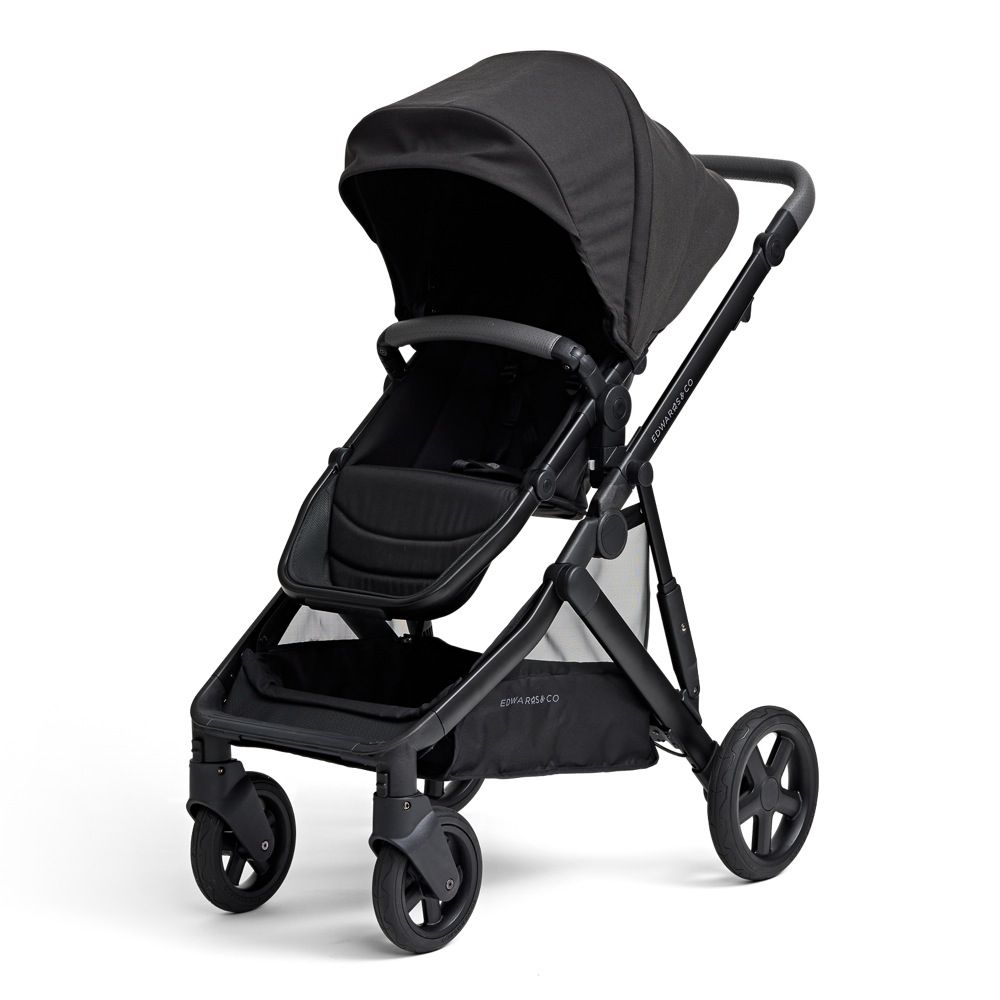
Toddler Scooter vs Toddler Bike 2026: Which One Should Come First?
The moment a toddler starts eyeing off the neighbour’s scooter, or wobbling towards a balance bike at the park, most Australian parents open a dozen browser tabs and close them an hour later no closer to an answer. Do you buy the scooter first because it looks easier to manage on the footpath, or go straight for a balance bike toddler because everyone swears it \”skips training wheels\” later? There isn’t one universal right answer, but there is a sensible way to work out which suits your toddler right now, and which actual models are worth the money in 2026.
This guide is written for the parent who has about ten minutes between school drop-off and a work call, not the one who wants sixty pages on early motor development. We’ve pulled together the developmental logic behind bike-first versus scooter-first, the age and weight ranges that genuinely matter, and a shortlist of real, currently sold toddler scooters and toddler bikes spanning a genuine range of budgets, from around approx. $29 for a basic first scooter up to a premium wooden balance bike that gets handed down between siblings.
One thing before you scroll further: whichever one wins in your house, a properly fitted toddler helmet is not optional, and we’ve covered what to check on that too.
Toddler bike vs scooter: which one goes first?
Paediatric physios and occupational therapists don’t fully agree on this, but there’s a reasonably consistent pattern in what they observe. A three-wheel scooter is usually the gentler entry point because leaning to steer requires less core strength and coordination than pedalling, and a toddler can stand still and just watch the world for a moment without falling over. A balance bike toddler setup asks for more all at once: sitting, gripping, scooting with both feet, and steering with the hands simultaneously.
Why many families start with a scooter
A scooter is forgiving. Your toddler can push with one foot, glide, stop, and start again without needing to master pedalling or gears. Three-wheel, lean-to-steer scooters are stable at slow speeds, which is exactly the speed an 18 month old to 2 year old operates at anyway.
- Easier for a first-time rider who still toddles more than runs
- Folds down small, handy for the boot on trips to the park or the shops
- Lower cost of entry, some genuinely useful models sit under approx. $40
- Trade-off: it doesn’t build the same steering-plus-balance combination that transfers directly to pedal bike riding later
Why a balance bike toddler often comes first for others
The case for the balance bike toddler route is that it builds the exact skill a pedal bike needs later: balancing on two wheels while steering, with feet doing the braking and pushing instead of pedals. Plenty of Australian kids go from balance bike straight to a pedal bike with no stabilisers at all, often around age 3 to 4.
- Develops genuine cycling balance, not just scooting
- Low seat height means most toddlers can plant both feet flat, which matters for confidence
- Often skips the stabiliser stage entirely, saving a purchase down the track
- Trade-off: needs a bit more core strength and coordination to get going, so a very young or cautious toddler may find it frustrating at first
The age and weight guide most brands use
- 12 to 18 months: seated ride-on trike or a convertible scooter with a seat and push handle, not a standard standing scooter yet
- 18 months to 2 years: three-wheel lean-to-steer scooter, or a lightweight balance bike with the seat at its lowest setting
- 2 to 4 years: either is genuinely appropriate, and a lot of families end up owning both
- Most toddler models: rated to around 20kg to 25kg rider weight, always confirm against the specific product
What to look for before you buy
- Wheel count and width on a scooter: three wheels (two at the front) are far more stable for a toddler than two, since a two-wheel scooter demands balance a toddler often hasn’t developed yet
- Adjustable height: a scooter deck or bike seat that grows with your toddler over 12 to 18 months means you’re not rebuying every winter
- Steering type: lean-to-steer scooters suit true toddlers, handlebar-turn steering suits an older, more confident rider
- Weight of the unit itself: a toddler who can’t lift or drag their own scooter or bike will lose interest fast, and you’ll be the one carrying it home
- Foot clearance and footrest: on a balance bike, a proper footrest keeps little feet off the ground when coasting downhill
- Genuine weight and age rating: check it against the box, not just the marketing photo of a toddler who looks younger than the stated range
- A helmet that actually fits: a toddler helmet should sit level, two finger-widths above the eyebrows, with a snug strap, and should meet AS/NZS 2063, the Australian standard covering pedal cycle helmets
Best toddler scooters for 2026
These are three real, currently sold scooters that cover the full spread from an entry-level first scooter to a genuine multi-stage option that lasts from toddlerhood into the early primary years.
1. Micro Mini Micro 3in1 Deluxe
This is the scooter most Australian parents end up recommending to each other, and for good reason. It converts through three stages: a seated ride-on with a parent push handle for the very littlest riders, a standing scooter with a handle for balance while they get their legs, and eventually a standalone lean-to-steer scooter once the seat and handle come off. That staged growth is the whole point, it’s genuinely one purchase covering roughly ages 1 to 5.
The lean-to-steer mechanism on the front wheels is the same system used across Micro’s range, so steering is done by shifting weight rather than twisting a handlebar, which suits toddlers who haven’t developed fine motor steering yet.
- Converts across three genuine growth stages, good value over the toddler years
- Lean-to-steer front wheels are stable and forgiving for beginners
- Swiss-designed build quality holds up to daily footpath use
- Trade-off: it’s a bigger upfront outlay than a basic scooter, approx. $160 to $190 RRP
- Trade-off: the seat and handle attachments take up storage space even after your toddler outgrows them
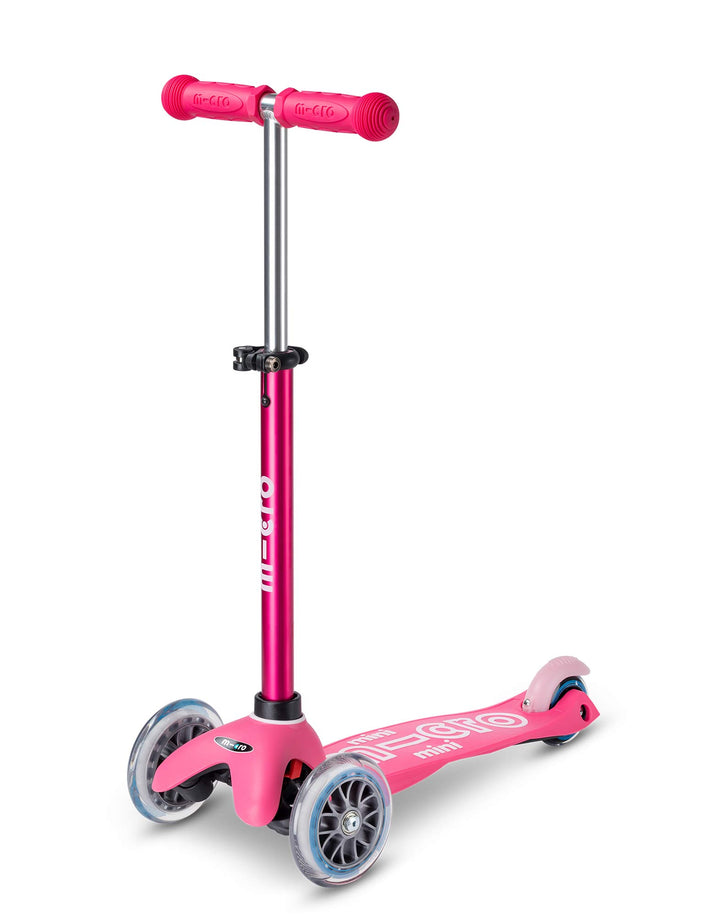
Micro Mini Micro 3in1 Deluxe
2. Anko Toddler Scooter
Anko is the house brand most Australian parents will recognise from the baby and kids aisle, and its basic three-wheel toddler scooter is the honest budget answer to \”does my toddler actually want a scooter, or is this a phase?\” It’s a simple lean-to-steer, foldable, lightweight scooter with no seat and no extras.
It won’t grow with your child the way the Micro range does, and the deck height typically isn’t adjustable, but for a first go at scooting, or as a low-stakes birthday gift, it does the job without the guilt of an expensive item gathering dust in the garage.
- Approx. $25 to $35 RRP, genuinely the cheapest sensible entry point
- Light enough for a toddler to carry themselves
- Folds flat for the car boot
- Trade-off: basic wheels and grip, not built for daily heavy use over years
- Trade-off: fixed height, so it’s outgrown faster than an adjustable model
Anko Toddler Scooter
3. Micro Mini2go Deluxe
This is the premium pick, and it’s aimed squarely at the youngest end of the toddler scooter market, roughly 12 months onward. It starts life as a seated ride-on trike with a full seat and push handle, then converts into a standing scooter as your toddler’s confidence grows, similar in spirit to the Mini Micro 3in1 but built for an even younger starting point with a more substantial seat and storage tray.
- Suits the youngest toddlers, genuinely usable from around 12 months
- Storage tray under the seat is a small but genuinely useful touch on walks
- Solid resale value given Micro’s reputation, common on the second-hand market
- Trade-off: approx. $200 to $230 RRP, the most expensive scooter on this list
- Trade-off: bulkier than a standard scooter once fully assembled
Micro Mini2go Deluxe
Best toddler bikes and balance bikes for 2026
If your household is leaning bike-first, these are three real toddler bikes worth shortlisting, from a genuine budget option through to a wooden bike some families keep for a second child.
1. Strider 12 Sport
The Strider 12 Sport is close to the default recommendation among cycling coaches and physios when the question is \”what balance bike toddler should we buy?\” It’s built specifically as a no-pedal balance bike, not a pedal bike with the pedals removed, which matters: the geometry, low centre of gravity and light steel frame are designed around a toddler’s proportions from the ground up.
Suited to roughly 18 months through to 5 years thanks to a seat that adjusts across a wide range, it’s genuinely light enough (under 3kg) for a toddler to lift and steer without help.
- Purpose-built balance bike geometry, not a modified pedal bike
- Seat adjusts across a wide range, so it lasts several years
- Footrest built into the frame for coasting
- Trade-off: no brake, riders learn to stop with their feet, which some parents prefer to teach separately before adding a pedal bike with brakes
- Approx. $130 to $160 RRP
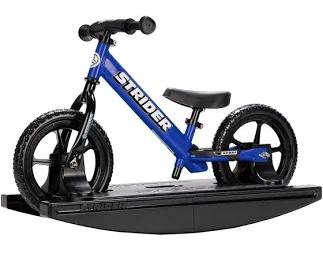
Strider 12 Sport
2. Btwin Runride 100
Btwin is Decathlon’s own cycling brand, and the Runride 100 is the sensible budget balance bike if you’re not yet sure your toddler will take to two wheels. It’s a straightforward steel-framed balance bike with a low, fixed-ish seat height range, foam-free tyres, and none of the extras.
- Approx. $60 to $80 RRP, a genuine budget entry into balance biking
- Steel frame is durable for a first bike that might get handed down
- Trade-off: heavier than the Strider, which can matter for a smaller toddler
- Trade-off: narrower seat height adjustment range than premium options
Btwin Runride 100
3. Wishbone Bike Original 3-in-1
The Wishbone Bike is the one families buy expecting to keep for more than one child. It’s a wooden balance bike built from birch plywood with puncture-proof wheels, and the clever part is the 3-in-1 design: it starts low to the ground for a very young toddler, then the frame reconfigures as they grow, extending the wheelbase and raising the seat, covering roughly 1 to 5 years on one frame.
It’s a genuine heirloom-style purchase rather than a disposable toy, and the resale value on the second-hand market reflects that.
- Reconfigurable wooden frame genuinely grows with your child across the toddler years
- Puncture-proof wheels, no tubes to worry about
- Strong resale value, often changes hands well used
- Trade-off: approx. $280 to $320 RRP, the most expensive pick in this guide
- Trade-off: wooden frame needs a little more care than steel or aluminium if it lives outdoors
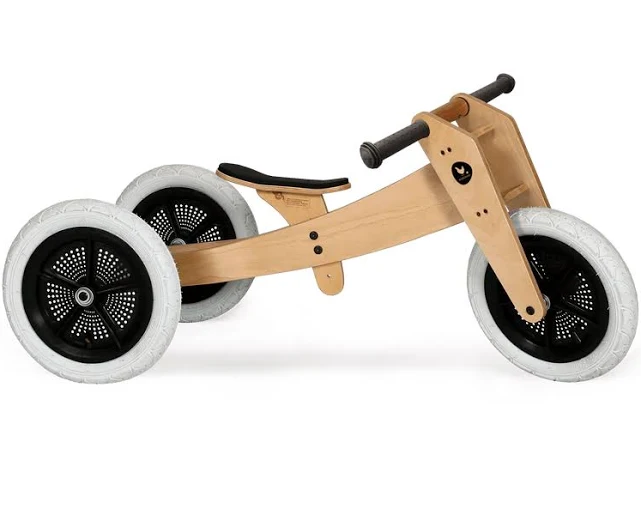
Wishbone Bike Original 3-in-1
Toddler scooters and bikes compared
| Product | Brand | Approx RRP | Key features | Best for |
|---|---|---|---|---|
| Micro Mini Micro 3in1 Deluxe #1 | Micro | approx. $160 to $190 | 3-stage convertible, lean-to-steer | A scooter that lasts from age 1 to 5 |
| Anko Toddler Scooter Budget | Anko | approx. $25 to $35 | 3-wheel, foldable, lightweight | Testing the waters with a first scooter |
| Micro Mini2go Deluxe Premium | Micro | approx. $200 to $230 | Trike-to-scooter conversion, storage tray | The youngest toddlers, from around 12 months |
| Strider 12 Sport | Strider | approx. $130 to $160 | Purpose-built balance bike geometry, footrest | Building genuine cycling balance early |
| Btwin Runride 100 | Btwin | approx. $60 to $80 | Steel frame, low seat height | A budget-friendly first balance bike |
| Wishbone Bike Original 3-in-1 | Wishbone Bike | approx. $280 to $320 | Reconfigurable wooden frame, 1 to 5 years | Families wanting one bike across siblings |
mum. Approved: our top 3 for 2026
Grows through three genuine stages, so it earns its keep across several toddler years.
A low-risk way to find out if scooting clicks before spending more.
A reconfigurable wooden bike built to be handed down, not replaced.
There’s no single right order between bike and scooter, it genuinely depends on your toddler’s confidence and how much they want to stand still versus balance on two wheels. If we had to choose one starting point for most families, the Micro Mini Micro 3in1 Deluxe earns its price by covering years of growth in one purchase, and on a tighter budget the Anko Toddler Scooter won’t let you down as a genuine first go. If your household is leaning bike-first instead, the Strider 12 Sport is the balance bike toddler pick worth building around.
Frequently asked questions
Should my toddler get a bike or scooter first?
Either can genuinely come first. A three-wheel scooter tends to suit a younger or more cautious toddler because leaning to steer needs less coordination than pedalling or balancing on two wheels. A balance bike toddler setup asks for more all at once but builds the exact balance skills that transfer to a pedal bike later. Plenty of Australian families end up owning both within the same year or two.
What age can a toddler start on a balance bike?
Most balance bikes, including the Strider 12 Sport, are usable from around 18 months once a toddler can walk confidently and stand while holding onto something. Seat height is the limiting factor, your toddler should be able to plant both feet flat on the ground while seated.
Does my toddler need a helmet on a scooter, even at low speed?
Yes. Falls at low speed still happen, and a toddler’s head is proportionally heavier than an adult’s relative to their body, making a fall more serious than it looks. Choose a toddler helmet that meets AS/NZS 2063, the Australian standard for pedal cycle helmets, and check the fit every few months as they grow.
How many wheels should a toddler scooter have?
Three wheels, with two at the front, is the safer configuration for a genuine toddler. The extra front wheel gives stability that a toddler’s developing balance can’t yet provide on a two-wheel scooter, which is really designed for an older, more confident child.
Is a wooden balance bike worth the extra cost over a steel one?
It depends on how many children will use it and how long you want it to last. A wooden option like the Wishbone Bike Original 3-in-1 costs more upfront but is designed to reconfigure across several years and holds resale value well, which can make it cheaper per year of use than a budget steel bike bought twice.
Where to buy these picks
✓ Verified prices are checked live at the retailer. Otherwise we show the approximate RRP (an indicative recommended price, not a live retailer price), or “price pending” where we don’t have one.
Micro Mini Micro 3in1 Deluxe
★ Best long lasting scooter
All 2 prices we track for this pick
- Baby Bunting $169.95 checked 18 Oct 2026
- Baby Village $169.99 checked 4 Oct 2026
Anko Toddler Scooter
Best value first scooter
Btwin Runride 100
Best value balance bike
Strider 12 Sport
Best for building balance
Micro Mini2go Deluxe
Best for youngest toddlers
Wishbone Bike Original 3-in-1
Best for siblings sharing
The shortlist, in your inbox
New winners, price drops and recalls worth knowing.