Baby’s Clothing Checklist: What You Really Need Before and After the Birth
Most newborn wardrobes start the same way: a baby-shower pile of tiny, fiddly outfits and only two clean sleepsuits. Babies outgrow sizes fast, stain pieces that were white five minutes ago, and may arrive in a different season from the one they will be wearing in three months’ time.
So the smart approach to baby’s clothing is not a big haul. It is a small, repeatable rotation of simple pieces, bought in the right sizes at the right time.
Below is a plain checklist of what to own, how many of each, what to buy before the birth and what to wait on, and three real products worth searching for by name. We have not tested any of them. This guide is research: product pages, garment design, sizing charts and Australian labelling rules.
Check price →
These are research-based picks, not purchases. They are also three different products (a sleepsuit, a bodysuit multipack and a growsuit), so they fill different roles in the wardrobe and the overall, budget and premium labels are not like-for-like.
How many of each piece you actually need
The number that matters is how many outfit changes you will get through before you next run the washing machine. Newborns can go through several changes a day once you count spit-up and nappy leaks. About a week’s worth of core pieces, plus a small buffer, is plenty.
The newborn core
- Bodysuits or singlets: 6 to 8. Baby singlets and short-sleeve bodysuits are the base layer under almost every outfit and take most of the mess.
- Zip sleepsuits (wondersuits): 5 to 7. These work as day and night wear in one, and a zip is much quicker than studs for a nappy change.
- Baby pyjamas: 2 to 3 sets for later, once your baby is past the sleepsuit-only stage and into two-piece pyjamas or a sleeping bag.
- Wraps or swaddles: 2 to 3 muslin or cotton. Stop swaddling as soon as your baby shows signs of rolling.
- Socks: 4 pairs. They go missing, so buy cheap ones.
- Beanies: 1 to 2, for going outdoors only. Babies should not wear a beanie or have their head covered when sleeping, and indoors a beanie is rarely needed.
For anything to do with sleep, follow Red Nose safe sleeping guidance. Overnight layers should follow the temperature of the room, not the date on the calendar or what feels cosy to adults.
Buy before the birth, wait until after
You do not need the whole list on day one. Buy a first batch now and fill in once you know your baby’s actual size and the season you are in.
- Buy before: a small first batch of bodysuits and zip sleepsuits (about half the rotation), plus a going-home outfit.
- Buy before: the hospital bag basics (see the questions at the end for a pack list), and a couple of wraps.
- Buy before: your first sizes from the brand’s own size chart, covering the smallest size and one up, since babies are born at very different lengths and weights.
- Wait until after: the second batch of sleepsuits and bodysuits, once you have seen your baby’s birth size and what gifts arrive.
- Wait until after: beanies, cardigans, jackets and sun hats, which depend on the season your baby is actually in.
- Wait until after: two-piece baby pyjamas, sleeping bags and the next size up.
Seasonal layers
Australian seasons are a real factor here. A baby born in January needs breathable short-sleeve cotton, a sun hat and little else. A baby born in July needs layers you can add and remove, since heated houses and cold mornings do not match.
- Summer: short-sleeve bodysuits, light cotton rompers, a wide-brim sun hat for outdoors.
- Winter: long-sleeve bodysuits, a fleece or knit layer for awake time, and a warm jacket for the pram. For sleep, choose a sleeping bag to suit the room temperature rather than adding extra layers.
- Changeover months: a cotton cardigan and a long-sleeve tee or white baby tee underneath cover the most weather for the least outlay.
The sizing trap
Sizes like 0000, 000 and 00 are not standard across brands. Each brand publishes its own chart, usually giving an age range alongside weight and height, and those ranges differ. A long baby can be out of a size well before the age on the label. Always check the brand’s size chart and go by your baby’s weight and length.
- Buy only a few pieces in the smallest size on the chart unless you know baby is small or due early.
- Check the next size up on the same chart before you stock up on it.
- Move up when the current size is getting snug at the shoulders and feet, not by the age on the label.
What to look for before you buy
- Zip over press studs for sleepwear: a zip is faster than a row of tiny studs when you are changing a nappy at 3am in the dark.
- Envelope or lap shoulders on bodysuits: they let you pull a messy bodysuit down over the body rather than over baby’s face.
- Fold-over mitts on newborn sizes: they stop face scratches without separate mittens that go missing. Check the product page, as not every sleepsuit has them.
- Soft, breathable cotton: a good fit for Australian summers and gentler on sensitive newborn skin than rough synthetic blends. Check the fabric composition on the product page.
- Fire hazard labelling on sleepwear: AS/NZS 1249 is the Australian Standard for children’s nightwear with reduced fire hazard, and it is the basis for the fire hazard label on sleepwear. Check the label on anything sold as nightwear.
- Flat seams and tagless labels: they reduce irritation, particularly under a car seat harness.
- Machine washable: clothes that need delicate handling will not survive a week of newborn mess. Read the care label before you buy.
- Footed suits with room at the toes: when toes start to curl, it is time to size up.
Three real picks worth searching for
These three fill different roles: an everyday sleepsuit, a bodysuit multipack for base layers and a growsuit. Decide which role you are filling first, then pick. Each one also has a note on when to skip it.
1. Bonds Zip Wondersuit
The Bonds Zip Wondersuit is a footed, long-sleeve, zip-front sleepsuit from one of Australia’s best-known baby clothing brands. Footed and zip-front means no separate socks and no rows of studs to line up, which is the practical reason it suits day and night wear. Check Bonds’ own size chart for the age, weight and height range of each size before you buy, and check the product page for fabric composition and care instructions.
It is not the lightest option for hot nights, so it is a better fit for autumn, winter and spring than for a peak-summer newborn. Buying seven at once also adds up, so many families buy a few and top up as sizes change.
- Strength: zip-front design, so a nappy change does not mean undressing the whole baby.
- Strength: footed, so one less item to lose in the pram or car seat.
- Trade-off: long-sleeve and footed, so it can be too warm in summer.
- Trade-off: footed suits are outgrown at the toes first, so keep an eye on fit.
- Skip it if: your baby is due in the middle of summer, or you want a full rotation on a tight budget.
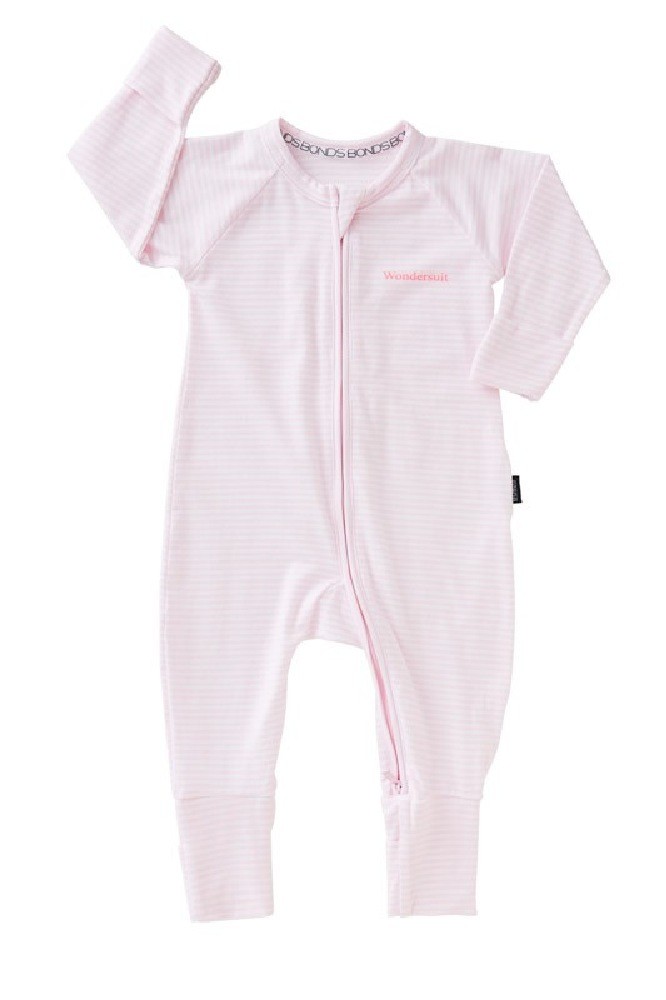
Bonds Wondersuit
2. Anko Baby Bodysuits multipack
Anko’s baby bodysuit multipacks are the pick for base layers: the singlet-style pieces that get soiled and outgrown fastest. Multipacks generally work out cheaper per piece than buying bodysuits singly, which is the right trade for something your baby will soil and outgrow in weeks. Pack contents, sleeve length, colours and sizes change over time, so read the current product page for what is in the pack and its size chart.
Low-regret here has a practical meaning: because each piece costs less, a wrong size costs you less than a wrong size on a single premium suit. Check the seller’s return policy for unopened packs before you count on returning one.
- Strength: a pack gives you several base layers in one purchase, in plain colours that mix easily.
- Strength: good for a growth spurt, when you need the next size in a hurry and do not want to spend much.
- Trade-off: budget cotton can lose shape after many washes, so check the fabric and care label on the product page.
- Trade-off: ranges and colours change, so replacing one specific pack later is not always possible.
- Skip it if: you want pieces that will survive being handed down to a second child.
Anko Baby Bodysuits multipack
3. Purebaby Zip Growsuit
Purebaby is an Australian baby-wear brand, and its zip growsuit sits at the premium end of this list. It suits parents who want a smaller wardrobe of better pieces and are happy to pay more per garment. Before buying, check the product page for the fabric composition, any certification, the care instructions and the size chart, since that is where the real value argument has to be made.
The honest trade-off is that you will not want to buy seven of them. The sensible way to use a premium growsuit is as a few suits layered into a cheaper rotation, for example the going-home outfit or the one you want for photos.
- Strength: zip-front growsuit design, so dressing is quick.
- Strength: works as a going-home outfit or a special-occasion piece.
- Trade-off: likely the highest cost per piece here, so it is hard to justify across a whole rotation.
- Trade-off: pale cotton still shows milk and food, so pre-treat stains quickly.
- Skip it if: you need a full week of sleepsuits, or your baby may only fit the size for a short stretch.
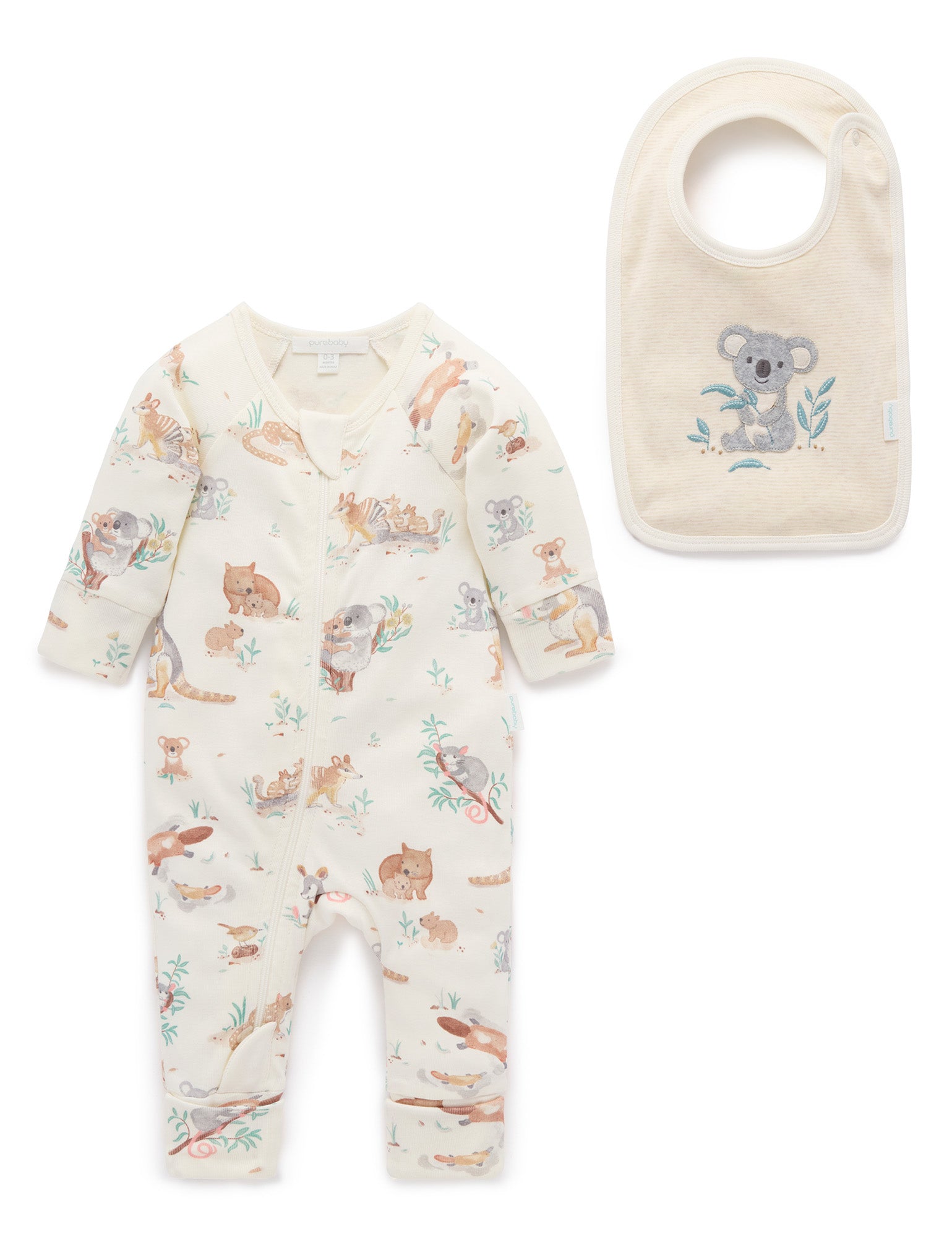
Purebaby Zip Growsuit
How the three compare
| Product | Brand | Check current price | Key features | Best for |
|---|---|---|---|---|
| Bonds Zip Wondersuit #1 | Bonds | Live price on the product card | Footed, zip-front, long-sleeve sleepsuit | The everyday sleepsuit rotation |
| Anko Baby Bodysuits multipack Budget | Anko | Live price on the product card | Multipack bodysuits (check pack contents) | Base layers and baby singlets on a budget |
| Purebaby Zip Growsuit Premium | Purebaby | Live price on the product card | Zip-front growsuit from an Australian brand | A few better pieces and special outfits |
Not sure yet? Put all 12 baby boy clothes we rate next to each other.
What to skip, and how to make clothes last
Not everything on the registry earns its place. A few categories are better left alone, and a couple of habits will stretch the life of what you own.
Skip or limit these
- Newborn shoes: they do nothing for a baby who is not walking and fall off constantly. Socks or footed suits are enough.
- Fiddly outfits with many buttons: lovely for photos, painful at night.
- Stacks of the smallest size: some babies skip it altogether.
- Dry-clean-only or hand-wash pieces: they will not survive newborn washing.
- Matching sets in a single size: baby will outgrow the top before the bottoms, so mix and match instead.
Make them last
- Pre-treat stains straight away with cold water, then an oxygen-based stain remover. Hot water can set milk and food stains.
- Sun-drying white cotton, such as a white baby tee, may help fade stains. Check the care label first.
- Wash new baby clothes once before first wear.
- Rotate sizes into storage as they get outgrown, and label the bin by size and season so the next baby is easy.
Baby clothing questions, answered
How many clothes should I pack in the hospital bag?
A short list is enough: 2 to 3 sleepsuits, 2 to 3 bodysuits, a going-home outfit, a pair of socks and a wrap. Pack the going-home outfit in two sizes, the smallest and one up per the brand’s chart, since you will not know your baby’s size until they arrive. A beanie is fine for the trip home while baby is awake, but take it off before sleep.
When do I move from a zip sleepsuit to a sleeping bag?
There is no fixed age. A common trigger is when you need to stop swaddling because baby is showing signs of rolling. Choose a sleeping bag that fits your baby’s size per its chart, with fitted neck and armholes so baby cannot slip inside, and a rating that suits the room temperature. Red Nose safe sleeping guidance covers the details.
What size should I buy for a baby born in winter versus summer?
Choose size by weight and length on the brand’s chart, not by the season. What changes is the next size: a winter baby will be in the following size in warmer months, so buy that size in lighter pieces once you can see how quickly they are growing. A summer baby will reach the next size in cooler weather, so wait to see before buying long-sleeve pieces.
Is secondhand baby clothing a good idea?
Yes, for most pieces. Before using any, check for loose buttons or snaps, frayed seams and thinning fabric. On sleepwear, make sure the fire hazard label is still attached and legible.
Build the wardrobe around a small rotation of plain pieces. Start with the Bonds Zip Wondersuit as the everyday sleepsuit for cooler months, fill in base layers with the Anko Baby Bodysuits multipack to keep the cost down, and treat the Purebaby Zip Growsuit as a few better pieces for special occasions rather than a full set. Buy a first batch before the birth, wait to see your baby’s size and the season, and let the brand’s size chart, not the label’s age, decide what you buy next.
Where to buy these picks
✓ Verified prices are checked live at the retailer. Otherwise we show the approximate RRP (an indicative recommended price, not a live retailer price), or “price pending” where we don’t have one.
Purebaby Zip Growsuit
Best for special outfits
All 2 prices we track for this pick
- The Thrifty Mumma $44.95 checked 18 Nov 2026
- Baby Bunting $49.95 checked 17 Nov 2026
Anko Baby Bodysuits multipack
Best budget basics
The shortlist, in your inbox
New winners, price drops and recalls worth knowing.