
Baby Bjorn Carrier Australia 2026: Harmony vs Mini vs Move (Complete Comparison)
If you’ve spent any time scrolling through baby gear at 2am with a newborn on your chest, you’ve almost certainly come across the BabyBjörn name. It’s one of those brands that Australian mums mention again and again at mothers’ group.
But here’s the thing: BabyBjörn doesn’t make just one carrier. There are three main models in the lineup, the Harmony, the Mini and the Move, and they’re priced quite differently, suit different stages, and feel completely different on your body. Choosing the wrong one for your lifestyle is an easy (and expensive) mistake to make, especially when you’re sleep-deprived and just want the chest pain of researching to stop.
So grab a cuppa. I’ve done the research, compared the specs, and pulled together everything you need to know to confidently choose the right BabyBjörn for your family in 2026. Whether you’re carrying a brand-new bub through a Melbourne winter or wrangling a wriggly toddler at the local park, there’s a model here for you, and I’ll be honest about the downsides too.
Why BabyBjörn Is Still a Favourite With Aussie Parents in 2026
BabyBjörn is a Swedish brand that’s been making baby carriers for decades, and there’s a reason they’ve stayed popular here in Australia. The carriers are genuinely simple to use, you can put most of them on solo, without a YouTube tutorial and without that panicked feeling of “am I doing this right?”. For new parents, that ease matters enormously.
The other big drawcard is the focus on ergonomics and newborn-readiness. The current range supports facing-in and facing-out carrying, and the higher-end models are designed with your baby’s hips and spine in mind. Many carriers in the BabyBjörn range carry acknowledgement from the International Hip Dysplasia Institute as “hip-healthy” when used correctly, which is a reassuring tick for parents worried about doing right by their little one’s developing hips.
From a safety perspective, any baby carrier sold in Australia should comply with relevant Australian and ACCC safety guidance. BabyBjörn is a well-established brand that takes safety seriously, but no carrier is a substitute for common sense: always make sure bub’s airway is clear, their chin is off their chest, and you can see their face at all times. The “close enough to kiss” rule is a lovely, simple check that works at any stage.
Now, let’s get into the three models so you can see exactly how they differ.
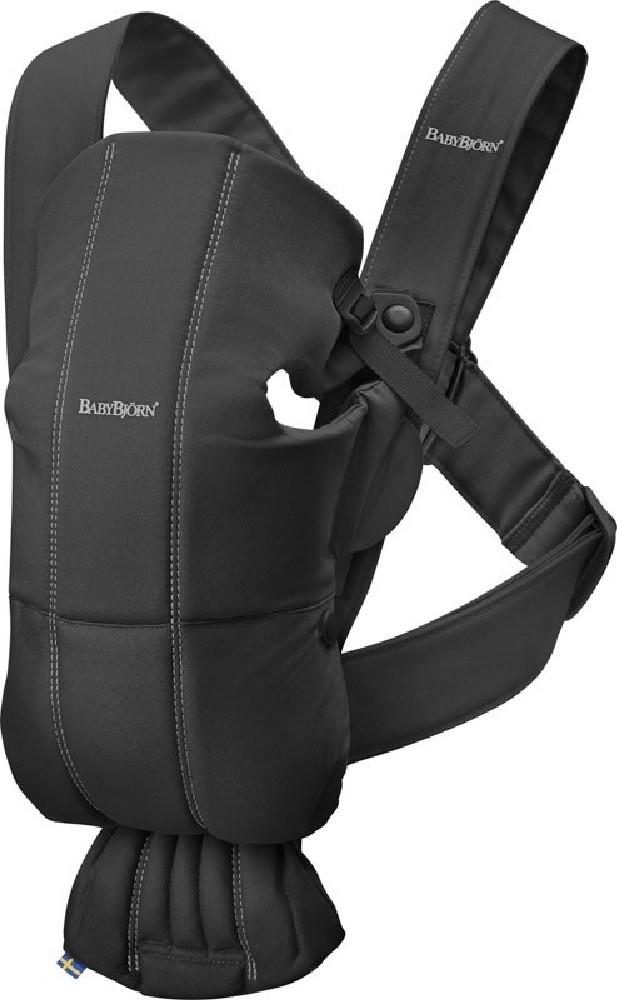
BabyBjörn Carrier Mini: The Simple, Newborn-Focused Choice
The BabyBjörn Baby Carrier Mini is the most affordable and most pared-back option in the range, and it’s designed specifically for that gorgeous (and exhausting) newborn stage. It suits babies from birth (around 3.5kg) up to roughly 12 months or 11kg, though in practice most parents find it’s best loved in those first six months.
What makes the Mini special is how genuinely easy it is. There’s a clever feature that lets you click bub in and out at the front while they stay snug against you, perfect for transferring a sleeping newborn to the cot without waking them (a true Australian parenting miracle). It offers facing-in and facing-out carrying and is wonderfully snug and supportive for tiny bodies.
Pros:
- The most budget-friendly BabyBjörn, great for testing whether you’re a “carrier family”
- Beautifully simple to put on and take off solo
- Lovely close, secure fit for newborns
- Comes in a soft cotton version and a cooler 3D mesh version (the mesh is a winner for Aussie summers)
Cons:
- No waist belt, so all the weight sits on your shoulders, fine for short stints with a newborn, but it gets tiring as bub grows
- Only suitable for front carrying (no hip or back carry)
- You’ll likely outgrow it well before bub is a toddler
Approximate RRP: around $150–$200 (approx.), with the 3D mesh version sitting at the upper end.
Best for: First-time parents, newborn-heavy use, those on a tighter budget, or as a lightweight second carrier to keep in the car.
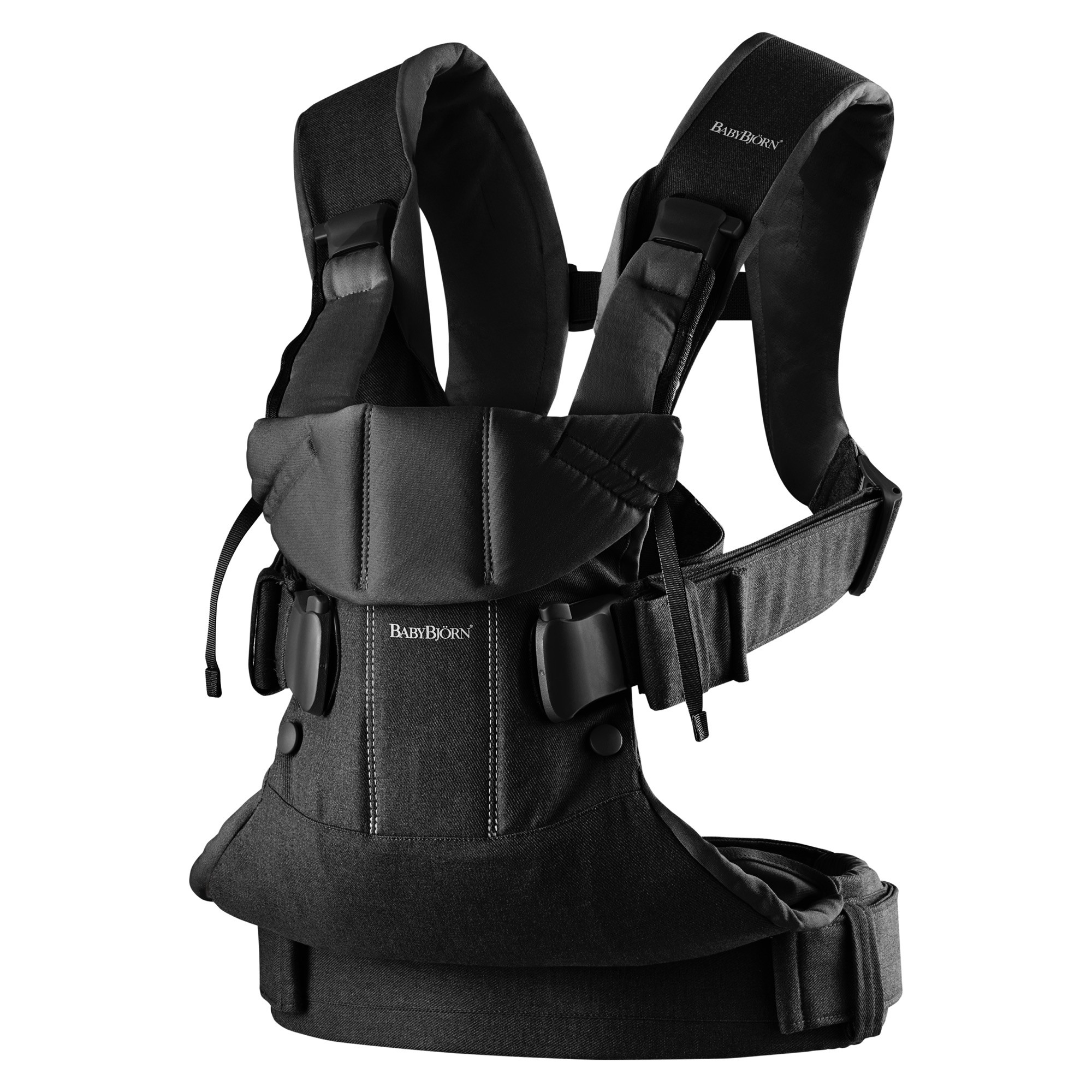
BabyBjörn Carrier Harmony: The Premium All-Rounder
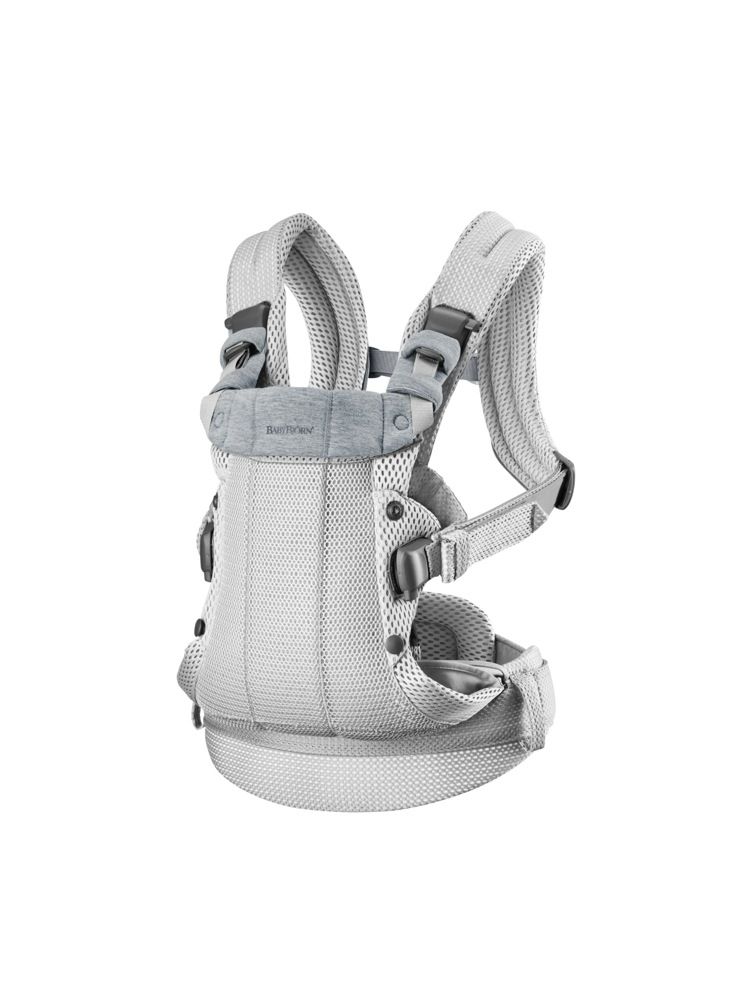
If the Mini is the entry point, the BabyBjörn Baby Carrier Harmony is the flagship, and it’s the one I’d point most parents towards if comfort over the long haul is the priority. It’s built for babies from birth (around 3.5kg) up to approximately three years (around 15kg), so it genuinely grows with your child.
The Harmony has a padded, structured waist belt and wide, padded shoulder straps that distribute weight across your hips and back rather than dumping it all on your shoulders. For longer walks, bushwalks, or those endless evening laps around the lounge room with an overtired baby, that difference is night and day. It supports four carrying positions: facing-in (two height settings for newborns and older bubs), facing-out, and back carrying once your child is old enough.
It’s made with a soft 3D mesh that breathes well, a real plus given how warm Australian afternoons can get, and it has an adjustable head support to cradle a sleeping newborn or fold down for a curious older baby who wants to look around.
Pros:
- Excellent weight distribution thanks to the padded waist belt, by far the most comfortable for extended wear
- Four carrying positions, including back carry for older babies and toddlers
- Breathable 3D mesh, ideal for our climate
- Grows with your child from newborn through to around three years
- Hip-healthy design acknowledged by the International Hip Dysplasia Institute when used correctly
Cons:
- The priciest in the range
- Slightly more to adjust and learn than the ultra-simple Mini (though still very intuitive)
- Can feel like a lot of carrier for a tiny newborn in the very early weeks
Approximate RRP: around $300–$370 (approx.).
Best for: Parents who want one carrier to last from newborn to toddler, those who’ll be doing longer walks or wearing bub for extended periods, and anyone who prioritises back support.
BabyBjörn Carrier Move: The Lightweight, Active Middle Ground
The BabyBjörn Baby Carrier Move sits neatly between the Mini and the Harmony, both in price and in features. It’s pitched at active families who want a carrier that’s comfortable and supportive but also lightweight and quick to use. It suits babies from birth (around 3.5kg) up to roughly 15 months or so (around the same upper weight range as the Mini, but with more comfort built in).
The big upgrade over the Mini is that the Move has a supportive waist belt, so the load is shared between your hips and shoulders. It uses an airy 3D mesh designed to keep you and bub cool, a genuine bonus during a humid Queensland summer or a sweaty pram-free walk. It offers facing-in and facing-out carrying and folds down nice and compact for chucking in the nappy bag.
Pros:
- Waist belt for better weight distribution than the Mini, at a lower price than the Harmony
- Lightweight and breathable, great for active, on-the-go parents
- Quick and easy to put on, with a sporty, streamlined feel
- Comfortable for moderate walks and everyday errands
Cons:
- No back-carry option (only front carrying), so it won’t take you as far into toddlerhood as the Harmony
- Lower upper age/weight range than the Harmony
- Padding is lighter than the Harmony, so it’s less plush for very long sessions
Approximate RRP: around $250–$300 (approx.).
Best for: Active parents who want waist-belt support without the top-tier price, families doing shorter-to-moderate walks, and anyone who values a lightweight, packable carrier.
Harmony vs Mini vs Move: The Side-by-Side Comparison
Sometimes it’s easiest to see everything laid out together. Here’s how the three BabyBjörn carriers stack up at a glance.
| Product | Brand | Key features | Best for |
|---|---|---|---|
| Baby Carrier Mini | BabyBjörn | No waist belt; front carry only; facing-in & facing-out; cotton or 3D mesh; click bub in/out | Budget-conscious parents & newborn-heavy use |
| Baby Carrier Move | BabyBjörn | Supportive waist belt; front carry only; facing-in & facing-out; lightweight 3D mesh | Active parents wanting waist support at a mid price |
| Baby Carrier Harmony | BabyBjörn | Padded waist belt & shoulders; 4 positions incl. back carry; 3D mesh; newborn to ~3 years | One carrier from newborn to toddler & long-wear comfort |
As a quick summary: the Mini is the simplest and cheapest, the Move adds a waist belt for better comfort at a mid-range price, and the Harmony is the premium do-it-all option that lasts the longest and supports your back the best.
Not sure yet? Put all 16 baby carriers we rate next to each other.
How to Choose the Right BabyBjörn for Your Family
The “best” carrier really does depend on you, your body, your budget, and how you picture using it. Here are the questions I’d ask myself before buying.
How long do you want it to last? If you want one carrier that’ll take you from those newborn snuggles all the way to a 2.5-year-old who insists on being carried home from the park, the Harmony is the clear winner thanks to its back-carry option and higher weight range. The Mini and Move are both front-carry only and bow out earlier.
How long will you wear it at a time? Quick trips to the shops and settling a baby for 20 minutes? The Mini handles that beautifully. Longer walks, bushwalks, or hours of wearing a contact-nap-loving baby? You’ll want the waist-belt support of the Move or, ideally, the plush padding of the Harmony. Your shoulders will thank you.
What’s your budget? There’s a meaningful price gap across the range. If you’re not sure you’ll be a baby-wearing family at all, the Mini is a lower-risk way to find out. If you already know you love carrying, spending more on the Harmony often works out as better value over time because you won’t need to upgrade.
What’s your climate like? Australian summers are no joke. All three come in breathable 3D mesh versions, which I’d strongly recommend if you live somewhere warm and humid. A sweaty baby (and a sweaty you) makes for a much less enjoyable walk.
Will more than one person wear it? If you and your partner are different sizes and you’ll be sharing, the Harmony and Move adjust nicely across body shapes. The Mini is simple but, without a waist belt, can feel less tailored on different frames.
mum.com.au Approved: Our Top Pick
After weighing it all up, our mum.com.au Approved pick of the BabyBjörn range is the BabyBjörn Baby Carrier Harmony.
It’s not the cheapest, and we won’t pretend otherwise, but it’s the one that does the most for the longest, and the comfort difference on extended wear is genuinely significant. The padded waist belt and shoulders mean you can carry a heavier baby or toddler without ending the day with an aching back, and the four carrying positions (including back carry) mean it stays useful well into the toddler years. For a family buying just one carrier to do it all, the Harmony offers the best long-term value despite the higher upfront cost.
That said, if your budget simply doesn’t stretch that far right now, the BabyBjörn Baby Carrier Mini is a brilliant, genuinely loveable entry point, and there’s no shame in starting there and upgrading later if you find you adore baby-wearing. And for active families who want waist support without the flagship price, the BabyBjörn Baby Carrier Move is a smart, breathable middle ground.
Whichever you lean towards, prices shift often, so it’s always worth checking the current deals before you commit.
Caring for Your BabyBjörn Carrier
One lovely practical thing about the BabyBjörn range is that the carriers are machine washable, which is a blessing when you’re dealing with the inevitable spit-up, dribble and mystery stains of early parenthood. Always check the specific care label, but generally a gentle, cool machine wash and air-drying out of direct sunlight will keep your carrier in good nick.
Before each use, give the buckles and seams a quick once-over to make sure everything’s secure and undamaged. Over months of daily wear, it’s worth being attentive to any wear and tear, particularly around the clips and straps. A well-cared-for carrier holds its resale value too, and quality baby gear that’s still in great condition is always in demand among other parents.
If you’ve bought your carrier second-hand (a great budget move, and very common among Aussie mums), double-check that no parts are damaged, that all buckles click firmly, and that it hasn’t been subject to any recall. When in doubt, a brand-new carrier gives you peace of mind that everything meets current safety expectations.
Our top pick across the board for most Australian families.
The value choice when you want the essentials without overspending.
The splurge pick if you want the most features and finish.
Frequently Asked Questions
Which BabyBjörn carrier is best for a newborn?
All three suit newborns from around 3.5kg, but the Mini is specifically designed with the newborn stage in mind and is the simplest to use for those early weeks. That said, the Harmony also handles newborns beautifully with its adjustable head support and lower height setting, and gives you far more longevity. If newborn ease is your only concern, the Mini wins; if you want one carrier for the long haul, the Harmony is worth the extra spend.
Is the BabyBjörn Harmony worth the higher price?
For most families, yes, provided you’ll actually use it a lot. The padded waist belt makes extended wear genuinely comfortable, and the back-carry option plus higher weight range mean it lasts into the toddler years. If you only plan to wear bub occasionally and briefly, you may not need to pay for all that extra comfort and could happily go with the Mini.
Can I carry my baby facing outwards in these carriers?
Yes, all three (Mini, Move and Harmony) support facing-out carrying once your baby has strong, steady head and neck control, usually from around five to six months. Facing out is best kept to shorter periods, as it can be overstimulating for little ones, and they often prefer turning back in for a snooze.
Are BabyBjörn carriers good for Australian summers?
The 3D mesh versions of all three carriers are well suited to our warmer months, they’re breathable and help keep both you and bub cooler. If you live somewhere hot and humid, the mesh option is well worth choosing over the cotton. Remember that wearing your baby adds shared body heat, so dress bub lightly, keep them hydrated (with feeds for younger babies), and avoid the harshest midday sun.
How long can my baby stay in a BabyBjörn carrier at one time?
There’s no single rule, but it’s wise to take regular breaks and to change bub’s position and have tummy time out of the carrier across the day. Always keep their airway clear, their face visible, and check they’re not slumped with their chin on their chest. If bub seems unsettled or overheated, it’s time for a break.
The Bottom Line
BabyBjörn has earned its place in Australian nurseries for good reason, the carriers are easy, well-made, and thoughtfully designed around both your baby’s comfort and yours. The choice really comes down to how much you’ll use it and for how long.
If you want our honest, all-things-considered recommendation: the BabyBjörn Baby Carrier Harmony is the standout for families wanting one carrier to last from newborn snuggles to toddler adventures, with the back support to make long days bearable. If budget is front of mind, the BabyBjörn Baby Carrier Mini is a wonderful, wallet-friendly starting point, and the BabyBjörn Baby Carrier Move is the ideal middle ground for active parents who want waist-belt comfort without the top-tier price.
Whatever you choose, those hands-free cuddles and contented little naps against your chest are among the loveliest parts of early parenthood. Prices change often, so check the latest before you buy, and happy baby-wearing.
Where to buy these picks
✓ Verified prices are checked live at the retailer. Otherwise we show the approximate RRP (an indicative recommended price, not a live retailer price), or “price pending” where we don’t have one.
All 6 prices we track for this pick
- Baby Little Planet $299.95 checked 7 Oct 2026
- Baby Village $319 checked 7 Oct 2026
- Kiddie Country $319 checked 7 Oct 2026
- Whole Bubs $339 checked 7 Oct 2026
- Baby Bunting $339.99 checked 4 Oct 2026
- Baby Kingdom $339.99 checked 7 Oct 2026
All 7 prices we track for this pick
- Baby Kingdom $129.99 checked 7 Oct 2026
- Kiddie Country $159 checked 7 Oct 2026
- Baby Bunting $159.99 checked 4 Oct 2026
- Baby Little Planet $159.99 checked 7 Oct 2026
- The Memo $160 checked 7 Oct 2026
- Baby Village $170 checked 7 Oct 2026
- Baby Zone $180 checked 7 Oct 2026
All 5 prices we track for this pick
- Baby Bunting $199 checked 4 Oct 2026
- Baby Kingdom $289.99 checked 7 Oct 2026
- Kiddie Country $299 checked 7 Oct 2026
- Baby Little Planet $299 checked 7 Oct 2026
- Baby Zone $320 checked 7 Oct 2026
Baby Carrier Free
Best soft feel carrier
Baby Carrier Move
Best for active parents
The shortlist, in your inbox
New winners, price drops and recalls worth knowing.