
Baby Panadol Australia 2026: Dosage Guide, Alternatives & When to Use
There’s a particular kind of panic that sets in when you press your lips to your baby’s forehead at 2am and feel that telltale heat. Your little one is unsettled, flushed, and miserable, and you’re standing in the dark trying to remember everything you’ve ever read about fevers, dosages and whether you’re doing the right thing. If that sounds familiar, take a deep breath. You’re not alone, and you’re already doing a wonderful job just by wanting to get it right.
Baby Panadol is one of the most reached-for products in Aussie homes, and for good reason, it’s a safe, effective way to ease pain and bring down a fever when used correctly. But “used correctly” is the key phrase, and there’s a surprising amount of confusion out there about dosing by age versus weight, how often you can safely give it, and when a fever actually warrants medicine at all.
In this guide, we’ll walk you through everything you need to know about baby Panadol in 2026, the right dosages, how it compares to alternatives like Nurofen, where to buy it affordably across Australia, and the all-important red flags that mean it’s time to call your doctor or head to the hospital. Consider this your calm, trusted friend in your back pocket for those long nights.
What Is Baby Panadol and How Does It Work?
Baby Panadol is the children’s formulation of paracetamol, one of the most widely used and well-studied medicines for infants and children. It works as both a pain reliever (analgesic) and a fever reducer (antipyretic), making it a go-to for everything from teething discomfort to the aches that come with a cold or post-immunisation grizzles.
Not sure yet? Put all 21 health & safety we rate next to each other.
In Australia, baby Panadol typically comes in a few forms:
- Panadol Baby Drops (1 month, 2 years): A concentrated formula with a dosing syringe, ideal for newborns and young babies.
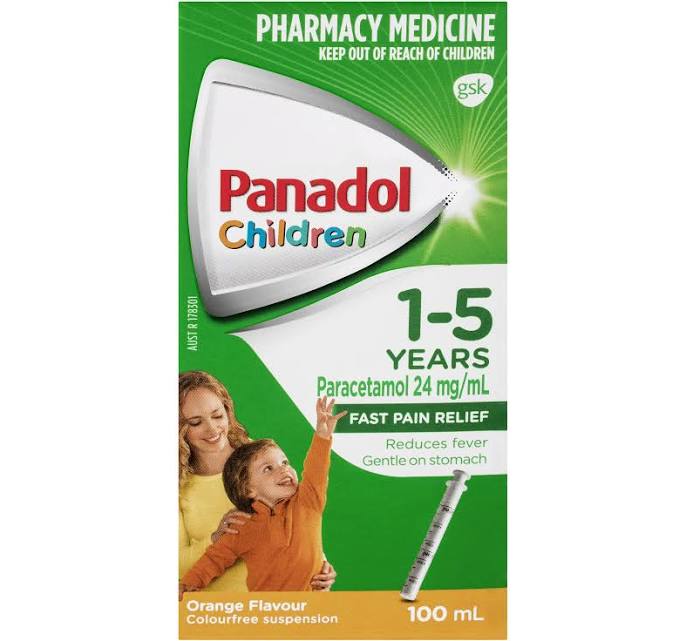
- Panadol Children’s 1-5 Years Suspension: A liquid colour-free, sugar-free formula with a measuring cup or syringe.
- Panadol Children’s 5-12 Years Suspension: A slightly stronger concentration for older kids.
Paracetamol is generally considered safe from one month of age, but it’s important to choose the formulation that matches your child’s age and to always measure with the device that comes in the pack. Kitchen teaspoons vary wildly in size and should never be used to dose medicine.
One of the reasons baby Panadol is so trusted is that it’s gentle on little tummies and rarely causes side effects when used as directed. Unlike anti-inflammatory medicines, it doesn’t irritate the stomach lining, which makes it a sensible first choice for many situations.
Baby Panadol Dosage Guide: Getting It Right
This is the section most parents come for, so let’s make it crystal clear. The golden rule of dosing baby Panadol is this: dose by weight, not just age, whenever you can. Age ranges on the packaging are a guide, but two children of the same age can have very different weights, and weight gives a far more accurate dose.
The standard recommended dose of paracetamol is 15mg per kilogram of body weight per dose, given every four to six hours as needed. Crucially, you should never give more than four doses in any 24-hour period, and never for more than 48 hours without speaking to a doctor.
Here’s a general guide based on the common baby Panadol formulations, but always read your specific product’s label, as concentrations can vary:
- Panadol Baby Drops (100mg/mL): For a baby weighing around 4–5kg, the dose is typically 0.6–0.9mL. Always use the included syringe.
- Panadol Children’s Suspension (24mg/mL): For a child weighing 8kg, that works out to roughly 5mL per dose; for 12kg, around 7.5mL.
A few non-negotiable safety tips:
- Always use the measuring syringe or cup provided, never a household spoon.
- Write down the time of each dose. In the fog of a sick night (or when two parents are tag-teaming), it’s frighteningly easy to double up.
- Check that you’re not giving paracetamol in another form at the same time (some cough and cold preparations contain it).
- If you’re unsure of your baby’s exact weight, your local pharmacist or Maternal and Child Health nurse can help, most pharmacies have baby scales.
When in doubt, phone healthdirect on 1800 022 222 (free, 24/7) or speak to your pharmacist. There’s no such thing as a silly question when it comes to dosing your baby.
When Should You Actually Give Baby Panadol?
Here’s something that surprises a lot of parents: a fever itself isn’t necessarily a bad thing. A fever is the body’s natural and healthy response to fighting off an infection, and the number on the thermometer doesn’t always reflect how unwell your child is. A baby with a temperature of 38.5°C who is happily playing may need nothing at all, while a child with a lower fever who is clearly miserable may benefit from relief.
The current guidance from Australian health experts is to treat the child, not the number. Give baby Panadol when:
- Your baby is genuinely uncomfortable, distressed or in pain.
- They’re too unsettled to feed, drink or rest.
- They’re suffering from teething pain, an ear infection, or aches from a cold (always confirm with your GP for infections).
- They’re miserable after immunisations, though many clinics now advise against routine pre-emptive dosing, so check first.
You generally don’t need to give baby Panadol simply because the thermometer reads a certain number, if your child is otherwise comfortable, drinking well and behaving normally. The goal is comfort, not chasing a “normal” temperature.
Important: Paracetamol should only be given to babies under three months of age on the advice of a doctor. For very young infants, any fever needs medical assessment rather than treatment at home.
Baby Panadol vs Nurofen: Understanding the Alternatives
The other big name in the children’s medicine cabinet is Nurofen for Children, which contains ibuprofen, an anti-inflammatory. Many parents wonder which to reach for, and whether you can use both.
Here’s how they compare:
- Paracetamol (baby Panadol): Suitable from one month of age. Gentle on the stomach. A good first choice and safe for most babies.
- Ibuprofen (Nurofen for Children): Only suitable from three months of age and over 5kg. Has anti-inflammatory properties, which can help with certain types of pain. Should be given with food and avoided if your child is dehydrated, vomiting, has a tummy bug, or has certain conditions like asthma in some children.
Can you alternate them? Some GPs do recommend alternating paracetamol and ibuprofen for a child who is very uncomfortable and not responding to one alone, but this should be done carefully and ideally under medical guidance, because it’s easy to lose track and accidentally overdose. If you do alternate, keep a written log of exactly what you gave and when.
For most everyday situations, teething, mild post-vaccination grizzles, a run-of-the-mill cold, baby Panadol on its own is usually all you need. Nurofen tends to come into its own for inflammation-related pain, but always check it’s appropriate for your child’s age, weight and health first.
Safe Storage and Common Mistakes to Avoid
Baby Panadol is brilliantly safe when used correctly, but paracetamol overdose is one of the more common causes of accidental poisoning in young children, so a few simple habits make all the difference.
Storage:
- Always store medicine up high, out of sight and reach, ideally in a locked cupboard. Many baby Panadol products have child-resistant caps, but these are a backup, not a guarantee.
- Store below 25°C and away from direct sunlight. Pop it back in the cupboard rather than leaving it on the bench.
- Check the expiry date regularly and safely dispose of old medicine by returning it to any pharmacy (free of charge) rather than binning it.
Common mistakes to avoid:
- Doubling up on paracetamol: Many combination cold-and-flu products contain paracetamol. Always check labels so you’re not giving it twice.
- Using the wrong measuring device: The syringe from one product may not match another’s concentration. Always use the device in the pack.
- Confusing concentrations: Baby Drops are far more concentrated than the children’s suspension. Giving a “drops” dose using the suspension (or vice versa) can be dangerous. Read the label every time.
- Giving it for too long: If your baby still needs medicine after 48 hours, it’s time to see a doctor rather than continuing to medicate at home.
If you ever suspect your child has had too much paracetamol, even if they seem fine, call the Poisons Information Centre on 13 11 26 immediately. Paracetamol overdose symptoms can be delayed, so don’t wait to see if something develops.
Red Flags: When to Skip the Panadol and Call a Doctor
Baby Panadol treats symptoms, it doesn’t cure the underlying cause. Knowing when a situation is beyond home care is one of the most important skills a parent can have. Trust your instincts: you know your baby better than anyone, and if something feels wrong, seek help.
Seek urgent medical attention (call 000 or go to your nearest emergency department) if your baby:
- Is under three months old and has a fever of 38°C or higher.
- Has a rash that doesn’t fade when you press a glass against it (a possible sign of meningococcal disease).
- Is difficult to wake, floppy, or unusually drowsy.
- Has difficulty breathing, is breathing very fast, or their lips or skin look blue or grey.
- Has a stiff neck, a bulging soft spot, or is extremely sensitive to light.
- Is having a seizure or convulsion.
- Shows signs of dehydration, no wet nappy for many hours, no tears when crying, sunken eyes or a dry mouth.
See your GP or call healthdirect (1800 022 222) the same day if your baby:
- Has a fever lasting more than 48 hours.
- Isn’t drinking or feeding well.
- Is more unsettled or sleepy than usual and you’re worried.
- Has a fever that keeps returning after the medicine wears off, alongside other symptoms.
Remember: a fever that responds well to baby Panadol but your child is still unwell, lethargic or not themselves still deserves a check. The relief medicine provides shouldn’t lull you into ignoring your gut feeling.
mum.com.au Approved: Our Baby Medicine Cabinet Picks
After researching the options, here’s what we’d recommend every Australian family keep on hand in 2026:
- Best overall: Panadol Baby Drops (1 month, 2 years), the concentrated formula and precise syringe make accurate dosing for little ones simple.
- Best value: Supermarket or pharmacy home-brand children’s paracetamol, same active ingredient and concentration, often half the price. Just double-check the mg/mL matches and use the included syringe.
- Best for older babies and toddlers: Panadol Children’s 1-5 Years Colour Free Suspension, gentle, easy to give, and the colour-free formula means no staining if it ends up on the carpet (and it will).
- Worth having alongside it: A reliable digital thermometer (Kmart and Big W have solid options under $20) and a simple notebook or phone note to log doses.
Our biggest tip? Buy your baby Panadol before you need it. Sick days have a way of arriving at midnight, on a public holiday, in the middle of a storm. Having the right formulation for your baby’s age already in the cupboard means one less thing to stress about when you’re holding a hot, grizzly bub.
Our top pick across the board for most Australian families.
The value choice when you want the essentials without overspending.
The splurge pick if you want the most features and finish.
Frequently Asked Questions
Can I give baby Panadol and Nurofen at the same time?
You shouldn’t give them at the exact same time, but some GPs do advise alternating paracetamol and ibuprofen for a child who is very uncomfortable and not getting relief from one alone. If you do this, keep a written log of each dose and time to avoid accidentally overdosing, and ideally check with your GP or pharmacist first. For most situations, baby Panadol on its own is enough.
How often can I give my baby Panadol?
Baby Panadol can be given every four to six hours as needed, with a maximum of four doses in any 24-hour period. Don’t use it for more than 48 hours without seeing a doctor. Always space doses at least four hours apart and write down each one so you don’t lose track.
What if I gave my baby too much Panadol?
Call the Poisons Information Centre on 13 11 26 straight away, even if your baby seems completely fine. Paracetamol overdose symptoms can be delayed by many hours, so never adopt a wait-and-see approach. Have the bottle handy so you can tell them the concentration and how much was given.
Can newborns have baby Panadol?
Paracetamol can be given from one month of age, but for babies under three months it should only ever be given on the advice of a doctor. Any fever in a baby under three months needs medical assessment rather than home treatment, so call your GP or healthdirect first.
Does baby Panadol help with teething?
Yes, baby Panadol can ease the genuine discomfort of teething when your little one is distressed. That said, try comfort measures first, chilled teething rings, gentle gum massage and extra cuddles, and reserve medicine for when they’re truly miserable rather than using it routinely. If your baby has a high fever, don’t assume it’s “just teething”; teething doesn’t cause significant fevers, so get them checked.
The Bottom Line
Baby Panadol remains one of the safest, most effective and most affordable tools in your parenting kit for easing pain and bringing comfort to an unwell little one. The keys to using it well are simple: dose by weight whenever possible, always use the syringe in the pack, never exceed four doses in 24 hours, and treat your child’s comfort rather than the number on the thermometer.
Our top recommendation for 2026 is to keep Panadol Baby Drops (or a home-brand equivalent at the matching concentration) stocked in a high, locked cupboard before you ever need them, paired with a decent thermometer and a notebook to track doses. And above all, trust your instincts. Medicine can ease symptoms, but no thermometer or dosing chart replaces a parent who knows when something just isn’t right.
When in doubt, you’ve always got backup: your pharmacist, your GP, healthdirect on 1800 022 222, and the Poisons Information Centre on 13 11 26. You’ve got this, and we’ve got you.
This article is for general information only. It is not a substitute for personalised medical advice. Always read the label, follow the directions for use, and consult your doctor or pharmacist if symptoms persist.
Where to buy these picks
✓ Verified prices are checked live at the retailer. Otherwise we show the approximate RRP (an indicative recommended price, not a live retailer price), or “price pending” where we don’t have one.
Panadol Baby Drops (1 month, 2 years)
★ Best for newborns
Panadol Children's 1-5 Years Suspension
Best for young toddlers
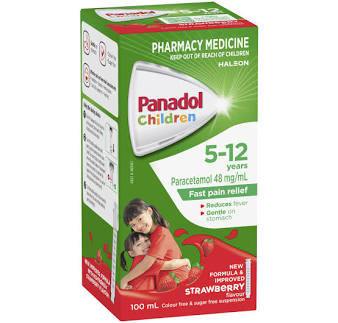
Panadol Children's 5-12 Years Suspension
Best for school-age kids
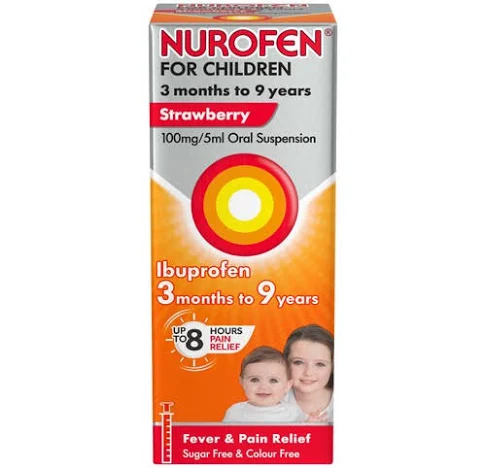
Nurofen for Children
Best for fever relief
The shortlist, in your inbox
New winners, price drops and recalls worth knowing.