

Best Baby Car Seats Australia 2026: Capsule vs Convertible (ACCC Safety Guide)
Best Baby Car Seats Australia 2026: Capsule vs Convertible (ACCC Safety Guide)
Few purchases feel as heart-thumping as choosing a baby seat. You’re literally buckling in the most precious cargo you’ll ever carry, and the sheer number of options out there can leave even the most organised mum feeling a little wobbly. Capsule or convertible? Isofix or seatbelt install? And why does one cost more than your last weekend away?
Take a deep breath, lovely. We’ve done the homework so you don’t have to. This guide walks you through the real difference between an infant capsule and a convertible baby car seat, what the ACCC actually requires here in Australia, and the specific models worth your hard-earned money in 2026.
Whether you’re nesting before your first bub arrives or upgrading for a growing toddler, here’s everything you need to know, honest pros and cons, approximate prices, and our genuine mum.com.au Approved picks.
The Most Important Thing: Australian Safety Standards (ACCC)
Before we talk brands, let’s talk safety, because in Australia, this isn’t optional. Every baby car seat sold legally here must comply with the mandatory standard AS/NZS 1754. This is overseen by the ACCC (Australian Competition and Consumer Commission) and it’s genuinely one of the strictest car restraint standards in the world.
Here’s what that means in plain English:
- Buy local. A seat bought overseas or online from an international seller may not meet AS/NZS 1754, even if it looks identical. American and European seats are not legal for use in Australian cars, no matter how glowing the reviews are.
- Look for the tick. Compliant seats carry the standards mark and a sticker confirming AS/NZS 1754. If it’s not there, walk away.
- Rear-facing for longer. Australian guidance recommends keeping bub rear-facing until at least 12 months, and ideally as long as the seat allows. It’s significantly safer for little necks and spines.
- Used with caution. A second-hand baby seat can be fine, but only if you know its full history, it’s under 10 years old, has never been in a crash, and still has all its labels and instructions. If in doubt, don’t.
Every product we recommend below complies with AS/NZS 1754. That’s the non-negotiable baseline, from there, it’s about finding the right fit for your family, your car and your budget.
Capsule vs Convertible: What’s the Difference?
This is the big fork in the road, so let’s make it simple.
An infant capsule (sometimes called an infant car seat) is a rear-facing baby seat designed for newborns up to around 6-12 months. The magic of a capsule is that it lifts out of the car with a click and carries straight onto a compatible pram, so you can transfer a sleeping newborn from car to cafe without waking them. Bliss.
A convertible car seat stays installed in the car and grows with your child. It starts rear-facing for your newborn and then converts to forward-facing once they’re big enough, typically lasting from birth to around 4 years (or longer for some models). It doesn’t lift out, so there’s no carrying a sleeping bub from the car.
So which is right for you?
- Choose a capsule if: you do lots of short trips with frequent stops, you love the convenience of not waking a sleeping baby, and you don’t mind buying a separate convertible seat down the track.
- Choose a convertible if: you want one seat that lasts for years, you’re conscious of cost over the long run, and you’re happy to wake bub for the dash inside.
Plenty of Aussie families do a bit of both, a capsule for those precious newborn months, then a convertible once bub outgrows it. There’s no wrong answer here, only what suits your lifestyle.
Best Infant Capsules (Baby Seats) for Newborns in 2026
If the lift-and-go convenience appeals to you, here are the capsules genuinely worth considering this year. All comply with AS/NZS 1754.
Maxi-Cosi Mico 12 LX
A long-standing favourite among Australian parents, the Mico 12 LX is light, easy to install and clicks neatly onto a wide range of compatible prams. The fabrics feel soft against newborn skin and the head support is reassuringly generous.
Pros: Lightweight to carry, broad pram compatibility, easy-adjust harness, breathable fabrics for warm Aussie days.
Cons: Like all capsules, the usable lifespan is short; you’ll need a convertible seat afterward.
Approx. RRP: around $400-$500 (approximate only).

Maxi-Cosi Mico 12 LX
Britax Safe-n-Sound Unity Neos
Britax Safe-n-Sound is an Aussie institution, and the Unity Neos capsule is a beautifully considered option with deep side-impact protection and an easy-read harness indicator. It pairs with Britax pram systems and several others via adapters.
Pros: Excellent side-impact protection, trusted Australian brand, intuitive harness, sturdy base.
Cons: Slightly heavier than some rivals once bub is bigger; premium price point.
Approx. RRP: around $450-$550 (approximate only).
Britax Safe-n-Sound Unity Neos
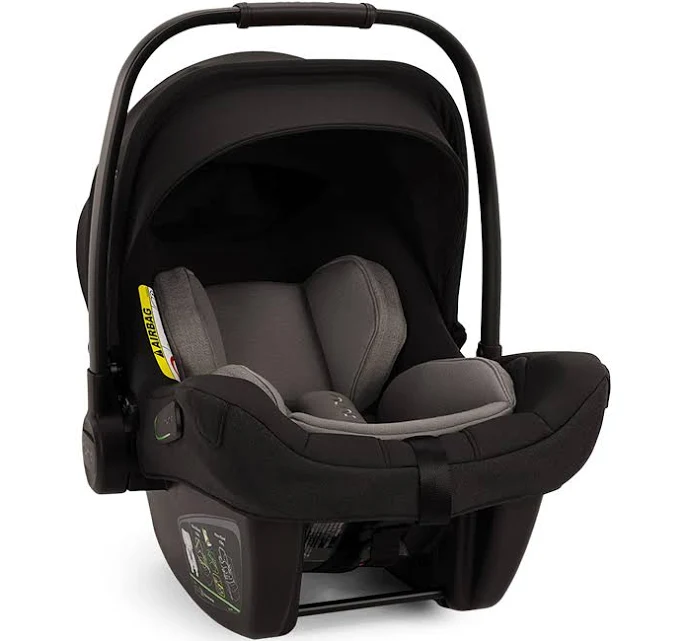
Nuna PIPA Next
For parents chasing a lighter, more design-led capsule, the Nuna PIPA Next is a lovely thing. It’s one of the lightest capsules around, has a clever no-rethread harness and an easy click-in base.
Pros: Extremely light to lift, premium fabrics, simple install, sleek look.
Cons: Sits at the higher end of the price range; pram compatibility is best within the Nuna ecosystem.
Approx. RRP: around $500-$650 (approximate only).
| Product | Brand | Key features | Best for |
|---|---|---|---|
| Mico 12 LX | Maxi-Cosi | Lightweight, wide pram compatibility, breathable fabric | Everyday convenience |
| Unity Neos | Britax Safe-n-Sound | Deep side-impact protection, easy harness indicator | Safety-focused parents |
| PIPA Next | Nuna | Ultra-light, no-rethread harness, sleek design | Easy lifting & style |
We’ve reviewed 14 baby car seats in total — compare the full list before you decide.
Best Convertible Baby Car Seats in 2026
If you’d rather one seat that grows with your child, these convertibles are the ones we’d happily put our own babies in. All comply with AS/NZS 1754.
Nuna PIPA Next
Britax Safe-n-Sound b-first ifix
A genuinely excellent all-rounder, the b-first ifix offers Isofix installation, deep side protection and a long rear-facing window. It’s easy to live with day to day and the install is forgiving even for first-timers.
Pros: Isofix for confident install, generous rear-facing duration, robust side-impact cushioning.
Cons: Bulky in smaller cars; not the cheapest.
Approx. RRP: around $500-$600 (approximate only).
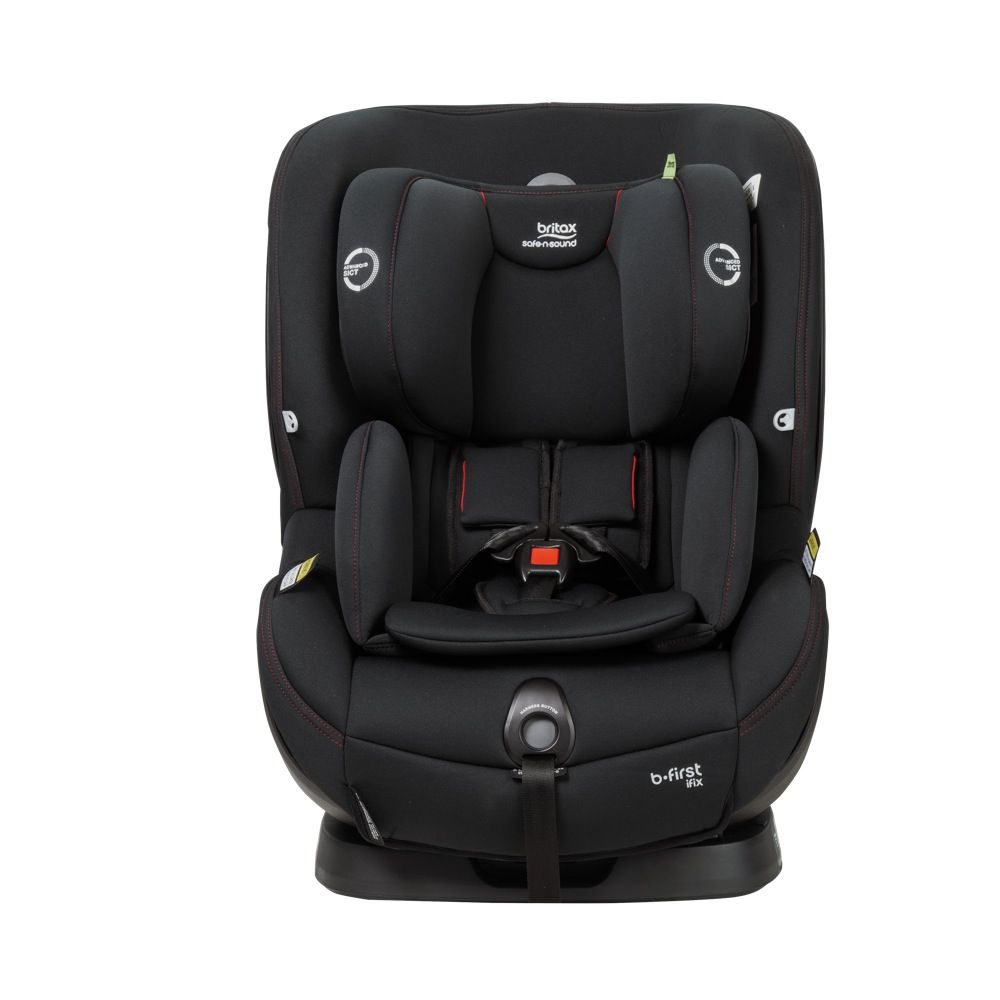
Britax Safe-n-Sound b-first ifix
Maxi-Cosi Pria LX
The Pria LX is a comfortable, plush convertible that’s beautifully padded for long drives, handy for those big country trips many Aussie families take over the summer holidays. The fabrics are removable and machine washable, which any parent will appreciate after the inevitable spills.
Pros: Very comfortable, easy-clean fabrics, smooth harness adjustment.
Cons: Takes up a fair bit of room; heavier to move between cars.
Approx. RRP: around $450-$600 (approximate only).

Maxi-Cosi Pria LX
Infasecure Kompressor 4 Astra
For families watching the budget without compromising on the AS/NZS 1754 standard, the Infasecure Kompressor 4 Astra is a smart pick. It uses a clever compressing harness to reduce slack and offers good adjustability as your child grows.
Pros: Great value, compressing harness for a snug fit, lighter than many convertibles.
Cons: Fabrics feel less plush than premium rivals; styling is more functional than fancy.
Approx. RRP: around $300-$400 (approximate only).
Infasecure Kompressor 4 Astra
Britax Safe-n-Sound Platinum Pro
If you want a baby seat that lasts as long as possible, the Platinum Pro is built for the long haul, converting from rear-facing newborn use right through to a forward-facing harnessed seat for older toddlers and beyond. It’s the “buy once” option.
Pros: Exceptional longevity, premium side-impact protection, easy-adjust everything.
Cons: Premium price; large footprint in compact cars.
Approx. RRP: around $650-$800 (approximate only).
| Product | Brand | Key features | Best for |
|---|---|---|---|
| b-first ifix | Britax Safe-n-Sound | Isofix, long rear-facing window, deep side protection | All-round value |
| Pria LX | Maxi-Cosi | Plush padding, washable fabrics, smooth harness | Comfort on long drives |
| Kompressor 4 Astra | Infasecure | Compressing harness, lighter weight, good value | Budget-conscious families |
| Platinum Pro | Britax Safe-n-Sound | Birth-to-big-kid longevity, premium protection | Buy-once families |
Isofix vs Seatbelt Installation: Which Is Right for You?
One of the most common questions we get is about how the baby seat actually attaches to the car. In Australia you’ll see two main methods, and both are perfectly safe when used correctly.
Isofix uses dedicated anchor points built into your car (most cars made in the last decade have them) plus the mandatory Australian top tether. The big appeal is confidence, those reassuring clicks tell you the seat is locked in, and it’s much harder to install incorrectly. If you swap the seat between cars often, Isofix makes life quicker.
Seatbelt installation uses your car’s existing seatbelt plus the top tether. It’s compatible with virtually every car, it’s often a bit lighter, and quality seatbelt-installed seats are every bit as safe. The trade-off is that it can be fiddlier to get a really tight, secure fit.
A quick but important note: in Australia, the top tether strap is always required, whether you choose Isofix or seatbelt install. It’s a key part of why our standard is so protective. And honestly? However you install, it’s well worth booking a professional fitting check. A correctly fitted seat is dramatically safer than even the best seat fitted poorly.
What to Look For When Buying a Baby Seat
Beyond the big capsule-vs-convertible decision, here are the practical things seasoned mums tell us actually matter day to day:
- Your car. Measure your back seat and check the seat’s footprint, especially if you drive a smaller car or need to fit multiple seats across. A bulky convertible can make three-across a real puzzle.
- Ease of harness adjustment. A no-rethread harness that adjusts as bub grows will save you endless fiddling. You’ll be grateful for this in a cold car park in winter.
- Breathability. Aussie summers are no joke. Look for breathable fabrics and consider how hot the seat will get in a parked car.
- Washable covers. Babies are gloriously messy. Removable, machine-washable covers are worth their weight in gold.
- Weight. If you’re choosing a capsule, lift it in the store. You’ll be carrying it a lot, often with a nappy bag on the other shoulder.
- Longevity. Check the height and weight limits and the recommended lifespan (most seats are rated for about 10 years from manufacture). A seat that lasts longer can be better value over time.
Britax Safe-n-Sound Platinum Pro
mum.com.au Approved: Our Top Picks for 2026
After weighing up safety, ease of use, comfort and value, here’s where we land for most Australian families this year.
Best capsule overall: Maxi-Cosi Mico 12 LX. It nails the brief, light to carry, easy to install, broad pram compatibility and breathable fabrics for our climate. For those precious newborn months, it’s a joy to live with. (Approx. RRP around $400-$500.)
Best convertible overall: Britax Safe-n-Sound b-first ifix. It’s the seat we’d recommend to a friend without hesitation, confident Isofix install, a long rear-facing window in line with Australian guidance, and serious side-impact protection. A genuine do-it-all baby car seat. (Approx. RRP around $500-$600.)
Best value: Infasecure Kompressor 4 Astra. Proof that a smaller budget doesn’t mean compromising on the AS/NZS 1754 standard. The compressing harness is clever, and it’s a solid, sensible choice. (Approx. RRP around $300-$400.)
Best for longevity: Britax Safe-n-Sound Platinum Pro. If you want to buy once and be done, this grows with your child for years and protects beautifully the whole way through. (Approx. RRP around $650-$800.)
Prices shift constantly and good deals come and go, so always check current pricing before you commit.
Our top pick across the board for most Australian families.
The value choice when you want the essentials without overspending.
The splurge pick if you want the most features and finish.
Frequently Asked Questions
How long should my baby stay rear-facing?
Australian guidance recommends keeping your baby rear-facing until at least 12 months of age, and ideally for as long as your seat’s height and weight limits allow. Rear-facing is significantly safer for a young child’s developing neck and spine, so there’s no rush to turn them around, bub being a little squishy at the knees is perfectly fine.
Is it safe to buy a second-hand baby seat?
It can be, but only with caution. A used baby car seat should be under 10 years old, have never been in a crash, still carry its AS/NZS 1754 label and instructions, and have all its original parts. If you can’t be certain of its full history, it’s safer to buy new. The seat is the one place we’d gently suggest not cutting corners.
Do I really need both a capsule and a convertible?
Not at all. A convertible car seat can take you from birth to around age 4, so it’s a complete solution on its own. Many families add a capsule purely for the newborn-carrying convenience, then move to a convertible later. It comes down to whether the lift-and-go factor is worth a second purchase for your lifestyle.
What’s the difference between an infant car seat and a baby capsule?
They’re the same thing, “infant car seat” and “baby capsule” are used interchangeably in Australia to describe the rear-facing, removable seat designed for newborns up to around 6-12 months. The key feature is that it clicks out of the car and onto a compatible pram.
Should I get my baby seat professionally fitted?
We highly recommend it. Studies consistently show a large proportion of car seats are installed incorrectly, and even small errors reduce protection. A professional fitting check gives you genuine peace of mind that everything, including that all-important top tether, is correctly secured.
The Bottom Line
Choosing a baby seat is one of the biggest safety decisions you’ll make as a new parent, but it doesn’t have to be overwhelming. Start with the non-negotiable, AS/NZS 1754 compliance, then decide whether the lift-and-go convenience of a capsule or the long-haul value of a convertible suits your family better.
For most families, our pick of the bunch is the Britax Safe-n-Sound b-first ifix as a do-it-all convertible, paired with the Maxi-Cosi Mico 12 LX capsule if you want that newborn-carrying ease. On a tighter budget, the Infasecure Kompressor 4 Astra proves safety needn’t cost the earth.
Whatever you choose, get it professionally fitted, double-check that top tether, and trust that you’ve done your homework. Your bub is in safe hands, and so are you.
Where to buy these picks
✓ Verified prices are checked live at the retailer. Otherwise we show the approximate RRP (an indicative recommended price, not a live retailer price), or “price pending” where we don’t have one.
Maxi-Cosi Mico 12 LX
★ Best for newborns
Infasecure Kompressor 4 Astra
★ Best value convertible
Britax Safe-n-Sound Platinum Pro
★ Best buy once
Britax Safe-n-Sound Unity Neos
Best for safety focus
Keep reading
The shortlist, in your inbox
New winners, price drops and recalls worth knowing.