Best Play Activity Mats Australia 2026: The Ones Worth Buying
Best Play Activity Mats Australia 2026: The Ones Worth Buying
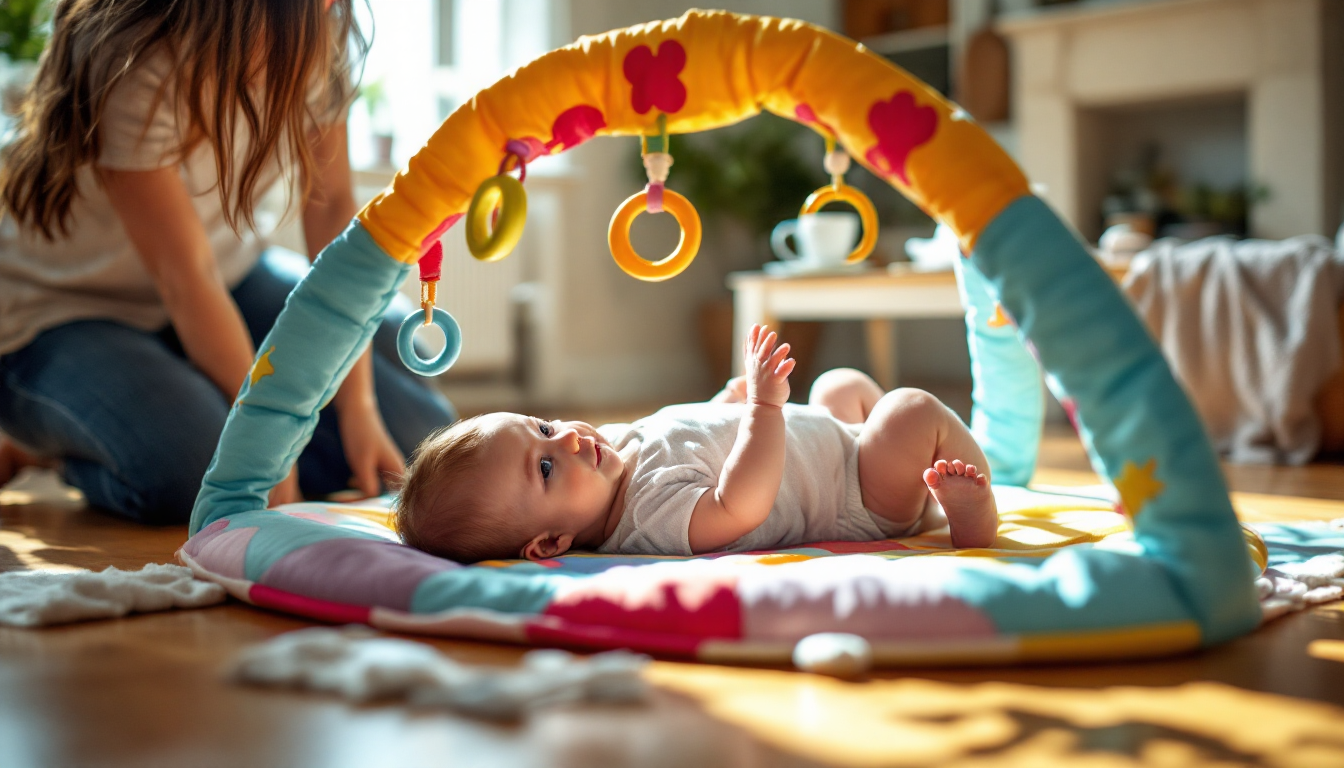
There’s a particular kind of relief that comes the first time your baby lies under an arch of dangling toys and just… stays there. No screen, no rocking, no you hovering with a rattle for twenty minutes straight. A good play activity mat buys you that: proper screen-free, hands-and-feet developmental play that holds a baby’s attention long enough for you to eat breakfast sitting down.
The tricky part is that “play mat” now covers everything from a $20 foam square with two dangly rings to a $170 set with reversible cards, a play guide and a mat that reconfigures as your baby grows. Most of that difference is real, some of it is packaging, and almost none of it is obvious from a product photo. Parents tend to start shopping for one around the newborn stage, then again at the tummy-time and rolling milestone, and often a third time as a birthday or Christmas gift for someone else’s baby.
We’ve dug into the specs, the stage-by-stage design, and the safety standards that actually apply, so you’re not guessing between near-identical boxes. Live pricing and where to buy sit in the comparison links below; here’s the honest research on which mat is actually worth the money.
What to actually look for in a play activity mat
Before you fall for a cute farm theme or a piano panel, it helps to know what actually separates a mat that earns its keep from one that gets kicked under the cot by month three.
How long it stays relevant
A newborn cares about high-contrast shapes and a mirror. A five-month-old wants things to kick, grab and pull off. A crawler wants a flat mat with nothing in the way. Mats that only serve the newborn stage get outgrown fast; the better designs have removable arches or reversible panels so the same mat carries you from mat-play with a two-week-old through to a nine-month-old doing tummy-time push-ups.
The safety standard behind the toys
Any toy attached to a play gym, from teethers to plush rings, falls under AS/NZS ISO 8124, Australia’s toy safety standard covering choking hazards, cord and tether length, and small-parts testing for the age group stated on the box. It’s worth checking the box actually states an age range and standard reference rather than just “0+”.
Mat surface and portability
Foam mats are softer underfoot for tummy time but can flatten or crumb over time; quilted fabric mats wash better and fold down for grandma’s house or the park. If you’re planning a lot of mat play outside the nursery, foldability and machine-washability matter more than they sound like they should at 2am.
- Stage coverage: does it work for a newborn and still earn its floor space at nine months, or is it a one-trick newborn toy?
- AS/NZS ISO 8124 compliance: check the packaging references the toy safety standard and states a clear age range, not just a vague “infant” label.
- Washable, foldable mat: reflux, dribble and the odd nappy blowout are inevitable; a mat you can wipe or machine-wash saves your sanity.
- Genuine sensory variety: textures, sounds, a mirror and high-contrast patterns matter more in the first months than a big cast of plush characters.
- Noise and battery reliance: a mat that only entertains via lights and music tends to get boring fast once the novelty wears off, and it’s one more thing needing batteries.
Our picks for 2026
1. Fisher-Price Deluxe Kick & Play Piano Gym
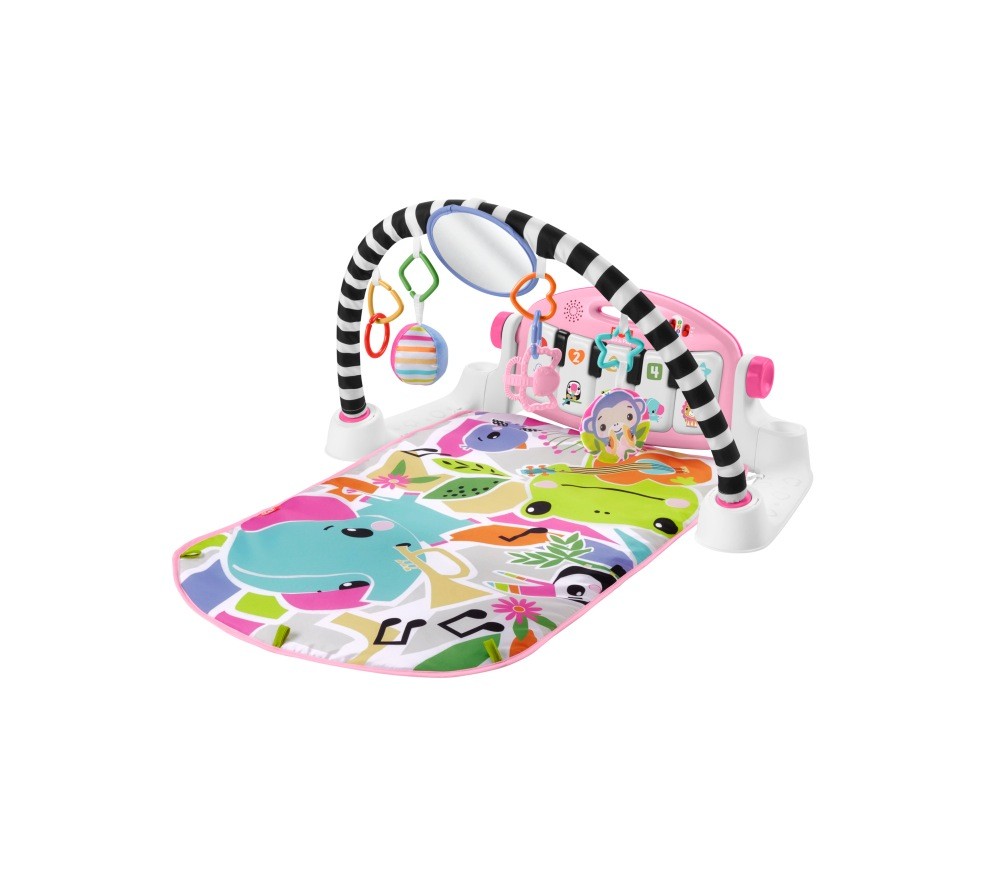
This is the mat most Australian parents will recognise, and it earns the reputation. The dangling piano panel rewards kicking with actual sound and light feedback, which is a genuine motor-skill hook for babies working out cause and effect, roughly from birth to around nine months depending on your baby’s size.
It’s not subtle or minimalist, and the arch toys are fixed to a fairly busy overhead design, so it won’t suit a nursery going for a neutral aesthetic. But as an all-rounder that covers newborn lying-down play through to sitting and reaching, it’s hard to beat for the approx. $70 to $90 RRP it usually sits at.
- Piano panel gives babies clear, repeatable cause-and-effect feedback
- Arch and toys detach once your baby starts rolling and needs flat space
- Runs on batteries, which some parents find noisy after a while
- Busier visual design than the newer minimalist mats
Fisher-Price Deluxe Kick & Play Piano Gym
2. Anko Baby Play Gym
If you just need something for tummy time that won’t feel like a waste of money for a stage that lasts a handful of months, this house-brand gym does the essentials without the extras. A soft mat, an overhead arch, and a small set of dangling toys, no lights, no music, no batteries required.
It’s a genuinely sensible pick for a second baby, a portacot travel setup, or anyone testing whether their newborn even likes mat play before spending more. At an approx. $25 to $35 RRP, it’s the mat you buy without agonising over it.
- Straightforward arch-and-mat design with no batteries needed
- Lightweight and easy to fold away or take travelling
- Fewer sensory features than pricier gyms, so it may lose interest sooner
- Toy variety is more limited than premium alternatives
Anko Baby Play Gym
3. Lovevery The Play Gym
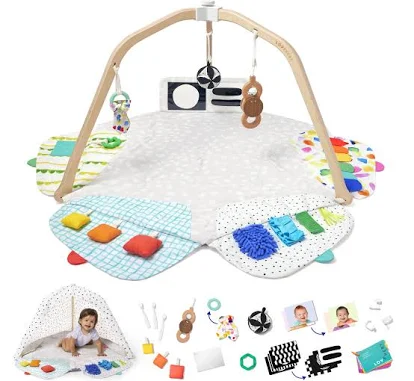
This is the mat parents research the most before buying, largely because it’s built stage by stage rather than as a single fixed setup. The reversible arch toys, teether ring and card guide are designed around specific developmental windows, from newborn high-contrast focus through to sitting and reaching, and the mat itself can be reconfigured as your baby grows into a toddler.
It’s genuinely thoughtful design, but it comes at a genuinely higher price, approx. $140 to $170 RRP, and the muted, Montessori-style colour palette is a deliberate choice that won’t appeal to every parent who wants brighter, busier toys. It’s the pick for someone who wants one considered purchase rather than multiple mats across the first year.
- Reversible, stage-based toys designed to grow with your baby
- Includes a play guide explaining the developmental purpose of each toy
- Noticeably higher approx. RRP than the other mats here
- Muted colour palette suits some nurseries, not others
Lovevery The Play Gym
4. Skip Hop Farmstand Activity Gym
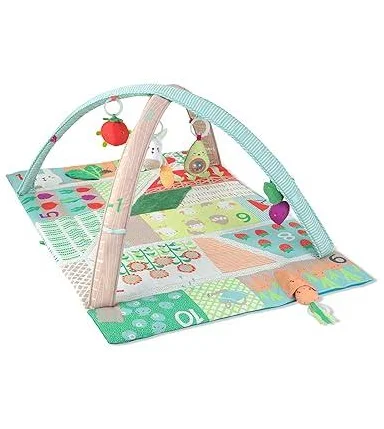
A solid middle option between the Fisher-Price and the Lovevery, this gym leans into a farm theme with plush toys, a soft tummy-time pillow, and a music panel, and it folds down more compactly than most for parents who want mat play to travel to grandma’s or the park.
The character-heavy design is either a win or a miss depending on your nursery aesthetic, and like the Fisher-Price it relies on batteries for the sound features. At an approx. $90 to $120 RRP, it sits comfortably in the middle of the market.
- Folds compactly, genuinely useful for travel and visiting family
- Soft tummy-time pillow is a nice, often-overlooked inclusion
- Farm theme and plush styling won’t suit every decor
- Battery-dependent music panel adds another thing to keep charged
Skip Hop Farmstand Activity Gym
How they compare
| Product | Brand | Approx RRP | Key features | Best for |
|---|---|---|---|---|
| Fisher-Price Deluxe Kick & Play Piano Gym #1 | Fisher-Price | approx. $70 to $90 | Kick-activated piano panel, detachable arch, lights and sound | An all-round first mat covering newborn to sitting stage |
| Anko Baby Play Gym Budget | Anko | approx. $25 to $35 | Simple arch and mat, no batteries, lightweight and foldable | Budget-conscious parents or a second-baby setup |
| Lovevery The Play Gym Premium | Lovevery | approx. $140 to $170 | Stage-based reversible toys, play guide, reconfigurable mat | Parents wanting one considered mat for the whole first year |
| Skip Hop Farmstand Activity Gym | Skip Hop | approx. $90 to $120 | Plush toys, tummy-time pillow, music panel, compact fold | Families who travel or visit relatives often |
We’ve reviewed 4 play mats in total — compare the full list before you decide.
mum. Approved: our top 3 for 2026
Covers the most developmental stages for the price, with genuine cause-and-effect play.
Does the essential job of tummy time without the extras you may never use.
Built around developmental stages rather than one fixed setup, worth it if you want a single long-term purchase.
What to check before you buy
A few quick checks save a lot of regret once the mat is out of the box and the tags are off.
In the listing
- Confirm the stated age and weight range matches your baby now, not just at newborn stage
- Look for a reference to AS/NZS ISO 8124 or an explicit toy safety compliance statement
- Check whether toys are removable, since a flat mat is what you’ll need once your baby starts rolling
- Check the mat itself, not just the toys, is machine-washable or wipeable
What to skip
- Mats that rely almost entirely on lights and sound for entertainment tend to lose their charm within weeks
- Very large overhead arches can become a hazard once a baby starts pulling up to sit or stand near the mat
- Secondhand gyms with no visible age labelling or missing safety tags are hard to verify against current standards
It’s also worth remembering that no play gym replaces supervised mat play. Tummy time and reaching games are meant to happen with you nearby, not as a set-and-forget screen substitute, which is really the whole point of choosing a mat over a device in the first place.
Frequently asked questions
What age can a baby start using a play activity mat?
Most gyms are designed from birth, using high-contrast patterns, a mirror and gentle sounds for the newborn stage, then adding kicking and reaching activities as your baby’s motor skills develop, generally up to around nine to twelve months before a flat mat with separate toys takes over.
Is a play activity mat the same as a tummy time mat?
Not quite. A tummy time mat is usually just a flat, padded surface, while a play activity mat (or play gym) adds an arch with dangling toys for reaching, kicking and visual tracking. Many parents use one mat for both purposes since most activity gyms include a simple padded base.
How do I know a play mat meets Australian safety standards?
Check the packaging for a reference to AS/NZS ISO 8124, the toy safety standard covering choking hazards, cord lengths and small-parts testing, along with a clearly stated recommended age range. If a product (especially secondhand) has no visible safety labelling, it’s best avoided.
Do I need more than one play mat as my baby grows?
Not necessarily. Mats with detachable arches and reversible toys, like the Lovevery The Play Gym, are designed to be reconfigured as your baby moves from lying down to sitting and reaching, which can save buying a second mat purely for the next stage.
Are foam mats or fabric mats better for mat play?
Foam mats tend to feel softer for tummy time but can flatten or crumb with heavy use over time, while quilted fabric mats generally wash better and fold down more easily for travel. Neither is objectively better; it comes down to how much travelling and washing your routine involves.
If we had to choose one, the Fisher-Price Deluxe Kick & Play Piano Gym is our 2026 pick for most Australian families, since it covers the widest stretch of developmental stages without asking for a premium price. On a tighter budget, the Anko Baby Play Gym won’t let you down for straightforward tummy-time play, and if you’d rather make one considered purchase that grows with your baby, the Lovevery The Play Gym is worth the extra spend.
Where to buy these picks
✓ Verified prices are checked live at the retailer. Otherwise we show the approximate RRP (an indicative recommended price, not a live retailer price), or “price pending” where we don’t have one.
Fisher-Price Deluxe Kick & Play Piano Gym
★ Best feature-rich gym
Anko Baby Play Gym
Best value
Skip Hop Farmstand Activity Gym
Best for travel
Lovevery The Play Gym
Best premium first year
The shortlist, in your inbox
New winners, price drops and recalls worth knowing.